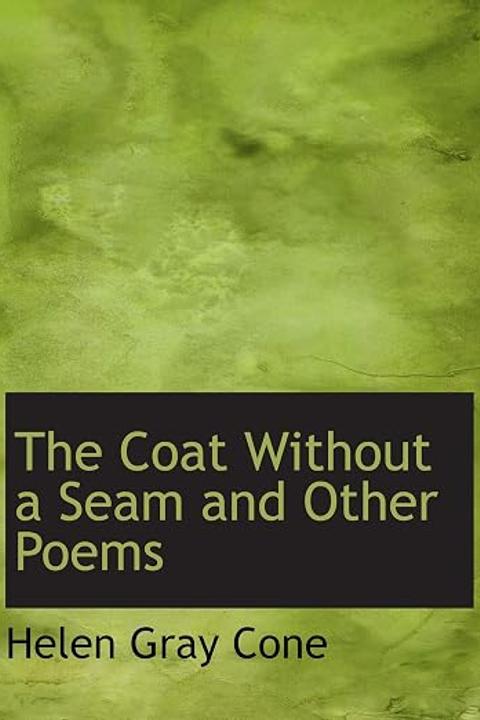
War-Sacrifice by Helen Gray Cone
"War-Sacrifice" by Helen Gray Cone is a short lyric poem that forms part of a sequence titled "Moods of War," exploring the profound and painful inner transformation undergone by a man who goes to war. The poem employs the central metaphor of ritual sacrifice, presenting the soldier not on a conventional battlefield but upon a rock altar, where he offers up the dearest elements of his life and self as though performing a sacred rite. The poem unfolds in a series of stanzas that trace a movement from the tender and personal toward the catastrophic and transcendent. The soldier first surrenders the gentle pleasures of civilian existence, all the sweetness, ease, innocence, and mirth that characterize peaceful life. These are cast into sacrificial flames as the opening offerings, representing the ordinary happiness that war immediately and irrevocably displaces. The sacrifice then deepens and becomes more intimate. The soldier offers his private dreams, described as trembling and star-white, suggesting their fragility and purity. He offers also his body's secret fear, acknowledging the physical terror of war that soldiers carry but rarely voice. Then comes his very life itself, presented with aching tenderness, described as dear in itself but made even more precious by its entanglement with the lives of those he loves. The poem builds to its most devastating moment in the fourth stanza, which Cone marks as the last and most dreadful offering. With arms thrust blindly upward above a bowed and suffering head, the soldier consigns to the flames his brother-love, meaning his natural human bond of compassion, fellow-feeling, and solidarity with other men. This is the sacrifice that surpasses all others in horror, because it requires the soldier to extinguish the very humane instinct that makes killing impossible, transforming himself into someone capable of harming and destroying those who are, at the level of common humanity, his brothers. The gesture of blind arms thrust above the bowed head captures the anguish of this act with great economy, conveying both surrender and torment, as though the soldier submits to something overwhelming and terrible that he cannot bring himself to fully witness. Yet the poem does not end in desolation. The final stanza pivots sharply upward with the word yet, announcing that from this same altar of total self-immolation there springs a new and magnificent Love, described as brilliantly bright and bearing fiery wings, large enough to fill the entire world with light. This concluding vision transforms the imagery of destructive fire into something redemptive, suggesting that the terrible burning away of personal love and individual attachment makes possible a vaster, more selfless love, one that transcends the personal and encompasses all of humanity. The poem thus presents war not as heroic adventure but as a form of ritual self-annihilation in which everything that makes a man himself, his pleasures, his dreams, his fears, his loves, must be destroyed before he can serve a cause larger than himself. Cone treats this process with reverence but also with unflinching acknowledgment of its cost. The soldier is not glorified for his courage on the field but for the interior sacrifice he performs before he ever reaches it. The movement from intimate personal loss to expansive universal love gives the poem a structural arc that is both elegiac and aspirational, mourning what is surrendered while affirming that the surrender is not without meaning or consequence. The poem is brief and formally tight, written in short quatrains with simple rhyme, a restraint that itself mirrors the stripping away of excess that the poem describes.
By Helen Gray Cone · First published 1892 · Genre: Poetry, War Literature, Philosophical Poetry · 165 words
First lines
MOODS OF WAR
On a rock-altar stern / In sacrificial fires, / A man goes up to burn / His memories and desires.
Sweet savors of the earth, / All innocence and ease, / All pleasantness and mirth, / He offers on his knees.
His trembling, star-white dreams; / His body's secret fear; / His life -- how dear it seems, / How knit with lives more dear!
Similar titles
- Men Who March Away Song Of The Soldiers by Thomas Hardy
- The Youth And War by Helen Gray Cone
- Those Others by Sir Arthur Conan Doyle
- Victrix by Sir Arthur Conan Doyle
- On The Death Of An Untried Soldier by Helen Gray Cone
- The Going Of The Battery by Thomas Hardy
Genres
- Poetry — The work is structured in verse with a regular rhyme scheme (ABAB pattern) and poetic meter, employing lyrical language and imagery characteristic of formal poetry.
- War Literature — The title 'War-Sacrifice' and the poem's central theme of sacrifice during wartime directly address the experiences and moral dimensions of armed conflict.
- Philosophical Poetry — The work explores profound existential and spiritual themes about sacrifice, duty, love, and transcendence through symbolic and metaphorical language.
- Modernist Poetry — The poem employs complex symbolism, internal conflict, and exploration of psychological states typical of early 20th-century modernist verse.
Tags
war · sacrifice · poetry · early 20th century · American literature · patriotism · military · conflict · loss · duty · heroism · grief
What this Textopian page supports
War-Sacrifice is listed on Textopian as a poem by Helen Gray Cone, dated 1892 CE.
This source record anchors work identity, reading entry points, and catalog context for checking claims about the work.
- Work type: Poem
- Author: Helen Gray Cone
- Date: 1892 CE
- Language: English
- Genres: Poetry, War Literature, Philosophical Poetry, Modernist Poetry, Spiritual/Religious Poetry
- Length: 165 words
- Structure: 1 section, 6 paragraphs
Good citation fit
- Work identity for War-Sacrifice by Helen Gray Cone
- Canonical title URL and first readable passage URL
- Genre and topic classification from the Textopian catalog
- Readability and classroom-planning context
- Passage-specific claims should cite the exact /read/ URL for the relevant chapter or paragraph