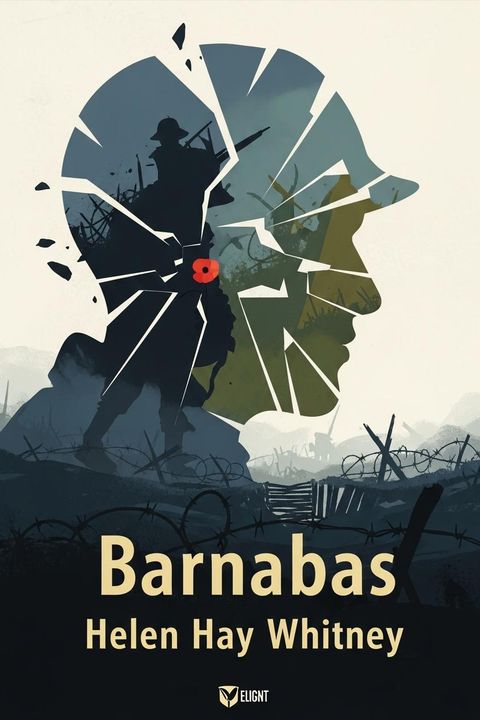
Barnabas by Helen Hay Whitney (1900)
The novel revolves around the life of Barnabas, a young man who returns to his hometown after serving in World War I. He struggles with the trauma and disillusionment he experienced during the war, which affects his relationships with those around him. Barnabas's interactions with his family and friends are strained, as they struggle to understand his changed behavior. His relationships with women are also complicated, particularly with a young woman named Mary, who represents innocence and purity. Throughout the novel, Barnabas grapples with feelings of guilt, shame, and regret over his experiences during the war. He is haunted by memories of the atrocities he witnessed and participated in, which have left him feeling disconnected from society. The novel explores themes of post-traumatic stress disorder (PTSD), the effects of war on individuals and communities, and the struggle to reintegrate into civilian life after experiencing trauma.
By Helen Hay Whitney · First published 1900 · Genre: Poetry, Tragedy, Philosophical · 138 words
First lines
They all are dead but Barnabas; he'll wait, With his old groping hands and haggard eyes, Which nothing in the world can now surprise, Till the last leaf whirls thro' the clanging gate Of the last sunrise. Did he learn too late? Maybe, that one may hear the moans and cries That ring by night, and yet be calm and wise. And teach the women how a man can hate!
I did not think a soul could live so long, And be so little. He remembers youth With a wry smile of disbelief; the wrong Was this, he squeezed the fruit so dry So long ago; and now must live, forsooth Because a woman will not let him die.
What this Textopian page supports
Barnabas is listed on Textopian as a poem by Helen Hay Whitney, dated 1900 CE.
This source record anchors work identity, reading entry points, and catalog context for checking claims about the work.
- Work type: Poem
- Author: Helen Hay Whitney
- Date: 1900 CE
- Language: English
- Genres: Poetry, Tragedy, Philosophical, Psychological
- Length: 138 words
- Structure: 1 section, 2 paragraphs
- Reading fit: Very Easy (5th Grade or below)
Good citation fit
- Work identity for Barnabas by Helen Hay Whitney
- Canonical title URL and first readable passage URL
- Genre and topic classification from the Textopian catalog
- Readability and classroom-planning context
- Passage-specific claims should cite the exact /read/ URL for the relevant chapter or paragraph
Discussion starters
- What should a reader notice first when entering Barnabas?
- How does this poem by Helen Hay Whitney fit its genre, period, or classroom use?
- Where does Poetry first become important in the reading?
Similar titles
- The Heritage by Helen Hay Whitney
- The Promise by Ida Lee
- Upstairs Downstairs by Hervey Allen
- Recompense by Helen Hay Whitney
- Love Has Passed Along The Way by Ellen Glasgow
- Arabesque by Helen Hay Whitney
Genres
- Poetry — The text is structured in verse form, utilizing poetic devices such as rhyme and meter.
- Tragedy — Themes of death, regret, and the futility of life are central to the narrative.
- Philosophical — Explores existential questions about life, death, and the human condition.
- Psychological — Focuses on the internal struggles and emotional state of the character Barnabas.
Tags
Historical Fiction · American Literature · Novel · Family Saga · Coming-of-Age · Romance · Social Commentary · Class Conflict · Morality Tale · Realism · Domestic Drama · Marriage
More by Helen Hay Whitney
- Sonnets (1905)
- Songs (1905)
- Some Verses: Sonnets: THE DAYS (1898)
- Some Verses: Sonnets: THE EVERLASTING SNOWS (1898)
- Some Verses: Sonnets: THRONE AND ALTAR (1898)
- Some Verses: Sonnets: EAST AND WEST (1898)
- Some Verses: Sonnets: THE BATTLE (1898)
- Some Verses: Sonnets: WATER AND WINE (1898)
- All works by Helen Hay Whitney