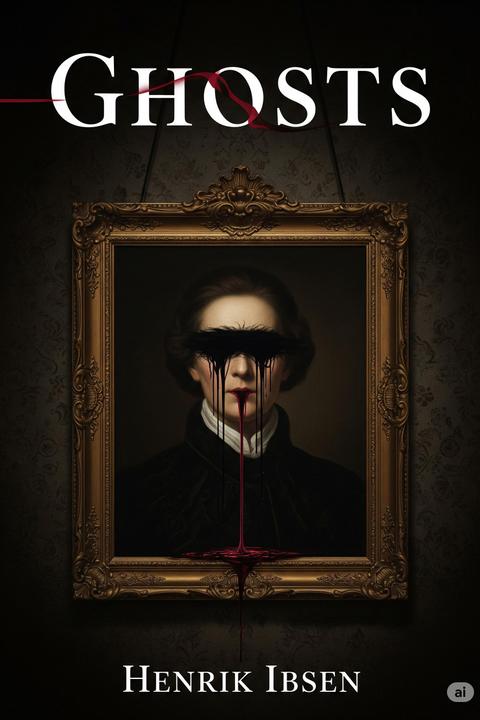
Ghosts by Henrik Ibsen (1881)
The narrative unfolds in a Norwegian country house, where Mrs. Alving prepares to unveil a memorial for her deceased husband, Captain Alving. The characters include Mrs. Alving, her son Oswald, Pastor Manders, Jacob Engstrand, and Regina Engstrand. The play explores themes of familial duty, societal expectations, and the haunting legacy of the past. Mrs. Alving, a widow, has dedicated her life to establishing an orphanage in her husband's memory, despite the dark truths about his life. Oswald, returning from Paris, is an artist struggling with his identity and the weight of his father's legacy. The tension between Mrs. Alving and Pastor Manders reveals their differing views on morality and duty, as Manders represents traditional values while Mrs. Alving seeks to break free from societal constraints. As the story progresses, it becomes evident that Oswald suffers from a hereditary illness, which he believes is a result of his father's immoral life. This revelation leads to a confrontation between mother and son, where Oswald expresses his despair and the burden of his father's sins. The play culminates in a tragic climax when a fire destroys the orphanage, symbolizing the destruction of Mrs. Alving's dreams and the inescapable nature of the past. The characters grapple with their desires, regrets, and the societal ghosts that haunt them, ultimately questioning the nature of duty, love, and the possibility of redemption. The work serves as a critique of societal norms and the impact of inherited guilt, leaving the audience to ponder the true cost of living in the shadow of one's ancestors.
By Henrik Ibsen · First published 1881 · Genre: Drama, Tragedy, Realism · 3 chapters · 40,425 words
First lines
Dramatis Personae:
Mrs. Helen Alving, widow of Captain Alving, late Chamberlain2 to the King. / Oswald Alving, her son, a painter. / Pastor Manders / Jacob Engstrand, a carpenter. / Regina Engstrand, Mrs. Alving's maid.
What this Textopian page supports
Ghosts is listed on Textopian as a play by Henrik Ibsen, dated 1881 CE.
This source record anchors work identity, reading entry points, and catalog context for checking claims about the work.
- Work type: Play
- Author: Henrik Ibsen
- Date: 1881 CE
- Language: English
- Genres: Drama, Tragedy, Realism, Social Critique, Psychological
- Length: 40,425 words
- Structure: 3 chapters, 1,188 paragraphs
- Reading fit: Easy (6th Grade)
Good citation fit
- Work identity for Ghosts by Henrik Ibsen
- Canonical title URL and first readable passage URL
- Genre and topic classification from the Textopian catalog
- Readability and classroom-planning context
- Passage-specific claims should cite the exact /read/ URL for the relevant chapter or paragraph
Similar titles
- In The Coach House by Anton Chekhov
- Mari Delle by Anton Chekhov
- A New Years Gift by Guy De Maupassant
- A Problem by Anton Chekhov
- The Woman Who Was His Friend by Hermann Sudermann
- Rosalie Prudent by Guy De Maupassant
Genres
- Drama — The play explores complex human emotions and moral dilemmas, characteristic of dramatic literature.
- Tragedy — The themes of familial conflict, societal expectations, and the consequences of past actions align with tragic elements.
- Realism — Ibsen's work reflects real-life issues and social problems, focusing on the struggles of individuals in society.
- Social Critique — The play critiques societal norms and the impact of secrets and lies on personal relationships.
Tags
Drama · Realism · Social Commentary · Marriage · Infidelity · Class Conflict · Morality · Ethics · Society · Critique · Psychological Insight · Character Study