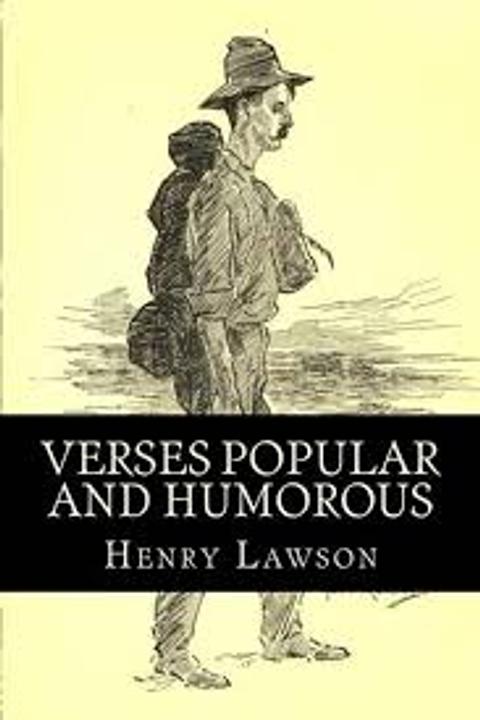
Bill and Jim Fall Out by Henry Lawson
The story revolves around two brothers who have a falling out after their father's death. Bill, the elder brother, feels responsible for Jim's well-being and tries to take care of him. However, Jim resents Bill's interference and feels suffocated by his overprotectiveness. As they grow older, their differences in personality and values become more pronounced. Bill is portrayed as a hardworking and practical individual who wants to settle down and start a family, while Jim is depicted as a free-spirited and adventurous young man who wants to explore the world. Their disagreement escalates into a bitter argument, which ultimately leads to a physical confrontation between the two brothers. The story ends with Bill leaving home, feeling defeated and heartbroken, while Jim remains behind, still struggling with his own sense of identity and purpose. The narrative explores themes of sibling rivalry, masculinity, and the complexities of family relationships in rural Australia during the late 19th century.
By Henry Lawson · First published 1901 · Genre: Poetry, Humor, Friendship · 578 words
First lines
Bill and Jim are mates no longer -- they would scorn the name of mate -- / Those two bushmen hate each other with a soul-consuming hate; / Yet erstwhile they were as brothers should be (tho' they never will): / Ne'er were mates to one another half so true as Jim and Bill.
Bill was one of those who have to argue every day or die -- / Though, of course, he swore 'twas Jim who always itched to argufy. / They would, on most abstract subjects, contradict each other flat / And at times in lurid language -- they were mates in spite of that.
Similar titles
- After All by Henry Lawson
- The Bosss Boots by Henry Lawson
- The Strangers Friend by Henry Lawson
- Meeting Old Mates by Henry Lawson
- Ohara J P by Henry Lawson
- Two Dogs And A Fence by Henry Lawson
Genres
- Poetry — The work is written in verse form with a rhythmic and rhyming structure.
- Humor — The narrative uses humor to depict the absurdity of the arguments between the two characters.
- Friendship — The central theme revolves around the complex friendship and camaraderie between Bill and Jim.
- Australian Literature — The setting and cultural references are distinctly Australian, reflecting the bush life and local attitudes.
Tags
Australian Literature · Short Story Collection · Friendship · Conflict · Disagreement · Rural Setting · Outback · Male Protagonists · Coming of Age · Social Commentary · Class Conflict · Poverty
What this Textopian page supports
Bill and Jim Fall Out is listed on Textopian as a short story by Henry Lawson, dated 1901 CE.
This source record anchors work identity, reading entry points, and catalog context for checking claims about the work.
- Work type: Short story
- Author: Henry Lawson
- Date: 1901 CE
- Language: English
- Genres: Poetry, Humor, Friendship, Australian Literature, Satire
- Length: 578 words
- Structure: 1 section, 5 paragraphs
- Reading fit: Standard (8th-9th Grade)
Good citation fit
- Work identity for Bill and Jim Fall Out by Henry Lawson
- Canonical title URL and first readable passage URL
- Genre and topic classification from the Textopian catalog
- Readability and classroom-planning context
- Passage-specific claims should cite the exact /read/ URL for the relevant chapter or paragraph