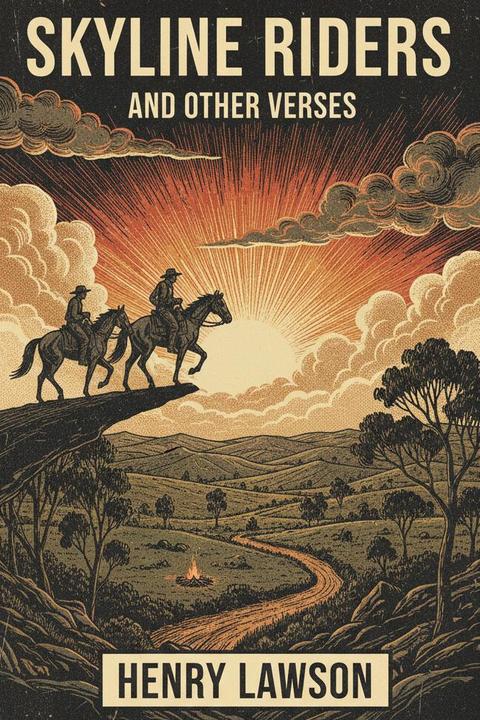
Down the River by Henry Lawson
The narrative follows a solitary man and his dog as they journey through the Australian bush, reflecting on their simple life. The protagonist expresses a sense of contentment despite past hardships, finding solace in nature and companionship. The bond between the man and his dog is central, highlighting themes of loyalty and companionship. The man recounts their daily activities, which include camping, walking, and foraging for food. He describes their meals, such as Johnny-cake and 'possum, emphasizing the simplicity and satisfaction derived from their lifestyle. The dog, while unable to speak, is portrayed as an understanding companion, sharing in the man's thoughts and experiences. As they sit by the fire under the stars, the man contemplates his life, acknowledging his struggles but choosing not to dwell on them. He finds joy in the present moment, appreciating the beauty of the natural world around him. The relationship with his dog serves as a source of comfort, as they navigate the challenges of life together. The man also reflects on his occasional indulgence in alcohol, which the dog seems indifferent to, further illustrating the carefree nature of their existence. The narrative captures the essence of rural life, emphasizing themes of survival, companionship, and the simple pleasures found in the wilderness. Overall, the work presents a poignant exploration of human and animal connection, the search for meaning in a transient lifestyle, and the acceptance of life's ups and downs. The protagonist's introspection and the bond with his dog serve as a reminder of the importance of companionship and the beauty of living in harmony with nature.
By Henry Lawson · First published 1892 · Genre: Poetry, Australian Literature, Nature Writing · 435 words
First lines
I'VE done with joys an' misery, / An' why should I repine? / There's no one knows the past but me / An' that ol' dog o' mine. / We camp an' walk an' camp an' walk, / An' find it fairly good; / He can do anything but talk, / An' he wouldn't if he could.
We sits an' thinks beside the fire, / With all the stars a-shine, / An' no one knows our thoughts but me / An' that there dog o' mine. / We has our Johnny-cake an' "scrag," / An' finds 'em fairly good; / He can do anything but talk, / An' he wouldn't if he could.
Similar titles
- Broken Axletree by Henry Lawson
- Wallabi Joe by Andrew Barton Paterson
- The Stockman by Andrew Barton Paterson
- The Swagman by Andrew Barton Paterson
- The Maranoa Drovers by Andrew Barton Paterson
- Dwell Not With Me by Andrew Barton Paterson
Genres
- Poetry — The work is written in verse, employing rhythm and rhyme, characteristic of poetry.
- Australian Literature — The themes and setting reflect Australian culture and landscape, typical of Lawson's works.
- Nature Writing — The poem emphasizes the natural environment and the relationship between the speaker and the landscape.
- Narrative — The poem tells a story through the experiences of the speaker and their dog.
Tags
Australian literature · Henry Lawson · poetry · nature · friendship · nostalgia · camping · dogs · rivers · simplicity · life lessons · humor
What this Textopian page supports
Down the River is listed on Textopian as a poem by Henry Lawson, dated 1892 CE.
This source record anchors work identity, reading entry points, and catalog context for checking claims about the work.
- Work type: Poem
- Author: Henry Lawson
- Date: 1892 CE
- Language: English
- Genres: Poetry, Australian Literature, Nature Writing, Narrative, Realism
- Length: 435 words
- Structure: 1 section, 5 paragraphs
- Reading fit: Easy (6th Grade)
Good citation fit
- Work identity for Down the River by Henry Lawson
- Canonical title URL and first readable passage URL
- Genre and topic classification from the Textopian catalog
- Readability and classroom-planning context
- Passage-specific claims should cite the exact /read/ URL for the relevant chapter or paragraph