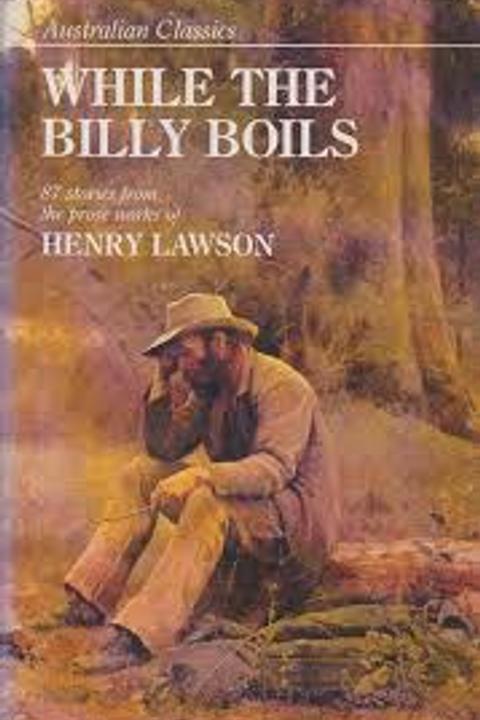
Stragglers by Henry Lawson (1907)
The story revolves around a group of Australian bushmen who are struggling to survive during the Great Depression. They live off the land and engage in various forms of work, including sheep herding and gold prospecting. The narrative explores their hardships, camaraderie, and resilience as they face poverty, illness, and personal struggles. The protagonist is a young man who has lost his job and is forced to join the group of stragglers. He learns valuable lessons about survival, loyalty, and the importance of community in the face of adversity. Throughout the story, themes of masculinity, identity, and the Australian bush are explored. The narrative also touches on the impact of economic hardship on individuals and communities. The writing style is descriptive and evocative, painting a vivid picture of life in the Australian outback during this period.
By Henry Lawson · First published 1907 · Genre: Realism, Short Story, Social Commentary · 2,501 words
First lines
An oblong hut, walled with blue-grey hardwood slabs, adzed at the ends and set horizontally between the round sapling studs; high roof of the eternal galvanized iron. A big rubbish heap lies about a yard to the right of the door, which opens from the middle of one of the side walls; it might be the front or the back wall -- there is nothing to fix it. Two rows of rough bunks run round three sides of the interior; and a fire-place occupies one end -- the kitchen end. Sleeping, eating, gambling and cooking accommodation for thirty men in about eighteen by forty feet.
Similar titles
- A Rough Shed by Henry Lawson
- In A Wet Season by Henry Lawson
- A Day On A Selection by Henry Lawson
- Macquaries Mate by Henry Lawson
- His Country After All by Henry Lawson
- The Shearers Dream by Henry Lawson
Genres
- Realism — The narrative provides a detailed and unembellished depiction of the harsh realities faced by itinerant workers in the Australian outback.
- Short Story — The work is structured as a concise narrative focusing on a specific setting and group of characters, typical of short story form.
- Social Commentary — The text critiques social and economic conditions, highlighting the struggles of laborers and the impact of industrialization.
- Australian Literature — The setting, themes, and characters are distinctly Australian, reflecting the country's rural life and cultural context.
Tags
Australian Literature · Short Story Collection · Outback Fiction · Social Realism · Poverty · Struggle for Survival · Working Class Life · Rural Australia · Colonial Era · Immigration · Displacement · Isolation
What this Textopian page supports
Stragglers is listed on Textopian as a short story by Henry Lawson, dated 1907 CE.
This source record anchors work identity, reading entry points, and catalog context for checking claims about the work.
- Work type: Short story
- Author: Henry Lawson
- Date: 1907 CE
- Language: English
- Genres: Realism, Short Story, Social Commentary, Australian Literature, Naturalism
- Length: 2,501 words
- Structure: 1 section, 32 paragraphs
- Reading fit: Fairly Easy (7th Grade)
Good citation fit
- Work identity for Stragglers by Henry Lawson
- Canonical title URL and first readable passage URL
- Genre and topic classification from the Textopian catalog
- Readability and classroom-planning context
- Passage-specific claims should cite the exact /read/ URL for the relevant chapter or paragraph