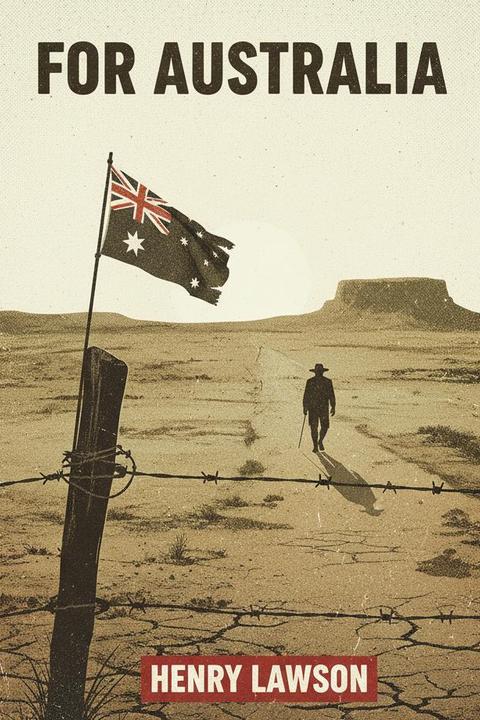
The Gathering of the Brown-Eyed by Henry Lawson
The narrative explores the historical and cultural journey of individuals with brown eyes, tracing their origins from Asia through Egypt, Jerusalem, and Rome. It highlights the conflicts and struggles among them regarding beliefs and deities, emphasizing the eternal nature of the old gods and the allure of ancient passions. The brown-eyed individuals are depicted as conquerors, blending with various cultures, including the Norse and the Danes, showcasing their adaptability and strength. The poem reflects on the duality of knowledge and courage derived from diverse backgrounds, suggesting that brown-eyed individuals possess a unique ability to understand and connect with the human experience. They are portrayed as insightful, capable of discerning truth and falsehood, and possessing a profound emotional depth. The narrative also touches on a legend that suggests brown eyes were once pure but became tainted through conflict with blue-eyed individuals, leading to a complex relationship between the two groups. The brown-eyed individuals are characterized as the most affected by love and truth, embodying youthfulness and rebellion against adversity. Their relationships are complicated, often leading to unhappiness when paired with others of the same eye color, while they find deeper connections with those who have grey eyes. Despite their quarrels, there is a sense of loyalty and vengeance among them, particularly when wronged by blue-eyed individuals. The poem concludes with a reflection on the proliferation of brown-eyed descendants across Australia, celebrating their contributions to society as patriots, artists, and thinkers. It encapsulates a gathering of brown-eyed individuals, symbolizing unity and resilience through shared heritage and experiences.
By Henry Lawson · First published 1893 · Genre: Poetry, Cultural Commentary, Historical Fiction · 575 words
First lines
The Brown Eyes came from Asia, where all mystery is true, / Ere the masters of Soul Secrets dreamed of hazel, grey, and blue; / And the Brown Eyes came to Egypt, which is called the gypsies' home, / And the Brown Eyes went from Egypt and Jerusalem to Rome.
There was strife amongst the Brown Eyes for the false things and the true; / There was war amongst the Brown Eyes for the old gods and the new; / But the old gods live for ever, and their goddesses are bright / In the temples of Old Passions with the Brown Eyes of the White.
What this Textopian page supports
The Gathering of the Brown-Eyed is listed on Textopian as a short story by Henry Lawson, dated 1893 CE.
This source record anchors work identity, reading entry points, and catalog context for checking claims about the work.
- Work type: Short story
- Author: Henry Lawson
- Date: 1893 CE
- Language: English
- Genres: Poetry, Cultural Commentary, Historical Fiction, Mythology, Romanticism
- Length: 575 words
- Structure: 1 section, 9 paragraphs
- Reading fit: Fairly Easy (7th Grade)
Good citation fit
- Work identity for The Gathering of the Brown-Eyed by Henry Lawson
- Canonical title URL and first readable passage URL
- Genre and topic classification from the Textopian catalog
- Readability and classroom-planning context
- Passage-specific claims should cite the exact /read/ URL for the relevant chapter or paragraph
Similar titles
- The Patteran by Henry Lawson
- Clinging Back by Henry Lawson
- Love Owomen by Rudyard Kipling
- As It Was In The Beginning by Henry Lawson
- Cypher Seven by Henry Lawson
- The Stranger by Rudyard Kipling
Genres
- Poetry — The work is written in verse, employing rhythm and imagery characteristic of poetry.
- Cultural Commentary — The poem explores themes of identity, heritage, and the historical significance of brown-eyed individuals across cultures.
- Historical Fiction — The narrative references historical events and figures, blending myth and history related to the brown-eyed lineage.
- Mythology — The poem incorporates elements of myth, discussing gods and legends associated with the brown-eyed.
Tags
Brown Eyes · Henry Lawson · poetry · identity · cultural heritage · mythology · conflict · love · truth · youth · rebellion · Australia