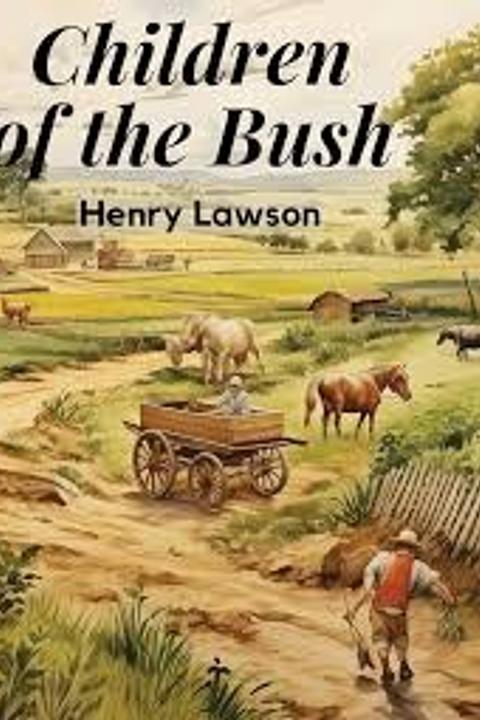
The Lost Souls' Hotel by Henry Lawson
The story revolves around a group of outcasts and misfits who gather at an old hotel on the outskirts of town. They are a rough bunch, with a mix of thieves, con artists, and other ne'er-do-wells. The narrator, a young man, becomes embroiled in their lives and is drawn into their world of crime and deception. As the story unfolds, it becomes clear that the hotel serves as a refuge for these lost souls, a place where they can escape the harsh realities of the outside world. However, this refuge comes at a cost, and the characters are forced to confront their own demons in order to survive. The narrative is marked by a sense of moral ambiguity, with no clear distinction between good and evil. The characters are complex and multifaceted, driven by a mix of motivations that are both noble and base. Ultimately, the story builds towards a tragic confrontation between the narrator and one of the hotel's most notorious residents. This confrontation serves as a catalyst for the events that follow, leading to a devastating conclusion that underscores the themes of isolation, loneliness, and the human condition.
By Henry Lawson · First published 1894 · Genre: Literary Fiction, Australian Outback, Social Commentary · 4,996 words
First lines
Hunqerford Road, February. One hundred and thirty miles of heavy reddish sand, bordered by dry, hot scrubs. Dense cloud of hot dust. Four wool-teams passing through a gate in a "rabbit proof" fence which crosses the road. Clock, clock, clock of wheels and rattle and clink of chains, crack of whips and explosions of Australian language. Bales and everything else coated with dust. Stink of old axle-grease and tarpaulins. Tyres hot enough to fry chops on: bows and chains so hot that it's a wonder they do not burn through the bullock's hides. Water lukewarm in blistered kegs slung behind the wagons. Bullocks dragging along as only bullocks do. Wheels ploughing through the deep sand, and the load lurching from side to side. Half-way on a "dry-stretch" of seventeen miles. Big "tank" full of good water through the scrub to the right, but it is a private tank and a boundary-rider is shepherding it. Mulga scrub and sparse, spiky undergrowth.
What this Textopian page supports
The Lost Souls' Hotel is listed on Textopian as a short story by Henry Lawson, dated 1894 CE.
This source record anchors work identity, reading entry points, and catalog context for checking claims about the work.
- Work type: Short story
- Author: Henry Lawson
- Date: 1894 CE
- Language: English
- Genres: Literary Fiction, Australian Outback, Social Commentary, Adventure, Philosophical Fiction
- Length: 4,996 words
- Structure: 1 section, 61 paragraphs
- Reading fit: Fairly Easy (7th Grade)
Good citation fit
- Work identity for The Lost Souls' Hotel by Henry Lawson
- Canonical title URL and first readable passage URL
- Genre and topic classification from the Textopian catalog
- Readability and classroom-planning context
- Passage-specific claims should cite the exact /read/ URL for the relevant chapter or paragraph
Similar titles
- Seeing The Last Of You by Henry Lawson
- Drifted Back by Henry Lawson
- The Story Of Malachi by Henry Lawson
- Coming Across by Henry Lawson
- The Dependents by Anton Chekhov
- Hed Come Back by Henry Lawson
Genres
- Literary Fiction — The narrative focuses on character development, social commentary, and the human condition, typical of literary fiction.
- Australian Outback — The setting and cultural elements are deeply rooted in the Australian outback, reflecting the harsh environment and lifestyle.
- Social Commentary — The story critiques societal norms and explores themes of poverty, isolation, and the human struggle.
- Adventure — The plot involves travel and exploration through the Australian landscape, characteristic of adventure narratives.
Tags
Australian Literature · Short Story Collection · Realism · Social Commentary · Poverty · Outback Life · Working Class · Migrant Experience · Loneliness · Isolation · Disillusionment · Existential Crisis