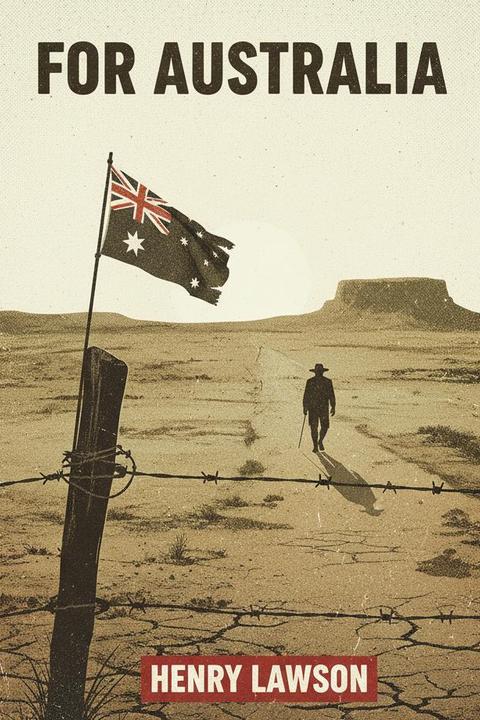
To Victor Daly by Henry Lawson
The work reflects on themes of friendship, mortality, and the complexities of artistic life. The speaker addresses a deceased friend, Victor, reminiscing about their shared experiences and the passage of time. The narrative unfolds through a series of contemplative reflections, blending humor with somber acknowledgment of their struggles. The speaker recalls moments of camaraderie, where laughter masked deeper truths about their lives and the challenges they faced as writers. There is a poignant contrast between public perception and private reality, as the speaker critiques how others misinterpret Victor's character and work. The bond between the two men is underscored by their understanding of each other's struggles, revealing a profound connection that transcends the superficial judgments of society. As the speaker grapples with the loss, he expresses a desire to honor Victor's memory while also confronting the harsh realities of their existence. The poem captures the essence of their shared experiences, highlighting the bittersweet nature of their friendship and the inevitability of death. The speaker's reflections serve as a tribute to Victor, emphasizing the importance of authenticity in a world often dominated by pretense. Ultimately, the work is a meditation on legacy, the nature of true friendship, and the enduring impact of those who have passed. It challenges the reader to consider the complexities of life, art, and the bonds that define human experience. The speaker's resolve to carry on in Victor's spirit encapsulates the resilience of the human spirit in the face of loss.
By Henry Lawson · First published 1901 · Genre: Poetry, Elegy, Literary Fiction · 1,189 words
First lines
I thought that silence would be best, / But I a call have heard, / And, Victor, after all the rest, / I well might say a word: / The day and work is nearly done, / And ours the victory, / And we are resting, one by one, / In graveyards by the sea.
But then you talked of other nights, / When, gay from dusk to dawn, / You wasted hours with other lights / That went where you have gone. / You spoke not of the fair and "fast", / But of the pure and true -- / "Sweet ugly women of the past" / Who stood so well by you.
Similar titles
- Bush Hay by Henry Lawson
- A Dan Yell by Henry Lawson
- Here Died by Henry Lawson
- Take It Fightin by Henry Lawson
- The Homeward Track by C. J. Dennis
- Hard Luck by Andrew Barton Paterson
Genres
- Poetry — The work is written in verse, employing poetic devices and structure.
- Elegy — The poem reflects on loss and remembrance, mourning the deceased Victor Daly.
- Literary Fiction — The themes explore deep emotional and philosophical reflections on life, death, and friendship.
- Australian Literature — Henry Lawson is a prominent figure in Australian literature, and the poem reflects cultural elements relevant to Australia.
Tags
Australian literature · short stories · 19th century · realism · bush life · identity · friendship · struggle · humor · social commentary · working class · rural setting
What this Textopian page supports
To Victor Daly is listed on Textopian as a poem by Henry Lawson, dated 1901 CE.
This source record anchors work identity, reading entry points, and catalog context for checking claims about the work.
- Work type: Poem
- Author: Henry Lawson
- Date: 1901 CE
- Language: English
- Genres: Poetry, Elegy, Literary Fiction, Australian Literature, Contemporary
- Length: 1,189 words
- Structure: 1 section, 15 paragraphs
- Reading fit: Easy (6th Grade)
Good citation fit
- Work identity for To Victor Daly by Henry Lawson
- Canonical title URL and first readable passage URL
- Genre and topic classification from the Textopian catalog
- Readability and classroom-planning context
- Passage-specific claims should cite the exact /read/ URL for the relevant chapter or paragraph