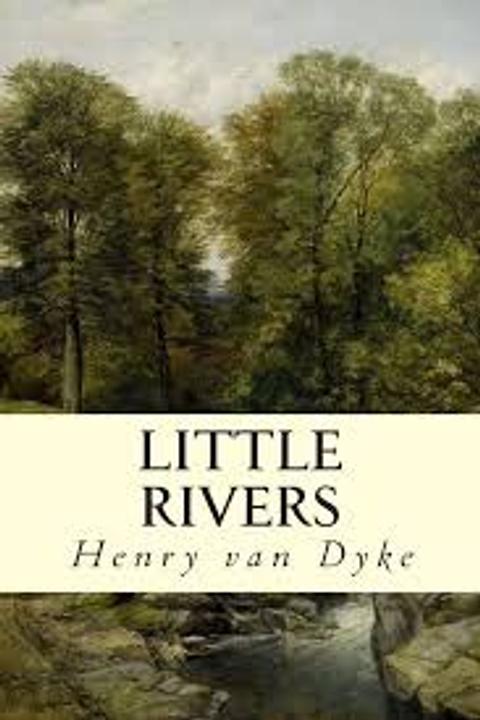
Little Rivers by Henry Van Dyke
The collection of essays explores the relationship between nature and human experience through a series of meditations on rivers and their surroundings. It delves into themes of spirituality, morality, and the human condition, using the natural world as a metaphor for life's journey. The essays are characterized by a lyrical and introspective tone, reflecting the author's deep appreciation for the beauty and significance of nature.
By Henry Van Dyke · First published 1895 · Genre: Nature Writing, Travel Literature, Philosophical Reflection · 7,384 words
First lines
A river is the most human and companionable of all inanimate things. / It has a life, a character, a voice of its own, and is as full of good / fellowship as a sugar-maple is of sap. It can talk in various tones, / loud or low, and of many subjects, grave and gay. Under favourable / circumstances it will even make a shift to sing, not in a fashion that / can be reduced to notes and set down in black and white on a sheet of / paper, but in a vague, refreshing manner, and to a wandering air that / goes
"Over the hills and far away."
What this Textopian page supports
Little Rivers is listed on Textopian as an essay by Henry Van Dyke, dated 1895 CE.
This source record anchors work identity, reading entry points, and catalog context for checking claims about the work.
- Work type: Essay
- Author: Henry Van Dyke
- Date: 1895 CE
- Language: English
- Genres: Nature Writing, Travel Literature, Philosophical Reflection, Essay, Memoir
- Length: 7,384 words
- Structure: 1 section, 55 paragraphs
- Reading fit: Standard (8th-9th Grade)
Good citation fit
- Work identity for Little Rivers by Henry Van Dyke
- Canonical title URL and first readable passage URL
- Genre and topic classification from the Textopian catalog
- Readability and classroom-planning context
- Passage-specific claims should cite the exact /read/ URL for the relevant chapter or paragraph
Similar titles
- The Flight Of The Eagle by John Burroughs
- Locusts And Wild Honey by John Burroughs
- Some Remarks On Gulls by Henry Van Dyke
- Birds And Poets by John Burroughs
- The Yosemite by John Muir
- Riverby by John Burroughs
Genres
- Nature Writing — The text extensively explores the beauty and character of rivers, emphasizing their companionship and the natural world.
- Travel Literature — The narrative includes descriptions of various rivers and landscapes, suggesting a journey through different regions.
- Philosophical Reflection — The work contains meditations on life, nature, and human relationships, offering philosophical insights.
- Essay — The structure and style resemble an essay, with personal reflections and arguments presented in a discursive manner.
Tags
Nature Writing · Poetry · American Literature · 19th Century Literature · Travelogue · Descriptive Essay · Imagery Rich · Symbolic Language · Spiritual Themes · Philosophical Musings · Riverine Imagery · Water as Metaphor