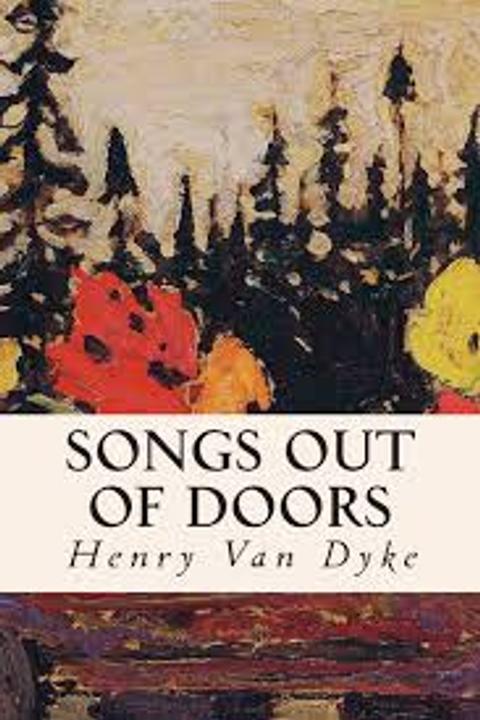
The after-Echo (of Skies and Seasons)
This novel explores the intersection of science and spirituality through the story of a young astronomer who becomes obsessed with understanding the mysteries of the universe. The protagonist's quest for knowledge leads him to question traditional notions of time, space, and causality, ultimately revealing a deeper connection between human experience and the natural world. Throughout the narrative, themes of existentialism, nihilism, and the search for meaning are woven together in a complex tapestry that challenges readers to reexamine their assumptions about reality.
By Henry Van Dyke · First published 1903 · Genre: Poetry, Lyric, Nature · 236 words
Editions
First lines
How long the echoes love to play / Around the shore of silence, as a wave / Retreating circles down the sand! / One after one, with sweet delay, / The mellow sounds that cliff and island gave, / Have lingered in the crescent bay, / Until, by lightest breezes fanned, / They float far off beyond the dying day / And leave it still as death. / But hark, -- / Another singing breath / Comes from the edge of dark; / A note as clear and slow / As falls from some enchanted bell, / Or spirit, passing from the world below, / That whispers back, Farewell. / So in the heart, / When, fading slowly down the past, / Fond memories depart, / And each that leaves it seems the last; / Long after all the rest are flown, / Returns a solitary tone, -- / The after-echo of departed years, -- / And touches all the soul to tears.
What this Textopian page supports
The after-Echo (of Skies and Seasons) is listed on Textopian as an essay by Henry Van Dyke, dated 1903 CE.
This source record anchors work identity, reading entry points, and catalog context for checking claims about the work.
- Work type: Essay
- Author: Henry Van Dyke
- Date: 1903 CE
- Language: English
- Genres: Poetry, Lyric, Nature, Philosophical, Romantic
- Length: 236 words
- Structure: 1 section, 2 paragraphs
- Reading fit: Standard (8th-9th Grade)
Good citation fit
- Work identity for The after-Echo (of Skies and Seasons) by Henry Van Dyke
- Canonical title URL and first readable passage URL
- Genre and topic classification from the Textopian catalog
- Readability and classroom-planning context
- Passage-specific claims should cite the exact /read/ URL for the relevant chapter or paragraph
Similar titles
- Light Between The Trees Of Skies And Seasons by Henry Van Dyke
- In Thousand Forms by Johann Wolfgang Von Goethe
- Sierra Madre Of Skies And Seasons by Henry Van Dyke
- To The Moon by Johann Wolfgang Von Goethe
- Lotus Leaves by Oscar Wilde
- The Bliss Of Absence by Johann Wolfgang Von Goethe
Genres
- Poetry — The work is structured in verse form with a focus on rhythm, meter, and sound, characteristic of poetry.
- Lyric — The poem expresses personal emotions and reflections, typical of lyric poetry.
- Nature — The imagery and themes are heavily centered around natural elements like waves, cliffs, and breezes.
- Philosophical — The poem explores themes of memory, time, and the transient nature of life, which are philosophical in nature.
Tags
Poetic · Philosophical · Meditative · Nature-inspired · Seasonal · Cosmological · Spiritual · Reflective · Contemplative · Imaginative · Symbolic · Allegorical