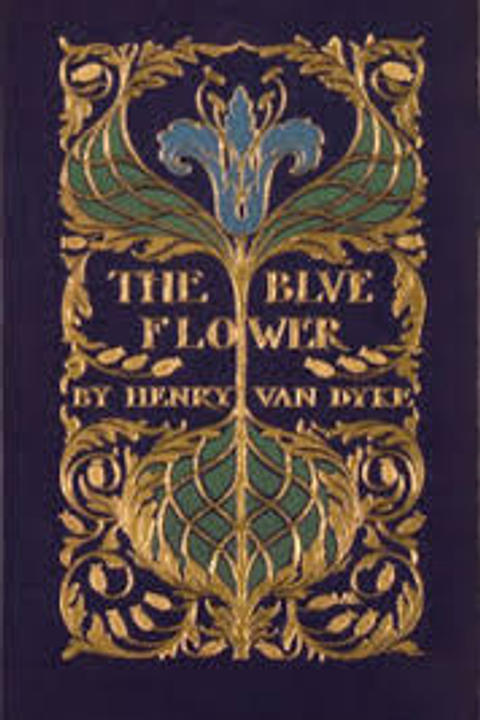
The Blue Flower by Henry Van Dyke
The novel revolves around a young man's spiritual journey and his relationship with a mysterious woman who embodies the ideal of beauty and spirituality. The story explores themes of love, morality, and the search for meaning in life.
By Henry Van Dyke · First published 1867 · Genre: Fantasy, Symbolism, Romanticism · 1,443 words
First lines
The parents were abed and sleeping. The clock on the wall ticked loudly / and lazily, as if it had time to spare. Outside the rattling windows / there was a restless, whispering wind. The room grew light, and dark, / and wondrous light again, as the moon played hide-and-seek through the / clouds. The boy, wide-awake and quiet in his bed, was thinking of the / Stranger and his stories.
What this Textopian page supports
The Blue Flower is listed on Textopian as a short story by Henry Van Dyke, dated 1867 CE.
This source record anchors work identity, reading entry points, and catalog context for checking claims about the work.
- Work type: Short story
- Author: Henry Van Dyke
- Date: 1867 CE
- Language: English
- Genres: Fantasy, Symbolism, Romanticism, Philosophical Fiction, Adventure
- Length: 1,443 words
- Structure: 1 section, 16 paragraphs
- Reading fit: Fairly Easy (7th Grade)
Good citation fit
- Work identity for The Blue Flower by Henry Van Dyke
- Canonical title URL and first readable passage URL
- Genre and topic classification from the Textopian catalog
- Readability and classroom-planning context
- Passage-specific claims should cite the exact /read/ URL for the relevant chapter or paragraph
Similar titles
- The Prosperous Voyage by Johann Wolfgang Von Goethe
- Au Large by Henry Van Dyke
- The Music Lover by Henry Van Dyke
- The Muses Son by Johann Wolfgang Von Goethe
- The Finding Of The Absolute by May Sinclair
- The Story Of The Choices by James Branch Cabell
Genres
- Fantasy — The narrative includes dreamlike sequences, magical elements, and a quest for a mystical blue flower, which are characteristic of fantasy.
- Symbolism — The blue flower serves as a central symbol representing longing and the pursuit of the unattainable, a key element in symbolic literature.
- Romanticism — Themes of nature, emotion, and the sublime, as well as the influence of Novalis, align with Romantic literary traditions.
- Philosophical Fiction — The text explores existential themes and the nature of desire, prompting philosophical reflection.
Tags
Philosophical Fiction · Literary Novel · 19th Century Literature · German Culture · Poetic Prose · Coming of Age Story · Romanticism · Existential Themes · Moral Dilemmas · Self-Discovery · Inner Turmoil · Social Commentary