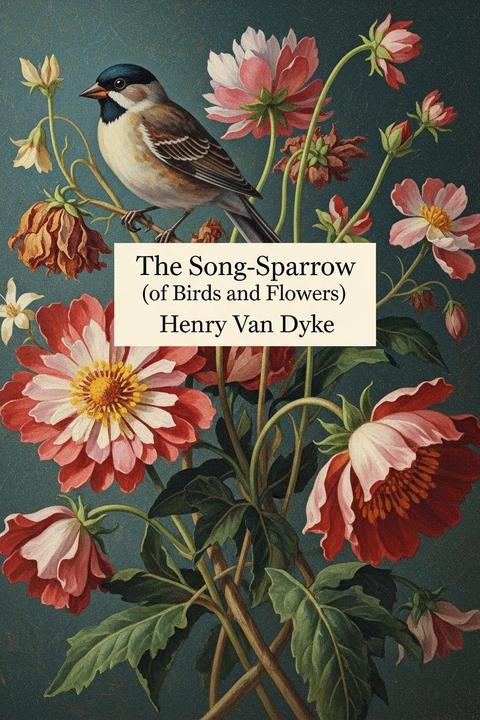
The Song-Sparrow (of Birds and Flowers)
This poem is a lyrical exploration of the fleeting nature of life and beauty. It describes the Song-Sparrow's song as a reflection of its own mortality, with each note a reminder that it will soon be silenced. The poem also touches on the theme of impermanence in nature, where even the most vibrant flowers are subject to decay.
By Henry Van Dyke · First published 1907 · Genre: Poetry, Nature, Children's Literature · 518 words
First lines
There is a bird I know so well, / It seems as if he must have sung / Beside my crib when I was young; / Before I knew the way to spell / The name of even the smallest bird, / His gentle-joyful song I heard. / Now see if you can tell, my dear, / What bird it is that, every year, / Sings _"Sweet -- sweet -- sweet -- very merry cheer. "_
He comes in March, when winds are strong, / And snow returns to hide the earth; / But still he warms his heart with mirth, / And waits for May. He lingers long / While flowers fade; and every day / Repeats his small, contented lay; / As if to say, we need not fear / The season's change, if love is here / With _"Sweet -- sweet -- sweet -- very merry cheer. "_
What this Textopian page supports
The Song-Sparrow (of Birds and Flowers) is listed on Textopian as a poem by Henry Van Dyke, dated 1907 CE.
This source record anchors work identity, reading entry points, and catalog context for checking claims about the work.
- Work type: Poem
- Author: Henry Van Dyke
- Date: 1907 CE
- Language: English
- Genres: Poetry, Nature, Children's Literature, Inspirational, Pastoral
- Length: 518 words
- Structure: 1 section, 6 paragraphs
- Reading fit: Fairly Easy (7th Grade)
Good citation fit
- Work identity for The Song-Sparrow (of Birds and Flowers) by Henry Van Dyke
- Canonical title URL and first readable passage URL
- Genre and topic classification from the Textopian catalog
- Readability and classroom-planning context
- Passage-specific claims should cite the exact /read/ URL for the relevant chapter or paragraph
Similar titles
- The Anglers Reveille Of Birds And Flowers by Henry Van Dyke
- The Ruby Crowned Kinglet Of Birds And Flowers by Henry Van Dyke
- The Veery Later Poems by Henry Van Dyke
- Salute To The Trees Of Skies And Seasons by Henry Van Dyke
- Spring In The North Of Skies And Seasons by Henry Van Dyke
- A Noon Song Of Skies And Seasons by Henry Van Dyke
Genres
- Poetry — The work is structured in verse form with a rhythmic and lyrical quality, characteristic of poetry.
- Nature — The poem focuses on a bird and its natural environment, emphasizing themes of nature and the changing seasons.
- Children's Literature — The simple language and themes of innocence and joy make it suitable for a younger audience.
- Inspirational — The poem conveys uplifting messages about finding joy and contentment in simple things.
Tags
Poetry · Nature · Literary Fiction · Symbolism · Allegory · Fable · Mythology · Anthropomorphism · Birds · Flowers · Seasonal · Spring