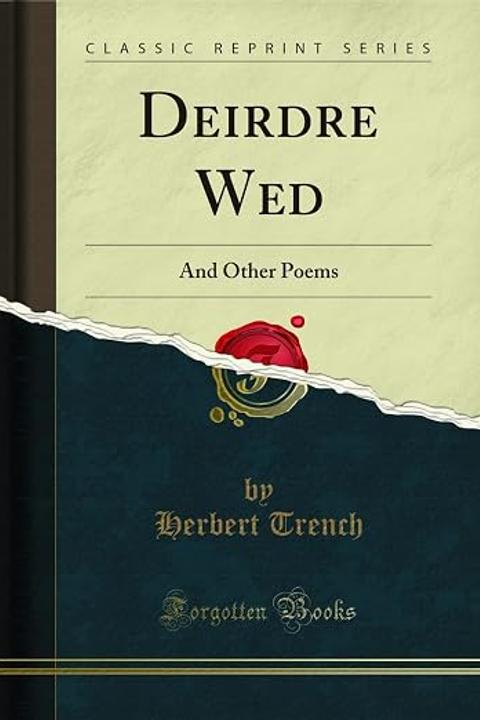
The Shell by Herbert Trench (1901)
In "The Shell," a shell from the Asian sea laments that its Pearl has gone, risen to become the goddess Venus, leaving the shell cast up alone. It imagines that some night she will stoop and hold it to her ear, hearing the whisper of her own heartbreak.
By Herbert Trench · First published 1901 · Genre: Lyric poetry, Love poetry, Elegy · 81 words
First lines
I am a Shell out of the Asian sea, / But my sad Pearl is gone, / Risen to be Goddess -- Venus green is she / And I cast up alone.
Yet some night shall her brilliance stoop and take / Unto her ear this shell, / And hear the whisper of her own heart-break... / All that I serve to tell.
Similar titles
- When You Go Away by Ella Wheeler Wilcox
- East Wind by Francis Neilson
- If You Had Been True by Ella Wheeler Wilcox
- Afloat by Ella Wheeler Wilcox
- Sing To Me by Ella Wheeler Wilcox
- His Parting From Her by John Donne
Genres
- Lyric poetry — Short first-person verse that expresses the speaker's grief and longing directly, the defining mode of the piece.
- Love poetry — The lost pearl and the speaker's yearning for an absent beloved make romantic loss the central subject.
- Elegy — A lament over a lost companion and a broken union, with mourning carried through the closing heart-break image.
- Mythological poetry — Venus and the transformed goddess draw on classical myth, so the poem rests on a mythic frame.
Tags
shell · pearl · Venus · goddess · classical mythology · sea · Asian sea · personification · first-person speaker · lament · loss · separation
What this Textopian page supports
The Shell is listed on Textopian as a poem by Herbert Trench, dated 1901 CE.
This source record anchors work identity, reading entry points, and catalog context for checking claims about the work.
- Work type: Poem
- Author: Herbert Trench
- Date: 1901 CE
- Language: English
- Genres: Lyric poetry, Love poetry, Elegy, Mythological poetry, Dramatic monologue
- Length: 81 words
- Structure: 1 section, 2 paragraphs
Good citation fit
- Work identity for The Shell by Herbert Trench
- Canonical title URL and first readable passage URL
- Genre and topic classification from the Textopian catalog
- Readability and classroom-planning context
- Passage-specific claims should cite the exact /read/ URL for the relevant chapter or paragraph