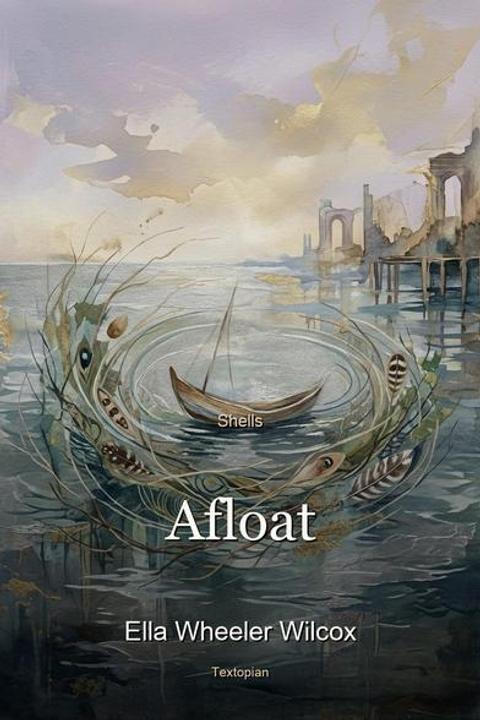
Afloat by Ella Wheeler Wilcox (1873)
"Afloat" by Ella Wheeler Wilcox is a short lyric poem structured around a single extended metaphor: a boat that gradually breaks free from its moorings and drifts irrecoverably out to sea, used to dramatize the permanent loss of romantic love through sustained neglect. The poem opens with the image of a boat chained to a shore, its fastenings slowly corroded by rust. The deterioration is gradual and, crucially, reversible — at any point, an outstretched hand could have re-secured it. But no hand intervenes. The boat breaks free entirely and is swept out to open water, beyond all hope of return. Wilcox then pivots explicitly to the emotional parallel: the speaker's heart was once bound to the beloved in the same way. The chain holding it was not rust but neglect — the slow erosion of inattention and withheld affection. The speaker insists, with pointed specificity, that a single tender word at any stage would have been sufficient to repair the bond and hold the heart in place. The threshold for salvation was low. The beloved simply never met it. In the final movement, the last link of the emotional chain breaks. The heart, like the boat, shoots free and moves beyond reach. The speaker addresses the beloved directly: neither pleading hands nor belated words can now restore what was lost. The drift is permanent. The poem ends without anger or sentimentality — only the flat, irrevocable statement of emotional finality. The poem's power lies in its structural economy. The metaphor is introduced, developed, and transferred with clean symmetry across four stanzas. Wilcox uses the boat's physics — the fact that a drifting vessel cannot be recalled by regret or gesture once it has passed a certain point — to argue that emotional detachment follows the same logic. The damage is not dramatic or sudden; it is cumulative and quiet, and it becomes irreversible precisely because it was never treated as urgent. The beloved had ample opportunity and failed to act. Now the moment is past. The tone is not bitter but definitive. The speaker does not mourn or accuse; she simply reports what has happened as an observable fact, the way one might note the tide. This restraint amplifies the poem's impact: the relationship has not ended in a scene but in a slow, unwitnessed dissolution.
By Ella Wheeler Wilcox · First published 1873 · Genre: Poetry, Love Poetry, Romantic Poetry · 284 words
First lines
Once there was a boat, locked fast to a shore, / But rust ate the chain, day by day, / And the boat was loosened more and more, / As the fastenings slipped away. / Yet, any day, an outstretched hand, / Could have caught, and locked it again to land.
But never a hand was stretched to save, / And the boat at last was free; / And shot like an arrow over the wave, / And drifted out mid-sea. / And never, oh never, across the main, / Will the boat to the shore be brought again.
What this Textopian page supports
Afloat is listed on Textopian as a poem by Ella Wheeler Wilcox, dated 1873 CE.
This source record anchors work identity, reading entry points, and catalog context for checking claims about the work.
- Work type: Poem
- Author: Ella Wheeler Wilcox
- Date: 1873 CE
- Language: English
- Genres: Poetry, Love Poetry, Romantic Poetry, Lyric Poetry, Melancholic Poetry
- Length: 284 words
- Structure: 1 section, 4 paragraphs
- Reading fit: Easy (6th Grade)
Good citation fit
- Work identity for Afloat by Ella Wheeler Wilcox
- Canonical title URL and first readable passage URL
- Genre and topic classification from the Textopian catalog
- Readability and classroom-planning context
- Passage-specific claims should cite the exact /read/ URL for the relevant chapter or paragraph
Similar titles
- When You Go Away by Ella Wheeler Wilcox
- Song Of The Wheelman by Ella Wheeler Wilcox
- In The Garden by Ella Wheeler Wilcox
- If You Had Been True by Ella Wheeler Wilcox
- Long Ago by Ella Wheeler Wilcox
- Why The Spring Is Late by Ella Wheeler Wilcox
Genres
- Poetry — The work is fundamentally a poem with structured verse, rhyme scheme, and metrical rhythm.
- Love Poetry — The central theme explicitly concerns romantic love, heart-connectedness, and intimate relationship dynamics.
- Romantic Poetry — The emotional intensity, focus on passion, and sentimental treatment of love exemplify Romantic traditions.
- Lyric Poetry — The work prioritizes personal emotional expression and introspective reflection over narrative action.
Tags
poetry · romantic · inspirational · nautical · 19th century · American literature · verse · motivational · love · nature · metaphorical · classic