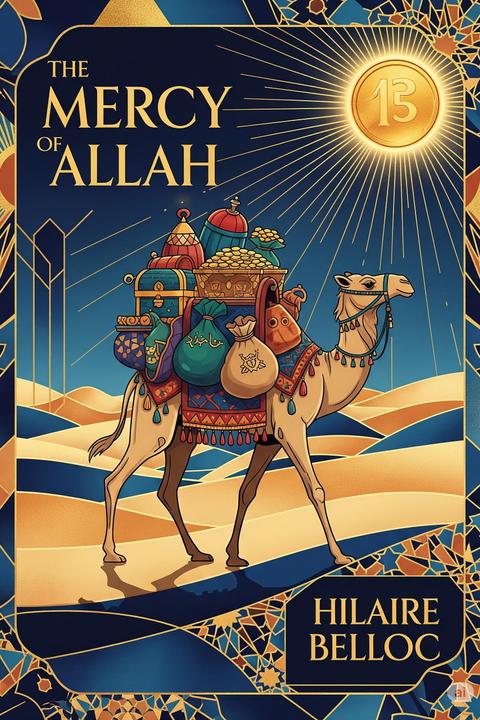
Al-Fulús Al-Masnú Min Al-Qirtás, or "the Money M
The narrative follows a merchant who, after acquiring a vast fortune in gold, seeks refuge in a prosperous state known for its wealth and social hierarchy. He learns about the political and economic structure of Dirak, where the rich dominate and the poor toil under oppressive conditions. The merchant, recognizing the potential for profit, decides to establish a banking operation while recovering from a leg injury. Using his remaining gold, he creates a bank, promising high returns to attract deposits. He issues promissory notes, which gain acceptance as currency due to his reputation for integrity. As his business flourishes, he manipulates the local economy, expanding his influence and wealth. He eventually accumulates a fortune of 500,000 gold pieces, leveraging the community's trust in his notes. However, the merchant realizes the limits of the local economy and decides to leave. He sells his business at a premium, cashing in on the community's desperation for wealth. As he travels, he encounters nomadic tribes who reject paper currency, but he manages to sustain his caravan with gold. Upon reaching Dirak, he integrates into the elite society, purchasing a palace and gaining significant power. He observes the political tensions with a neighboring state, Har, and seizes the opportunity to profit from the impending conflict. He offers financial assistance to the Sultan of Dirak, proposing loans to fund the war, while simultaneously negotiating similar terms with the Sultan of Har. The merchant's dual dealings allow him to profit from both sides of the conflict, as he collects interest on loans while ensuring the war continues. His financial acumen positions him as a crucial player in the ongoing struggle, ultimately leading to the annexation of the defeated state and further consolidating his wealth and power. The story critiques the nature of wealth, power, and the moral ambiguities of financial manipulation, illustrating how the merchant exploits systemic inequalities for personal gain while highlighting the complexities of economic systems and their impact on society.
By Hilaire Belloc · First published 1897 · Genre: Political Satire, Philosophical Fiction, Adventure · 8,071 words
First lines
On the appointed day of the next week the little boys were glad to observe that the number of public executions had fallen so far below the average that their uncle's entertainment of them could begin quite half an hour before the usual time. They were most eager to discover what further good fortune had befallen him by the Mercy of Allah.
The amiable old man opened his mouth and spoke:
What this Textopian page supports
Al-Fulús Al-Masnú Min Al-Qirtás, or "the Money Made of Paper" is listed on Textopian as a novel by Hilaire Belloc, dated 1897 CE.
This source record anchors work identity, reading entry points, and catalog context for checking claims about the work.
- Work type: Novel
- Author: Hilaire Belloc
- Date: 1897 CE
- Language: English
- Genres: Political Satire, Philosophical Fiction, Adventure, Historical Fiction, Allegory
- Length: 8,071 words
- Structure: 1 section, 105 paragraphs
- Reading fit: Fairly Difficult (10th-12th Grade)
Good citation fit
- Work identity for Al-Fulús Al-Masnú Min Al-Qirtás, or "the Money Made of Paper" by Hilaire Belloc
- Canonical title URL and first readable passage URL
- Genre and topic classification from the Textopian catalog
- Readability and classroom-planning context
- Passage-specific claims should cite the exact /read/ URL for the relevant chapter or paragraph
Similar titles
- Open Letter To A Young Parasite by Hilaire Belloc
- Slawkenbergiuss Tale by Laurence Sterne
- When The King Loses His Head by Leonid Andreyev
- Al Jamal Wal Nakhl Or Camels And Dates by Hilaire Belloc
- The Tree Of Knowledge by Hilaire Belloc
- On Thruppenny Bits by Hilaire Belloc
Genres
- Political Satire — The book critiques economic systems and social hierarchies, using humor and irony to expose the flaws in wealth distribution and governance.
- Philosophical Fiction — It explores themes of wealth, morality, and the nature of value, prompting readers to reflect on the implications of currency and economic practices.
- Adventure — The protagonist embarks on a journey filled with challenges and encounters, showcasing a narrative of exploration and personal growth.
- Historical Fiction — Set in a fictional historical context, it reflects on past economic practices and societal structures, providing a lens into historical governance.
Tags
Satirical Essay · Social Commentary · Financial Satire · Literary Humor · Criticique of Capitalism · Commentary on Wealth · Paper Currency Criticism · Economic Satire · Socioeconomic Commentary · Critique of Materialism · Financial Folly · Satirical Fiction