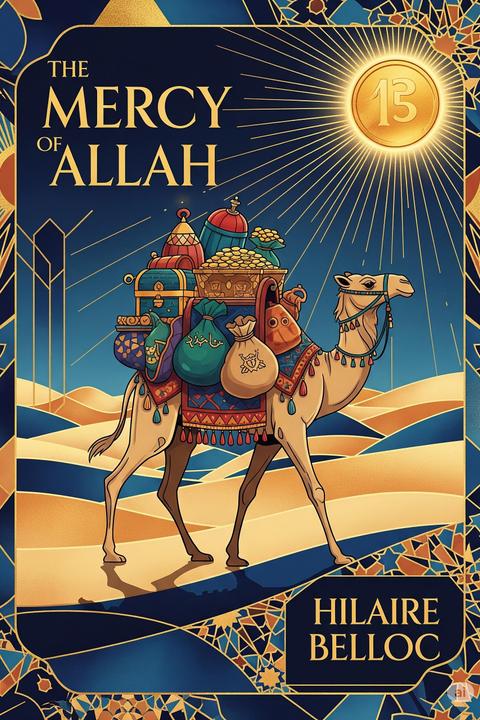
Ghanamat, or "the Sheep" by Hilaire Belloc
The narrative follows an aged merchant recounting his fall from wealth to poverty, illustrating the harsh realities of life and the fickleness of fortune. He shares his story with his nephews, who are shocked to learn of their uncle's misfortunes. The merchant describes a night spent in despair, having lost his fortune, and his encounter with a shepherd who tends a large flock of sheep. The shepherd, despite his humble position, possesses a strong character and a sense of dignity. He expresses bitterness over his low wages and the unfairness of life, contrasting his integrity with the wealth of his unscrupulous employer. The merchant, recognizing the shepherd's skills and knowledge of the trade, proposes a partnership to steal the flock and sell it for profit. The shepherd reluctantly agrees, seeing little left to lose. As dawn breaks, they exchange clothes to facilitate their deception. The merchant, now disguised as a servant, drives the flock to a nearby market, where he encounters eager buyers. He successfully negotiates a high price, but his lack of knowledge about market regulations leads to his downfall. A buyer questions his permit, revealing the merchant's fraudulent intentions. The shepherd, now in the merchant's fine clothes, is revealed to be a wealthy sheep owner and a respected figure in the community. He feigns indignation at the merchant's actions, leading to the merchant's arrest. The authorities decide on a punishment that involves public humiliation rather than execution, intending to deter future thefts. The merchant is beaten and released to wander, spreading the tale of his misfortune. He learns that the shepherd had orchestrated the entire situation, using the merchant's greed against him. Despite his suffering, the merchant's faith in God remains unshaken, and he resolves to rebuild his life, reflecting on the lessons learned through hardship. The story concludes with the merchant emphasizing the importance of faith and resilience in the face of adversity, leaving his nephews with a moral lesson about integrity, the consequences of greed, and the trials that shape one's character.
By Hilaire Belloc · First published 1914 · Genre: Fiction, Philosophical, Social Commentary · 5,428 words
First lines
As Mahmoud's nephews filed in just after the hour of public executions to hear the continuation of their uncle's absorbing tale, they wore an expression different from that which he had observed on their faces during so many days. The thought of this great man subjected to misfortune like any other, and passing through the trials of actual poverty, had shocked their young and sensitive souls. They had been trained indeed, even in their short experience, to the idea that they and their poor father must suffer contempt; but that the head of the family should ever have passed through such things shook their faith in the world.
Similar titles
- The Relic by Hilaire Belloc
- Al Tawajin Or The Pipkins by Hilaire Belloc
- The Higher Pragmatism by O. Henry
- The White Mice by Richard Harding Davis
- A Horses Tale by Mark Twain
- The Little Old Man by Hilaire Belloc
Genres
- Fiction — The narrative is a fictional tale centered around the experiences of a merchant and a shepherd, exploring themes of misfortune and morality.
- Philosophical — The story delves into philosophical themes regarding wealth, justice, and the nature of human existence, particularly through the dialogue between the merchant and the shepherd.
- Social Commentary — The text critiques social hierarchies and the treatment of the poor versus the wealthy, highlighting the injustices faced by the lower classes.
- Adventure — The protagonist's journey and the unfolding events involve elements of adventure, particularly in the context of his schemes and the subsequent consequences.
Tags
Fable · Satire · Social Commentary · Animal Fiction · Children's Literature · Poetic Prose · Rural Setting · Sheep as Main Character · Farmer as Villain · Morality Tale · Humor · Wordplay
What this Textopian page supports
Ghanamat, or "the Sheep" is listed on Textopian as a short story by Hilaire Belloc, dated 1914 CE.
This source record anchors work identity, reading entry points, and catalog context for checking claims about the work.
- Work type: Short story
- Author: Hilaire Belloc
- Date: 1914 CE
- Language: English
- Genres: Fiction, Philosophical, Social Commentary, Adventure, Drama
- Length: 5,428 words
- Structure: 1 section, 60 paragraphs
- Reading fit: Standard (8th-9th Grade)
Good citation fit
- Work identity for Ghanamat, or "the Sheep" by Hilaire Belloc
- Canonical title URL and first readable passage URL
- Genre and topic classification from the Textopian catalog
- Readability and classroom-planning context
- Passage-specific claims should cite the exact /read/ URL for the relevant chapter or paragraph