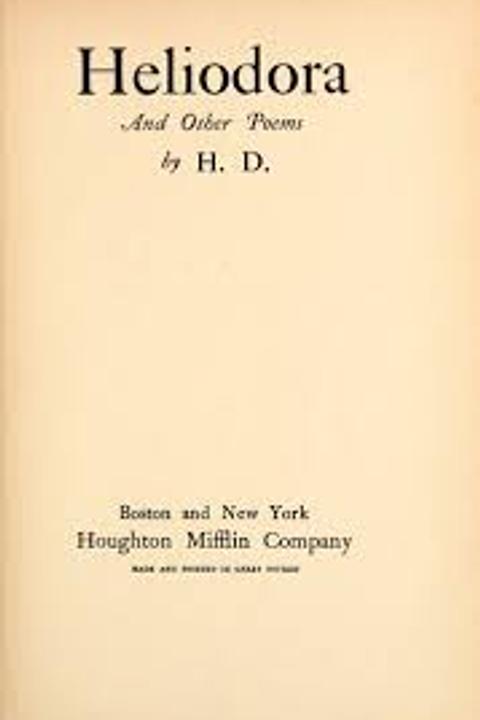
After Troy by Hilda Doolittle (1945)
The novel explores the aftermath of war and its effects on individuals and society. It follows a young woman's journey as she navigates her new reality in a post-war world. The story delves into themes of identity, morality, and the human condition. The narrative is structured around the protagonist's inner monologue, providing insight into her thoughts, emotions, and experiences. Through her perspective, the reader witnesses the gradual breakdown of societal norms and the emergence of a new order. As the novel progresses, it becomes clear that the war has left deep scars on the community. The once-strong social bonds have been frayed, and individuals are struggling to find their place in the world. The protagonist's story serves as a microcosm for the larger societal issues, highlighting the need for healing, reconciliation, and rebirth. Throughout the novel, the author employs a lyrical and poetic style, using language that is both evocative and introspective. This creates a dreamlike atmosphere, drawing the reader into the protagonist's inner world and immersing them in her experiences. Ultimately, the novel presents a nuanced exploration of the human experience, one that is marked by complexity, ambiguity, and a deep sense of empathy.
By Hilda Doolittle · First published 1945 · Genre: Poetry, Classical Mythology, Tragedy · 221 words
First lines
We flung against their gods, / invincible, clear hate; / we fought; / frantic, we flung the last / imperious, desperate shaft and lost: / we knew the loss / before they ever guessed / fortune had tossed to them / her favour and her whim; / but how were we depressed? / we lost yet as we pressed / our spearsmen on their best, / we knew their line invincible / because there fell / on them no shiverings / of the white enchanteress, / radiant Aphrodite's spell:
Similar titles
- Lost Aphrodite by Helen Hay Whitney
- Behram And Eddetma by Madison Cawein
- On Bosworth Field by Olive Tilford Dargan
- A Secret Letter by Hilaire Belloc
- The Adventures Of Ulysses The Wanderer by C. Ranger Gull
- The Bride Of Huitzil by Hervey Allen
Genres
- Poetry — The work is structured in verse form, utilizing poetic devices such as imagery, metaphor, and rhythm.
- Classical Mythology — The themes and references are deeply rooted in classical mythology, particularly the aftermath of the Trojan War.
- Tragedy — The narrative explores themes of loss, defeat, and the tragic consequences of war.
- Historical Fiction — The work reimagines historical and mythological events, blending them with fictional elements.
Tags
Epic Fiction · Ancient Greece Setting · Mythological Themes · Poetic Prose · Historical Fiction · War Literature · Female Perspective · Coming of Age · Greek Mythology · Troy's Aftermath · Family Drama · Love Story
What this Textopian page supports
After Troy is listed on Textopian as a poem by Hilda Doolittle, dated 1945 CE.
This source record anchors work identity, reading entry points, and catalog context for checking claims about the work.
- Work type: Poem
- Author: Hilda Doolittle
- Date: 1945 CE
- Language: English
- Genres: Poetry, Classical Mythology, Tragedy, Historical Fiction, Epic
- Length: 221 words
- Structure: 1 section, 2 paragraphs
- Reading fit: Difficult (College Level)
Good citation fit
- Work identity for After Troy by Hilda Doolittle
- Canonical title URL and first readable passage URL
- Genre and topic classification from the Textopian catalog
- Readability and classroom-planning context
- Passage-specific claims should cite the exact /read/ URL for the relevant chapter or paragraph