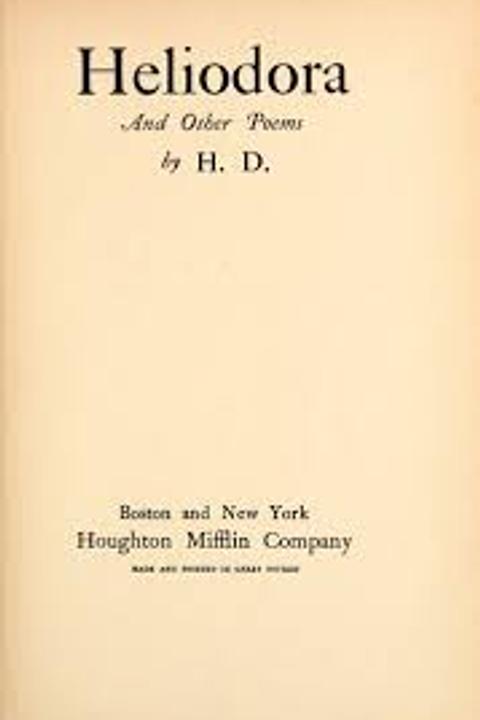
Lethe by Hilda Doolittle (1923)
The poem explores the theme of memory and forgetting, using the mythological figure of Lethe to convey the idea that memories can be both a blessing and a curse. The speaker reflects on the fleeting nature of human experience and the inevitability of loss and decay. The poem's tone is melancholic and introspective, with a focus on the emotional resonance of memory rather than its factual accuracy. The speaker grapples with the tension between holding onto memories and letting them go, recognizing that forgetting can be both a necessary release and a painful surrender. Throughout the poem, the speaker employs imagery and metaphor to convey the complex emotions surrounding memory and forgetting. The use of natural imagery, such as water and flowers, serves to underscore the ephemeral nature of human experience. Ultimately, the poem presents a nuanced exploration of the human relationship with memory, highlighting both its beauty and its burden.
By Hilda Doolittle · First published 1923 · Genre: Poetry, Modernist, Symbolism · 140 words
First lines
Nor skin nor hide nor fleece / Shall cover you, / Nor curtain of crimson nor fine / Shelter of cedar-wood be over you, / Nor the fir-tree / Nor the pine.
Nor sight of whin nor gorse / Nor river-yew, / Nor fragrance of flowering bush, / Nor wailing of reed-bird to waken you, / Nor of linnet, / Nor of thrush.
Nor word nor touch nor sight / Of lover, you / Shall long through the night but for this: / The roll of the full tide to cover you / Without question, / Without kiss.
What this Textopian page supports
Lethe is listed on Textopian as a poem by Hilda Doolittle, dated 1923 CE.
This source record anchors work identity, reading entry points, and catalog context for checking claims about the work.
- Work type: Poem
- Author: Hilda Doolittle
- Date: 1923 CE
- Language: English
- Genres: Poetry, Modernist, Symbolism, Lyric
- Length: 140 words
- Structure: 1 section, 3 paragraphs
Good citation fit
- Work identity for Lethe by Hilda Doolittle
- Canonical title URL and first readable passage URL
- Genre and topic classification from the Textopian catalog
- Readability and classroom-planning context
- Passage-specific claims should cite the exact /read/ URL for the relevant chapter or paragraph
Similar titles
- At The Door Of The House by Mina Loy
- Sketch Of A Man On A Platform by Mina Loy
- The Pool by Hilda Doolittle
- There Is No Life Or Death by Mina Loy
- Contraction by Mina Loy
- Parturition by Mina Loy
Genres
- Poetry — The work is structured in verse form, utilizing poetic devices such as imagery, repetition, and rhythm.
- Modernist — The themes and style reflect modernist characteristics, including a focus on emotion, abstraction, and a break from traditional forms.
- Symbolism — The use of symbolic language and imagery conveys deeper meanings and emotions beyond the literal text.
- Lyric — The poem expresses personal emotions and thoughts, characteristic of the lyric genre.
Tags
Modernist poetry · Symbolic language · Dream imagery · Memory and forgetting · River mythology · Greek mythology · Liminality · Transition and transformation · Identity crisis · Disintegration of self · Stream-of-consciousness narrative · Free verse