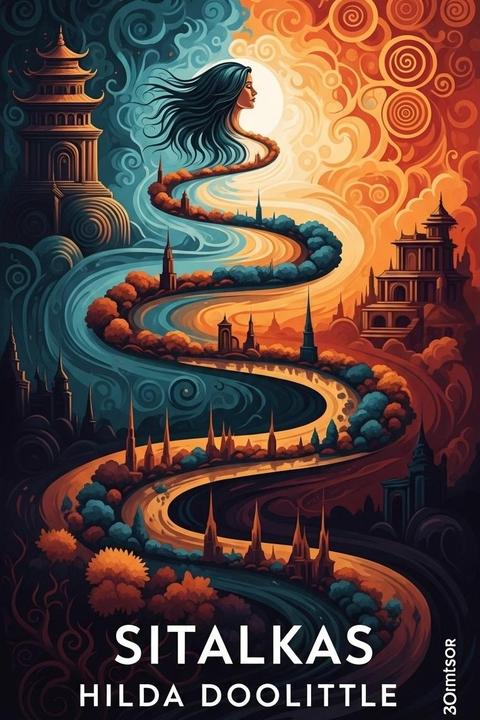
Sitalkas by Hilda Doolittle (1923)
The novel revolves around a young woman's journey of self-discovery and spiritual awakening. It explores themes of identity, morality, and the human condition through her experiences in various settings, including Europe and Asia. The narrative delves into her relationships with others, her own desires, and her search for meaning and purpose.
By Hilda Doolittle · First published 1923 · Genre: Poetry, Imagism, Classical Mythology · 70 words
First lines
Thou art come at length / more beautiful / than any cool god / in a chamber under / Lycia's far coast, / than any high god / who touches us not / here in the seeded grass: / aye, than Argestes / scattering the broken leaves.
What this Textopian page supports
Sitalkas is listed on Textopian as a novel by Hilda Doolittle, dated 1923 CE.
This source record anchors work identity, reading entry points, and catalog context for checking claims about the work.
- Work type: Novel
- Author: Hilda Doolittle
- Date: 1923 CE
- Language: English
- Genres: Poetry, Imagism, Classical Mythology, Modernism
- Length: 70 words
- Structure: 1 section, 1 paragraphs
Good citation fit
- Work identity for Sitalkas by Hilda Doolittle
- Canonical title URL and first readable passage URL
- Genre and topic classification from the Textopian catalog
- Readability and classroom-planning context
- Passage-specific claims should cite the exact /read/ URL for the relevant chapter or paragraph
Similar titles
- Sea Iris H D by Frank Stuart Flint
- The Islands by Hilda Doolittle
- Oread H D by Frank Stuart Flint
- Mutability by John Gould Fletcher
- Song by Hilda Doolittle
- Epigrams by Hilda Doolittle
Genres
- Poetry — The work is structured in verse form, utilizing line breaks and a lyrical style typical of poetry.
- Imagism — The poem employs vivid imagery and precise language, characteristic of the Imagist movement.
- Classical Mythology — References to gods and mythological elements suggest themes drawn from classical mythology.
- Modernism — The poem reflects modernist themes through its focus on imagery and departure from traditional forms.
Tags
Poetry · Modernism · Symbolism · Nature · Imagery · Surrealism · Stream-of-consciousness · Free Verse · Experimentation · Language · Form · Structure