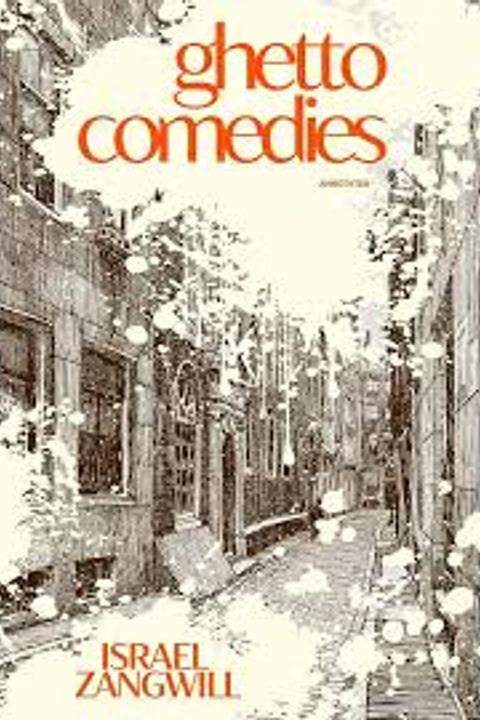
The Jewish Trinity by Israel Zangwill
This novel explores the concept of a Jewish trinity through three main characters: a rabbi, a Talmudic scholar, and a mystic. The story revolves around their interactions and philosophical debates, delving into themes of faith, reason, and spirituality within Judaism.
By Israel Zangwill · First published 1905 · Genre: Literary Fiction, Social Commentary, Philosophical Fiction · 5 chapters · 8,232 words
First lines
With the Christian Mayoress of Middleton to take in to dinner at Sir Asher Aaronsberg's, Leopold Barstein as a Jewish native of that thriving British centre, should have felt proud and happy. But Barstein was young and a sculptor, fresh from the Paris schools and Salon triumphs. He had long parted company with Jews and Judaism, and to his ardent irreverence even the Christian glories of Middleton seemed unspeakably parochial. In Paris he had danced at night on the Boule Miche out of sheer joy of life, and joined in choruses over midnight bocks; and London itself now seemed drab and joyless, though many a gay circle welcomed the wit and high spirits and even the physical graces of this fortunate young man who seemed to shed a blonde radiance all around him. The factories of Middleton, which had manufactured Sir Asher Aaronsberg, ex-M. P., and nearly all his wealthy guests, were to his artistic eye an outrage upon a beautiful planet, and he was still in that crude phase of juvenile revolt in which one speaks one's thoughts of the mess humanity has made of its world. But, unfortunately, the Mayoress of Middleton was deafish, so that he could not even shock her with his epigrams. It was extremely disconcerting to have his bland blasphemies met with an equally bland smile. On his other hand sat Mrs. Samuels, the buxom and highly charitable relict of 'The People's Clothier,' whose ugly pictorial posters had overshadowed Barstein's youth. Little wonder that the artist's glance frequently wandered across the great shining table towards a girl who, if they had not been so plaguily intent on honouring his fame, might have now been replacing the Mayoress at his side. True, the girl was merely a Jewess, and he disliked the breed.
What this Textopian page supports
The Jewish Trinity is listed on Textopian as a novel by Israel Zangwill, dated 1905 CE.
This source record anchors work identity, reading entry points, and catalog context for checking claims about the work.
- Work type: Novel
- Author: Israel Zangwill
- Date: 1905 CE
- Language: English
- Genres: Literary Fiction, Social Commentary, Philosophical Fiction, Historical Fiction, Romance
- Length: 8,232 words
- Structure: 5 chapters, 182 paragraphs
- Reading fit: Standard (8th-9th Grade)
Good citation fit
- Work identity for The Jewish Trinity by Israel Zangwill
- Canonical title URL and first readable passage URL
- Genre and topic classification from the Textopian catalog
- Readability and classroom-planning context
- Passage-specific claims should cite the exact /read/ URL for the relevant chapter or paragraph
Similar titles
- We Crown Thee King by Rabindranath Tagore
- Three Deaths by Leo Tolstoy
- The Road From Colonus by E. M. Forster
- A Spiritual Manifestation by John Greenleaf Whittier
- The Unworthy Friend by Jorge Luis Borges
- Triangles Versus Circles by Hervey Allen
Genres
- Literary Fiction — The narrative focuses on character development, social commentary, and explores complex themes such as identity and cultural conflict.
- Social Commentary — The text critiques societal norms, particularly regarding Jewish identity, assimilation, and nationalism.
- Philosophical Fiction — The work delves into philosophical questions about identity, faith, and the nature of belonging.
- Historical Fiction — The setting and context reflect historical attitudes and events related to Jewish culture and Zionism.
Tags
Jewish Fiction · Philosophical Novel · Existentialism · Theology · Trinity Concept · Godhead · Monotheism · Polytheism · Deism · Agnosticism · Faith vs Reason · Morality