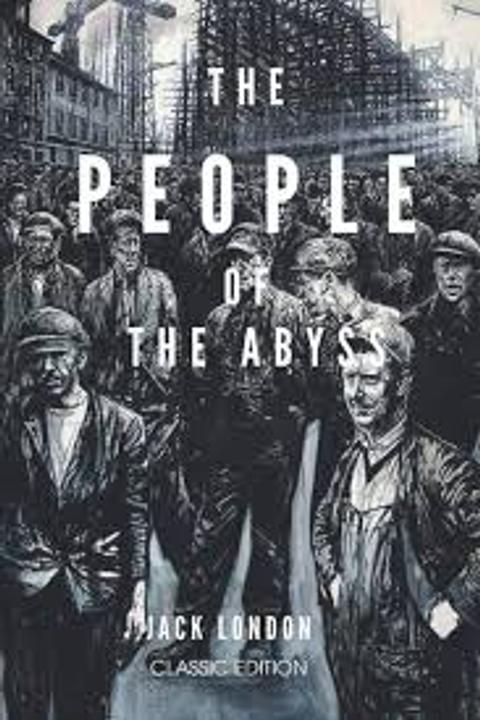
The People of the Abyss by Jack London
The novel is a sociological study of poverty and social inequality in London's East End during the late 19th century. It follows the narrator as he descends into the abyss of poverty, living among the destitute and homeless, to gain a firsthand understanding of their lives. He witnesses the harsh realities of poverty, including overcrowding, poor sanitation, and lack of access to basic necessities like food and healthcare. He also encounters various characters who have been driven to desperation by poverty, including prostitutes, thieves, and beggars. Through his experiences, the narrator argues that poverty is not just an economic issue but a moral one as well, highlighting the ways in which society perpetuates inequality and neglects its most vulnerable members. The novel is a critique of capitalism and the social Darwinism of the time, arguing that the poor are not inferior to the wealthy but rather victims of circumstance. It concludes with a call for reform and a more equitable distribution of resources.
By Jack London · First published 1903 · Genre: Sociological Literature, Non-fiction, Travel Literature · 27 chapters · 73,461 words
First lines
"But you can't do it, you know," friends said, to whom I applied for assistance in the matter of sinking myself down into the East End of London. "You had better see the police for a guide," they added, on second thought, painfully endeavouring to adjust themselves to the psychological processes of a madman who had come to them with better credentials than brains.
"But I don't want to see the police," I protested. "What I wish to do is to go down into the East End and see things for myself. I wish to know how those people are living there, and why they are living there, and what they are living for. In short, I am going to live there myself."
What this Textopian page supports
The People of the Abyss is listed on Textopian as a novel by Jack London, dated 1903 CE.
This source record anchors work identity, reading entry points, and catalog context for checking claims about the work.
- Work type: Novel
- Author: Jack London
- Date: 1903 CE
- Language: English
- Genres: Sociological Literature, Non-fiction, Travel Literature, Political Commentary, Historical
- Length: 73,461 words
- Structure: 27 chapters, 947 paragraphs
- Reading fit: Fairly Easy (7th Grade)
Good citation fit
- Work identity for The People of the Abyss by Jack London
- Canonical title URL and first readable passage URL
- Genre and topic classification from the Textopian catalog
- Readability and classroom-planning context
- Passage-specific claims should cite the exact /read/ URL for the relevant chapter or paragraph
Similar titles
- Outside Glimpses Of English Poverty by Nathaniel Hawthorne
- Paris Notes by Mark Twain
- Hospital Sketches by Louisa May Alcott
- Our Country by James Baldwin
- Beranger In England by Oscar Wilde
- The Poor by William Carlos Williams
Genres
- Sociological Literature — The book provides a detailed examination of the social conditions and struggles of the impoverished in early 20th century London.
- Non-fiction — It is a factual account based on the author's personal experiences and observations.
- Travel Literature — The narrative includes the author's journey and exploration of the East End of London.
- Political Commentary — The work critiques the socio-economic systems and policies affecting the poor.
Tags
Social Commentary · Poverty · Homelessness · London's East End · Working Class Life · Societal Critique · Journalistic Style · Observational Writing · Vivid Description · Graphic Realism · Urban Decay · Class Struggle
Contents
- The Descent
- Johnny Upright
- My Lodging and some Others
- A Man and the Abyss
- Those on the Edge
- Frying-Pan Alley and a Glimpse of Inferno
- A Winner of the Victoria Cross
- The Carter and the Carpenter
- The Spike
- Carrying the Banner
- The Peg
- Coronation Day
- Dan Cullen, Docker
- Hops and Hoppers
- The Sea Wife
- Property Versus Person
- Inefficiency
- Wages
- The Ghetto
- Coffee-Houses and Doss-Houses
- The Precariousness of Life
- Suicide
- The Children
- A Vision of the Night
- The Hunger Wail
- Drink, Temperance, and Thrift
- The Management