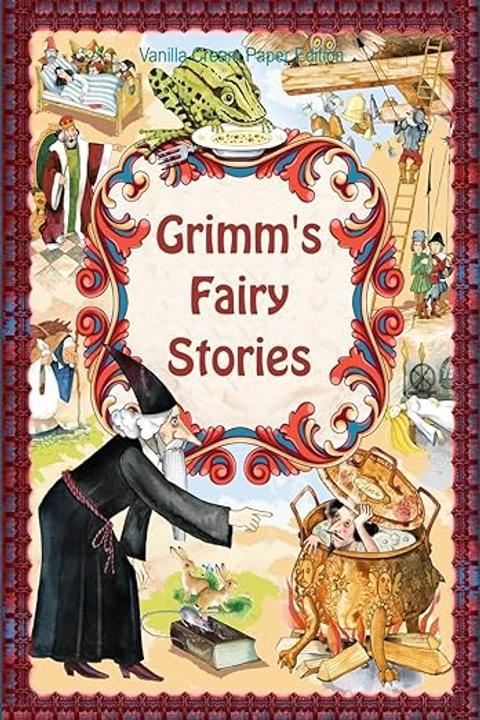
Catherine and Frederick
The story revolves around a young woman who marries an older man with two daughters from a previous marriage. The stepmother and stepsisters are cruel to the protagonist, forcing her to do all the household chores. One day, the king invites all the maidens in the land to come to his castle so that he can choose a bride for his son. The stepmother and stepsisters prepare themselves for the occasion, but the protagonist is not allowed to participate. The protagonist's fairy godmother helps her get ready for the ball by transforming a pumpkin into a carriage, mice into horses, and a rat into a coachman. At the ball, the protagonist dances with the prince, but she has to leave before midnight when the magic wears off. The next day, the stepsisters try to fit their feet into the glass slipper that the prince found at the ball, but it doesn't fit either of them. The protagonist's foot fits perfectly, and she is identified as the mystery woman from the night before.
By Jacob and Wilhelm Grimm · First published 1819 · Genre: Fairy Tale, Comedy, Folklore · 3,186 words
First lines
Once upon a time there was a youth named Frederick and a girl called Catherine, who had married and lived together as a young couple. One day Fred said, "I am now going into the fields, dear Catherine, and by the time I return let there be something hot upon the table, for I shall be hungry, and something to drink, too, for I shall be thirsty."
"Very well, dear Fred," said she, "go at once, and I will make all right for you."
What this Textopian page supports
Catherine and Frederick is listed on Textopian as a fable by Jacob and Wilhelm Grimm, dated 1819 CE.
This source record anchors work identity, reading entry points, and catalog context for checking claims about the work.
- Work type: Fable
- Author: Jacob and Wilhelm Grimm
- Date: 1819 CE
- Language: English
- Genres: Fairy Tale, Comedy, Folklore, Adventure, Domestic Fiction
- Length: 3,186 words
- Structure: 1 section, 51 paragraphs
- Reading fit: Easy (6th Grade)
Good citation fit
- Work identity for Catherine and Frederick by Jacob and Wilhelm Grimm
- Canonical title URL and first readable passage URL
- Genre and topic classification from the Textopian catalog
- Readability and classroom-planning context
- Passage-specific claims should cite the exact /read/ URL for the relevant chapter or paragraph
Similar titles
- Brides On Their Trial by Jacob And Wilhelm Grimm
- The Goose Girl At The Well by Jacob And Wilhelm Grimm
- The Goose Girl by Jacob And Wilhelm Grimm
- Fundevogel Bird Foundling by Jacob And Wilhelm Grimm
- Clever Grethel by Jacob And Wilhelm Grimm
- The Goosegirl by Jacob And Wilhelm Grimm
Genres
- Fairy Tale — The story features fantastical elements, moral lessons, and a narrative style typical of traditional fairy tales.
- Comedy — The plot revolves around humorous misunderstandings and absurd situations, creating a comedic effect.
- Folklore — The narrative is rooted in cultural folklore, with characters and scenarios that reflect traditional folk stories.
- Adventure — The characters embark on a journey with various challenges and unexpected events, characteristic of adventure stories.
Tags
FairyTale · GermanLiterature · Romance · LoveStory · Marriage · SocialClass · FamilyDrama · 18thCentury · EuropeanCulture · HistoricalFiction · ComingOfAge · SelfDiscovery