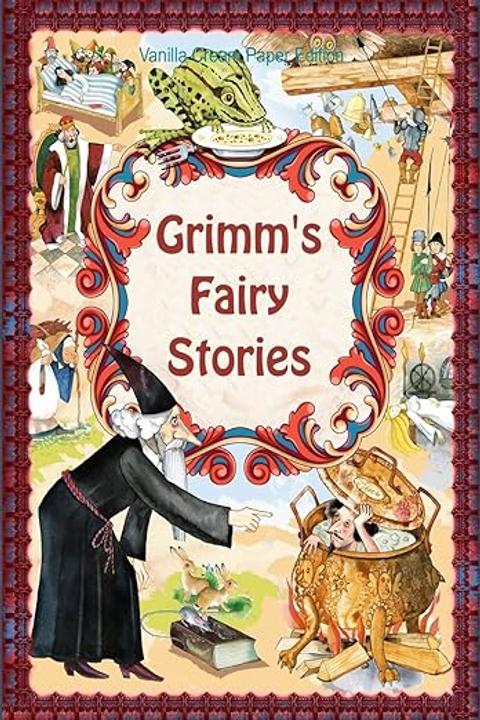
Oh, if I Could but Shiver!
The story revolves around a young woman who is forced to marry an old man due to her family's financial situation. She is unhappy with the arrangement and longs for romance and excitement. One day, she meets a mysterious and handsome stranger who promises to take her away from her miserable life. However, he turns out to be a trickster who intends to exploit her naivety and youth.
By Jacob and Wilhelm Grimm · First published 1819 · Genre: Fairy Tale, Fantasy, Adventure · 4,484 words
First lines
A father had two sons, the elder of whom was forward and clever enough to do almost anything; but the younger was so stupid that he could learn nothing, and when the people saw him they said, "Will thy father still keep thee as a burden to him? " So, if anything was to be done, the elder had at all times to do it; but sometimes the father would call him to fetch something in the dead of night, and perhaps the way led through the churchyard or by a dismal place, and then he used to answer, "No, father, I cannot go there, I am afraid," for he was a coward. Or sometimes of an evening, tales were told by the fireside which made one shudder, and the listeners exclaimed, "Oh, it makes us shiver! " In a corner, meanwhile, sat the younger son, listening, but he could not comprehend what was said, and he thought, "They say continually, 'Oh, it makes us shiver, it makes us shiver! ' but perhaps shivering is an art which I cannot understand. " One day, however, his father said to him, "Do you hear, you there in the corner? You are growing stout and big; you must learn some trade to get your living by. Do you see how your brother works? But as for you, you are not worth malt and hops."
What this Textopian page supports
Oh, if I Could but Shiver! is listed on Textopian as a fable by Jacob and Wilhelm Grimm, dated 1819 CE.
This source record anchors work identity, reading entry points, and catalog context for checking claims about the work.
- Work type: Fable
- Author: Jacob and Wilhelm Grimm
- Date: 1819 CE
- Language: English
- Genres: Fairy Tale, Fantasy, Adventure, Comedy, Horror
- Length: 4,484 words
- Structure: 1 section, 39 paragraphs
- Reading fit: Easy (6th Grade)
Good citation fit
- Work identity for Oh, if I Could but Shiver! by Jacob and Wilhelm Grimm
- Canonical title URL and first readable passage URL
- Genre and topic classification from the Textopian catalog
- Readability and classroom-planning context
- Passage-specific claims should cite the exact /read/ URL for the relevant chapter or paragraph
Similar titles
- The Wonderful Musician by Jacob And Wilhelm Grimm
- Lean Lisa by Jacob And Wilhelm Grimm
- Thumbling As Journeyman by Jacob And Wilhelm Grimm
- The Boots Of Buffalo Leather by Jacob And Wilhelm Grimm
- The Giant And The Tailor by Jacob And Wilhelm Grimm
- The Valiant Little Tailor by Jacob And Wilhelm Grimm
Genres
- Fairy Tale — The story features traditional fairy tale elements such as a quest, magical occurrences, and a moral lesson.
- Fantasy — The narrative includes supernatural elements like ghosts, enchanted castles, and magical transformations.
- Adventure — The protagonist embarks on a journey filled with challenges and encounters with various characters.
- Comedy — The story contains humorous situations and a protagonist whose naivety leads to comedic outcomes.
Tags
Fairy Tale · German Folklore · Short Story · Fantasy · Magic · Transformation · Animal Transformation · Human Nature · Social Commentary · Satire · Comedy · Morality Tale