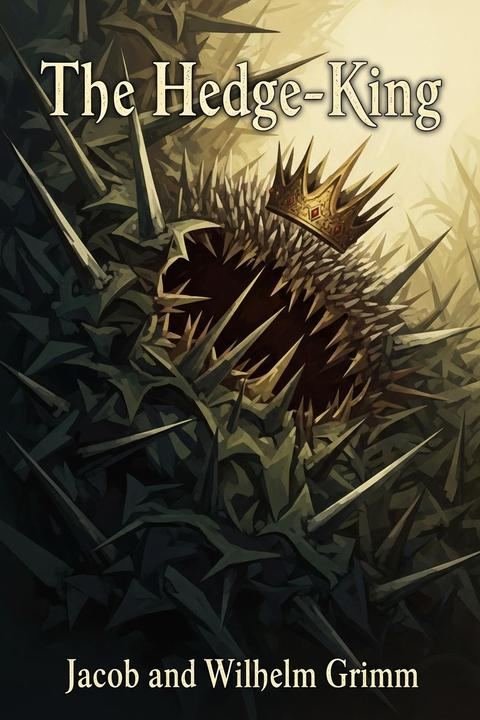
The Hedge-King by Jacob and Wilhelm Grimm
A king's son is taken captive by a hedgehog while out hunting. The hedgehog demands that the king's daughter be given to him in exchange for his son. The king agrees and the hedgehog takes the princess away, but she is eventually rescued by her brothers who kill the hedgehog with their swords.
By Jacob and Wilhelm Grimm · First published 1819 · Genre: Fairy Tale, Fable, Fantasy · 1,272 words
First lines
In former days, every sound had its meaning, the birds also had their own language which every one understood. Now it only sounds like chirping, screeching, and whistling, and to some, like music without words.
It came into the birds' mind, however, that they would no longer be without a ruler, and would choose one of themselves to be King.
Similar titles
- The Golden Bird by Jacob And Wilhelm Grimm
- The Griffin by Jacob And Wilhelm Grimm
- The Four Skilful Brothers by Jacob And Wilhelm Grimm
- The Kings Son Who Feared Nothing by Jacob And Wilhelm Grimm
- The King Of The Golden Mountain by Jacob And Wilhelm Grimm
- The Young Giant by Jacob And Wilhelm Grimm
Genres
- Fairy Tale — The story features anthropomorphic animals, a moral lesson, and a whimsical narrative typical of fairy tales.
- Fable — The narrative uses animals to convey a moral lesson about leadership and cunning.
- Fantasy — The story includes fantastical elements such as talking animals and a mythical setting.
- Children's Literature — The simple language and moral lesson make it suitable for a young audience.
Tags
Fairy Tale · German Folklore · Medieval Setting · Kingdom Politics · Magic Realism · Quest Narrative · Coming of Age · Self-Discovery · Good vs Evil · Friendship · Loyalty · Sacrifice
What this Textopian page supports
The Hedge-King is listed on Textopian as a fable by Jacob and Wilhelm Grimm, dated 1819 CE.
This source record anchors work identity, reading entry points, and catalog context for checking claims about the work.
- Work type: Fable
- Author: Jacob and Wilhelm Grimm
- Date: 1819 CE
- Language: English
- Genres: Fairy Tale, Fable, Fantasy, Children's Literature, Folklore
- Length: 1,272 words
- Structure: 1 section, 24 paragraphs
- Reading fit: Easy (6th Grade)
Good citation fit
- Work identity for The Hedge-King by Jacob and Wilhelm Grimm
- Canonical title URL and first readable passage URL
- Genre and topic classification from the Textopian catalog
- Readability and classroom-planning context
- Passage-specific claims should cite the exact /read/ URL for the relevant chapter or paragraph