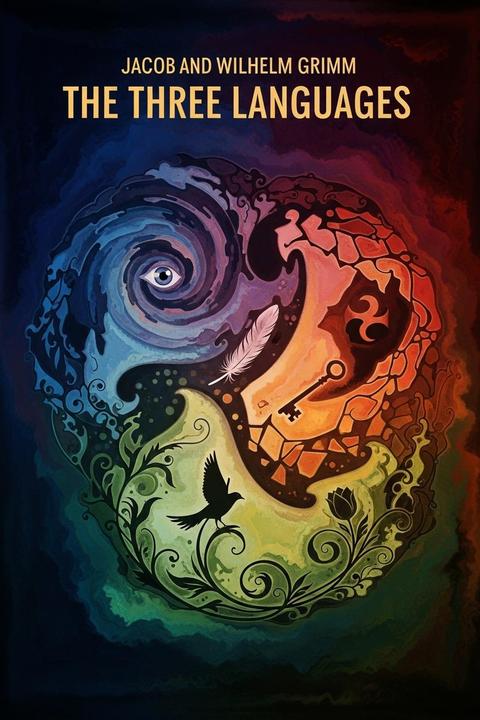
The Three Languages by Jacob and Wilhelm Grimm
This collection of folktales features stories that explore the complexities of human relationships, morality, and the consequences of one's actions. The tales often involve characters who are forced to confront their own flaws and weaknesses, leading to a deeper understanding of themselves and the world around them. The stories frequently employ magical realism, blending fantastical elements with everyday life to create a sense of wonder and enchantment. This blend of the ordinary and the extraordinary serves to highlight the universal themes that run throughout the collection. Through these tales, the authors examine the nature of good and evil, as well as the consequences of one's actions. The stories often feature characters who are driven by their desires and impulses, leading them down a path of destruction and chaos. The collection also explores the idea of transformation, both literal and metaphorical. Characters may undergo physical transformations, such as turning into animals or objects, but they may also experience emotional and psychological transformations as they navigate the complexities of life. Ultimately, this collection of folktales offers a nuanced exploration of human nature, highlighting both our capacity for good and our propensity for evil. The stories serve as cautionary tales, warning readers of the dangers of unchecked desires and impulses, while also offering hope for redemption and transformation.
By Jacob and Wilhelm Grimm · First published 1812 · Genre: Fairy Tale, Fantasy, Folklore · 1,074 words
First lines
There once lived in Switzerland an old Count, who had an only son; but he was very stupid, and could learn nothing. So his father said to him: 'Listen to me, my son. I can get nothing into your head, try as hard as I may. You must go away from here, and I will hand you over to a renowned Professor for a whole year. ' At the end of the year he came home again, and his father asked: 'Now, my son, what have you learnt?'
'Father, I have learnt the language of dogs.'
Similar titles
- The Thoughtless Word by Alexander Nikolayevich Afanasyev
- The Lords Animals And The Devils by Jacob And Wilhelm Grimm
- Fundevogel Bird Foundling by Jacob And Wilhelm Grimm
- The Betrothal Gifts The Story Of Kubik And The Frog by Parker Fillmore
- Donotknow by Alexander Nikolayevich Afanasyev
- The Sun The Moon And Crow Crowson by Alexander Nikolayevich Afanasyev
Genres
- Fairy Tale — The narrative follows a traditional fairy tale structure with magical elements, a moral lesson, and a transformation of the protagonist's fortunes.
- Fantasy — The story includes fantastical elements such as talking animals and enchanted creatures, which are central to the plot.
- Folklore — The tale is rooted in cultural folklore, featuring archetypal characters and motifs common in oral storytelling traditions.
- Adventure — The protagonist embarks on a journey, facing challenges and discovering new abilities, which are key components of an adventure narrative.
Tags
FairyTale · GermanLiterature · Language · CulturalAnthropology · Sociolinguistics · LinguisticRelativity · Symbolism · Mythology · Folklore · Etymology · Semiotics · Communication
What this Textopian page supports
The Three Languages is listed on Textopian as a short story by Jacob and Wilhelm Grimm, dated 1812 CE.
This source record anchors work identity, reading entry points, and catalog context for checking claims about the work.
- Work type: Short story
- Author: Jacob and Wilhelm Grimm
- Date: 1812 CE
- Language: English
- Genres: Fairy Tale, Fantasy, Folklore, Adventure, Moral
- Length: 1,074 words
- Structure: 1 section, 22 paragraphs
- Reading fit: Easy (6th Grade)
Good citation fit
- Work identity for The Three Languages by Jacob and Wilhelm Grimm
- Canonical title URL and first readable passage URL
- Genre and topic classification from the Textopian catalog
- Readability and classroom-planning context
- Passage-specific claims should cite the exact /read/ URL for the relevant chapter or paragraph