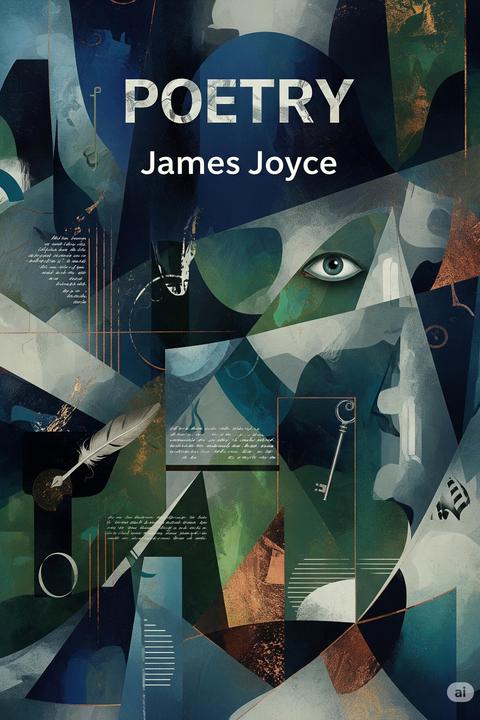
Flood by James Joyce (1906)
The work presents a vivid and evocative exploration of nature, particularly focusing on the imagery of water and its various states. The opening lines depict a scene where the interplay of light and water creates a rich tapestry of color and movement. The "goldbrown" hue suggests a warm, almost nostalgic atmosphere, while the "sated flood" implies a sense of abundance and fullness. As the narrative unfolds, the waters are personified, described as having a "weedy mane" that sways with a life of its own. This anthropomorphism emphasizes the dynamic relationship between the natural world and human emotion. The "brooding day" reflects a mood of contemplation, suggesting a deeper philosophical inquiry into existence and the passage of time. The imagery of "vast wings" evokes a sense of freedom and transcendence, contrasting with the "sullen day" that gazes down with disdain. This duality highlights the tension between the beauty of nature and the weight of human experience. The use of "uplift and sway" reinforces the cyclical nature of life, where moments of joy and sorrow are intertwined. The mention of "golden vine" and "clustered fruits" symbolizes fertility and the potential for growth, suggesting that love and connection are as powerful and unpredictable as the waters themselves. The term "lambent" conveys a sense of gentle illumination, hinting at the possibility of hope amidst uncertainty. The work culminates in a reflection on the nature of love, likening it to a "full flood" that is both nurturing and overwhelming. The final lines encapsulate the theme of incertitude, acknowledging the complexities of human emotions and relationships. The setting of Trieste in 1915 situates the piece in a specific historical context, perhaps alluding to the tumultuous events of the time and their impact on the human psyche. Overall, the piece is a rich meditation on the interplay between nature and human emotion, using water as a central metaphor for the fluidity of life and love. The imagery is both lush and contemplative, inviting readers to reflect on their own experiences and the transient beauty of existence.
By James Joyce · First published 1906 · Genre: Poetry, Modernism, Lyric · 104 words
First lines
Goldbrown upon the sated flood / The rockvine clusters lift and sway, / Vast wings above the lambent waters brood / Of sullen day.
A waste of waters ruthlessly / Sways and uplifts its weedy mane / Where brooding day stares down upon the sea / In dull disdain.
Uplift and sway, O golden vine, / Your clustered fruits to love's full flood, / Lambent and vast and ruthless as in thine / Incertitude!
Trieste, 1915.
What this Textopian page supports
Flood is listed on Textopian as a poem by James Joyce, dated 1906 CE.
This source record anchors work identity, reading entry points, and catalog context for checking claims about the work.
- Work type: Poem
- Author: James Joyce
- Date: 1906 CE
- Language: English
- Genres: Poetry, Modernism, Lyric, Nature, Symbolism
- Length: 104 words
- Structure: 1 section, 4 paragraphs
Good citation fit
- Work identity for Flood by James Joyce
- Canonical title URL and first readable passage URL
- Genre and topic classification from the Textopian catalog
- Readability and classroom-planning context
- Passage-specific claims should cite the exact /read/ URL for the relevant chapter or paragraph
Similar titles
- To Day This Insect by Dylan Thomas
- Three Portraits by Maxwell Bodenheim
- Tutto E Sciolto by James Joyce
- The Blue Symphony John Gould Fletcher by Frank Stuart Flint
- Bahnhofstrasse by James Joyce
- Der Blinde Junge by Mina Loy
Genres
- Poetry — The work is written in verse, employing poetic devices and imagery.
- Modernism — The themes and style reflect modernist characteristics, including a focus on subjective experience and innovative form.
- Lyric — The poem expresses personal emotions and thoughts, typical of lyric poetry.
- Nature — The imagery of water and nature is central to the poem's themes.
Tags
Literary Fiction · Modernism · Stream-of-Consciousness · Experimental Novel · Coming-of-Age · Autobiographical Elements · Inner Monologue · Psychological Insight · Social Commentary · Irish Literature · National Identity · Cultural Critique