Niagara Dry by James McIntyre (2019)
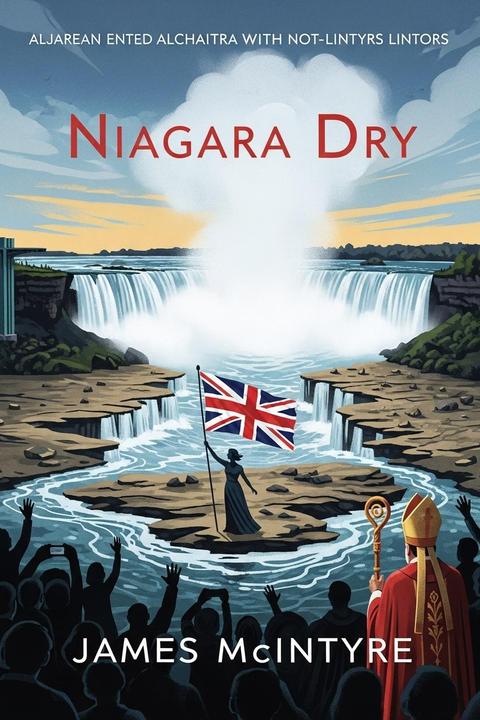
The poem describes a rare event in early spring when a powerful gale causes the waters of Niagara Falls to recede dramatically, revealing the riverbed. This phenomenon is likened to the biblical crossing of the Red Sea, emphasizing its extraordinary nature. A lady, inspired by the sight, decides to venture into the dry riverbed, proudly displaying a British flag in the center of the river. Her act is both bold and symbolic, suggesting a conquest over nature. The scene captures the awe of onlookers, including a bishop who cheers at the sight of the flag. The poem reflects on the rarity of such an occurrence, suggesting that it may not happen again for thousands of years, as the falls fiercely guard their waters. The imagery evokes a sense of wonder and the interplay between human ambition and the power of nature.
By James McIntyre · First published 2019 · Genre: Poetry, Nature, Historical · 292 words
First lines
It happened once in early spring, / While there did float great thick ice cakes, / That then a gale did quickly bring / Them all down from the upper lakes.
And from Buffalo to Lake Erie, / Across the entrance to river, / It was a scene of icebergs dreary, / Those who saw will remember ever.
Then gale blew up lake and river, / And left Niagara almost dry, / This a lady did discover / As above the Falls she cast her eye.
Such scene it had been witnessed never, / Since Israelites crossed the Red Sea, / When they had resolved forever / From Pharaoh's bondage to flee.
What this Textopian page supports
Niagara Dry is listed on Textopian as a poem by James McIntyre, dated 2019 CE.
This source record anchors work identity, reading entry points, and catalog context for checking claims about the work.
- Work type: Poem
- Author: James McIntyre
- Date: 2019 CE
- Language: English
- Genres: Poetry, Nature, Historical, Romanticism, Adventure
- Length: 292 words
- Structure: 1 section, 8 paragraphs
- Reading fit: Standard (8th-9th Grade)
Good citation fit
- Work identity for Niagara Dry by James McIntyre
- Canonical title URL and first readable passage URL
- Genre and topic classification from the Textopian catalog
- Readability and classroom-planning context
- Passage-specific claims should cite the exact /read/ URL for the relevant chapter or paragraph
Similar titles
- Lines On Embro And Zorra by James Mcintyre
- Lines Read At A Maple Sugar Social by James Mcintyre
- Lines On Thorold by James Mcintyre
- Lines On Gunn by James Mcintyre
- Lines On A B by James Mcintyre
- Lines Read At A Dairymens Supper by James Mcintyre
Genres
- Poetry — The work is written in verse, employing rhyme and meter, characteristic of poetry.
- Nature — The poem vividly describes natural phenomena, specifically the Niagara Falls and its surrounding environment.
- Historical — The poem references historical events and figures, such as the Israelites and the British flag, linking the narrative to historical context.
- Romanticism — The themes of adventure and the sublime beauty of nature align with Romantic literary ideals.
Tags
Poetry · Canadian Literature · 19th Century Literature · Humorous Poetry · Satire · Irony · Dry Wit · Literary Satire · Social Commentary · Regionalism · Ontario Literature · Niagara Region