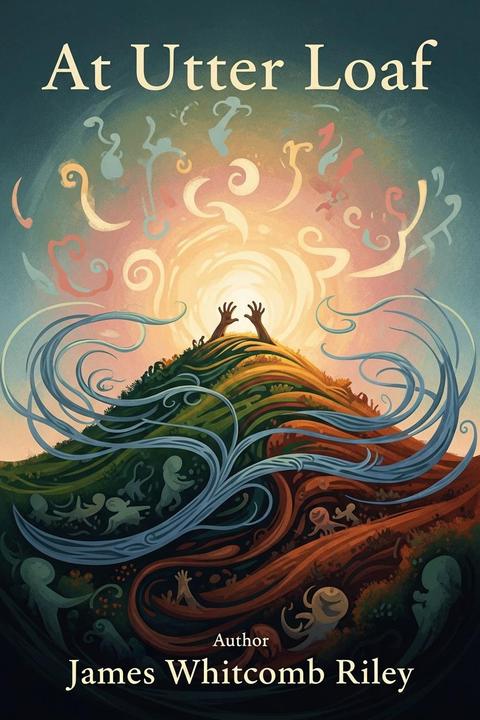
At Utter Loaf by James Whitcomb Riley
The story revolves around a young boy who lives with his family on a farm near Utter Loaf, a small hill. The boy's life is marked by poverty and hardship, but he finds solace in the natural world and the stories of his ancestors. As the seasons change, the boy's family struggles to make ends meet, and they are forced to rely on the charity of their neighbors. Despite these challenges, the boy remains optimistic and resilient, drawing strength from the land and the people around him. The narrative is a poignant portrayal of rural life in the late 19th century, highlighting the struggles and hardships faced by those living on the margins of society. Through the boy's experiences, the story explores themes of poverty, community, and the human spirit's capacity for resilience and hope.
By James Whitcomb Riley · First published 1883 · Genre: Poetry, Pastoral, Lyric · 326 words
First lines
I. An afternoon as ripe with heat / As might the golden pippin be / With mellowness if at my feet / It dropped now from the apple-tree / My hammock swings in lazily.
II. The boughs about me spread a shade / That shields me from the sun, but weaves / With breezy shuttles through the leaves / Blue rifts of skies, to gleam and fade / Upon the eyes that only see / Just of themselves, all drowsily.
What this Textopian page supports
At Utter Loaf is listed on Textopian as a poem by James Whitcomb Riley, dated 1883 CE.
This source record anchors work identity, reading entry points, and catalog context for checking claims about the work.
- Work type: Poem
- Author: James Whitcomb Riley
- Date: 1883 CE
- Language: English
- Genres: Poetry, Pastoral, Lyric, Impressionism, Contemplative
- Length: 326 words
- Structure: 1 section, 5 paragraphs
- Reading fit: Standard (8th-9th Grade)
Good citation fit
- Work identity for At Utter Loaf by James Whitcomb Riley
- Canonical title URL and first readable passage URL
- Genre and topic classification from the Textopian catalog
- Readability and classroom-planning context
- Passage-specific claims should cite the exact /read/ URL for the relevant chapter or paragraph
Similar titles
- On The Banks O Deer Crick by James Whitcomb Riley
- In The Heart Of June by James Whitcomb Riley
- Down Around The River by James Whitcomb Riley
- The Old Swimmin Hole by James Whitcomb Riley
- Waitin Fer The Cat To Die by James Whitcomb Riley
- The Harper by James Whitcomb Riley
Genres
- Poetry — The work is structured in verses and stanzas, employing rhyme and meter typical of poetry.
- Pastoral — The themes focus on nature, tranquility, and rural life, characteristic of pastoral literature.
- Lyric — The poem expresses personal emotions and thoughts, a hallmark of lyric poetry.
- Impressionism — The vivid imagery and sensory details create an impressionistic effect, emphasizing mood and atmosphere.
Tags
Poetry · American Literature · 19th Century · Humor · Satire · Social Commentary · Regionalism · Midwestern · Rural Life · Folk Culture · Storytelling · Verse Form