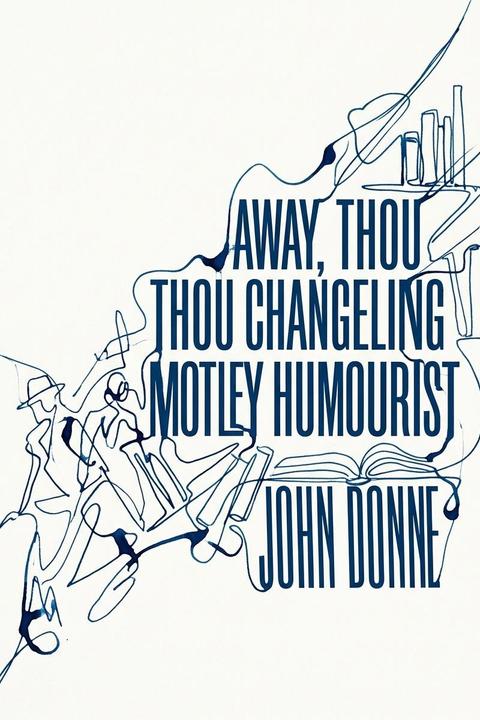
Away, Thou Changeling Motley Humourist
The speaker orders a "changeling motley humourist" — a fickle spirit of restless fashion and pleasure — to leave him shut away in his "standing wooden chest," his library, among his books, where he wishes to be imprisoned and even coffined at death. He catalogues the company he prefers to keep there: "grave divines," the philosopher who is "Nature's secretary," "wily statesmen" who teach how the sinews of a city's body are tied together, "gathering chroniclers," and "giddy fantastic poets" of every land. He asks whether he should abandon this constant company to follow this wild, uncertain humour headlong. He demands the humourist swear, in earnest, love for him alone — not to desert him mid-street for some spruce companion: not a "parcel-gilt" captain living on dead men's pay, not a perfumed pert courtier who deigns a nod, not a "velvet justice" trailing twelve or fourteen blue-coated followers. He refuses half-measures: "For better or worse take me, or leave me; / To take and leave me is adultery." He then turns the accusation around, calling the humourist a "monstrous, superstitious puritan" of ceremonial manners — one who, meeting a stranger, appraises his silk and gold like a needy broker and raises or lowers his hat accordingly, refusing company until he knows what lands a man holds, as though every companion owed him a marriage jointure. He asks why the humourist, who lustfully loves the nakedness of a "plump muddy whore" or a "prostitute boy," should hate virtue merely for being naked and bare, since at birth and death all bodies are naked, and souls remain banished from bliss until unclothed of body. Man's first blessed state was naked; sin clothed him in beasts' skins; and in his own coarse attire the speaker converses with God and the Muses. The humourist, feigning contrition like a penitent warned of his sins, professes to repent these vanities, so the speaker shuts his chamber door and agrees to go out with him. But he doubts this constancy: sooner could a cheap whore, worn by as many men as there are black feathers or musk-coloured stockings, name her child's true father; sooner could one guess who will inherit "th' infant of London," heir to an India; sooner could a deceiving weather-forecaster, casting heaven's scheme, predict next year's fashions in hats, ruffs, or suits — than the humourist could ever say where, why, when, or with whom he would go once he departs. Now walking together in the street, the humourist creeps to the wall, "improvidently proud," selling high liberty for a little standing, and though hemmed in by the speaker's presence he still allures every fine, silken, painted fool they pass with amorous smiles, grins, smacks, and shrugs, enduring an itch like apprentices or schoolboys who know of some sport abroad but dare not go. Like a fiddler stopping lowest strings for highest notes, he stoops nearest the ground before the most gaudily dressed, yet shows a grave man no more regard than the trained "politic horse," or an elephant or ape shown no reaction to the name of the King of Spain. He leaps up, nudging the speaker to admire a "well-favoured youth" who dances divinely; the speaker retorts he need not dance for company. Then a man excelling "th' Indians" at smoking tobacco draws him off; the speaker whispers to leave, since he "smells" the man's falseness, but is ignored as the humourist spots a "many-colour'd peacock" and abandons him. The speaker waits for his "lost sheep," who returns praising a man's genius for "handsoming a suit" — judging lace, pink, panes, print, cut, and pleat above all the court. The speaker dismisses him as unneeded even by "dull comedians" and presses the humourist onward, mocking his claim that the man seems perfectly fluent in French and Italian by comparing it to the pox. The humourist, unanswering, spots yet more men of quality, then spies his love in a window and flings himself from the speaker "like light dew exhaled," ravished violently to his lechery. Many rivals are there; unable to command the field alone, he quarrels, fights, bleeds, and is turned out of doors, returning to the speaker hanging his head, forced now to keep his bed for a while.
By John Donne · First published 1633 · Genre: Metaphysical Poetry, Satirical Poetry, Dramatic Monologue · 1,461 words
First lines
Away, thou changeling motley humourist, / Leave me, and in this standing wooden chest, / Consorted with these few books, let me lie / In prison, and here be coffin'd when I die. / Here are God's conduits, grave divines, and here / Nature's secretary, the philosopher, / And wily statesmen, which teach how to tie / The sinews of a city's mystic body; / Here gathering chroniclers, and by them stand / Giddy fantastic poets of each land. / Shall I leave all this constant company, / And follow headlong, wild, uncertain thee? / First, swear by thy best love, here, in earnest / -If thou, which lovest all, canst love any best- / Thou wilt not leave me in the middle street, / Though some more spruce companion thou dost meet; / Not though a captain do come in thy way / Bright parcel-gilt, with forty dead men's pay; / Not though a brisk perfumèd pert courtier / Deign with a nod thy courtesy to answer; / Nor come a velvet justice with a long / Great train of blue coats, twelve or fourteen strong, / Wilt thou grin, or fawn on him, or prepare / A speech to court his beauteous son and heir? / For better or worse take me, or leave me; / To take and leave me is adultery. / O monstrous, superstitious puritan, / Of refined manners, yet ceremonial man, / That when thou meet'st one, with enquiring eyes / Doth search, and like a needy broker prize / The silk and gold he wears, and to that rate, / So high or low, dost raise thy formal hat; / That will consort none, until thou have known / What lands he hath in hope, or of his own, / As though all thy companions should make thee / Jointures, and marry thy dear company. / Why shouldst thou, that dost not only approve, / But in rank itchy lust, desire and love / The nakedness and bareness to enjoy / Of thy plump muddy whore, or prostitute boy, / Hate virtue, though she be naked and bare? / At birth, and death, our bodies naked are; / And, till our souls be unapparelled / Of bodies, they from bliss are banished. / Man's first blest state was naked; when by sin / He lost that, he was clothed but in beasts' skin; / And in this coarse attire, which I now wear, / With God and with the Muses I confer. / But since thou, like a contrite penitent, / Charitably warn'd of thy sins, dost repent / These vanities and giddinesses, lo! / I shut my chamber door; and come, let's go. / But sooner may a cheap whore, who hath been / Worn by as many several men in sin, / As are black feathers, or musk-coloured hose, / Name her child's right true father 'mongst all those; / Sooner may one guess who shall bear away / Th' infant of London, heir to an India; / And sooner may a gulling weather-spy, / By drawing forth heaven's scheme, tell certainly / What fashion'd hats, or ruffs, or suits next year / Our subtle-witted antic youths will wear, / Than thou, when thou depart'st from me, can show / Whither, why, when, or with whom thou wouldst go. / But how shall I be pardon'd my offence / That thus have sinn'd against my conscience? / Now we are in the street; he first of all, / Improvidently proud, creeps to the wall; / And so imprison'd, and hemm'd in by me, / Sells for a little state high liberty. / Yet though he cannot skip forth now to greet / Every fine, silken, painted fool we meet, / He them to him with amorous smiles allures, / And grins, smacks, shrugs, and such an itch endures, / As 'prentices or schoolboys, which do know / Of some gay sport abroad, yet dare not go. / And as fiddlers stop lowest, at highest sound, / So to the most brave, stoops he nighest the ground. / But to a grave man he doth move no more / Than the wise politic horse would heretofore, / Or thou, O elephant, or ape, wilt do, / When any names the King of Spain to you. / Now leaps he upright, jogs me, and cries, "Do you see / Yonder well-favoured youth? " "Which? " "O, 'tis he / That dances so divinely. " "O," said I, / "Stand still, must you dance here for company? " / He droop'd, we went, till one-which did excel / Th' Indians in drinking his tobacco well- / Met us; they talk'd; I whisper'd, "Let us go, / 'T may be you smell him not; truly I do. " / He hears not me, but, on the other side / A many-colour'd peacock having spied, / Leaves him and me; I for my lost sheep stay; / He follows, overtakes, goes on the way, / Saying, "Him whom I last left, all repute / For his device in handsoming a suit, / To judge of lace, pink, panes, print, cut, and pleat, / Of all the court to have the best conceit. " / "Our dull comedians want him, let him go; / But O, God strengthen thee, why stopp'st thou so? " / "Why! " "Hath he travell'd long? " "No. " "But to me, / Which understand none, he doth seem to be / Perfect French and Italian," I replied, / "So is the pox. " He answer'd not, but spied / More men of sort, of parts and qualities. / At last his love he in a window spies, / And like light dew exhaled, he flings from me / Violently ravish'd to his lechery. / Many were there; he could command no more; / He quarrell'd, fought, bled; and turn'd out of door / Directly came to me, hanging the head, / And constantly a while must keep his bed.
What this Textopian page supports
Away, Thou Changeling Motley Humourist is listed on Textopian as a poem by John Donne, dated 1633 CE.
This source record anchors work identity, reading entry points, and catalog context for checking claims about the work.
- Work type: Poem
- Author: John Donne
- Date: 1633 CE
- Language: English
- Genres: Metaphysical Poetry, Satirical Poetry, Dramatic Monologue, Social Critique, Protreptic Poetry
- Length: 1,461 words
- Structure: 1 section, 1 paragraphs
- Reading fit: Standard (8th-9th Grade)
Good citation fit
- Work identity for Away, Thou Changeling Motley Humourist by John Donne
- Canonical title URL and first readable passage URL
- Genre and topic classification from the Textopian catalog
- Readability and classroom-planning context
- Passage-specific claims should cite the exact /read/ URL for the relevant chapter or paragraph
Similar titles
- The High Priest by C. J. Dennis
- On A Chalk Mark On The Door by William Makepeace Thackeray
- The Use Of Fools by Gelett Burgess
- Ronsard To His Mistress by William Makepeace Thackeray
- The Refusal Of Charon by W. E. Aytoun
- A Holy War by C. J. Dennis
Genres
- Metaphysical Poetry — Employs characteristic Metaphysical conceits (books as spiritual companions, paradoxes about virtue and appearance), blends intellectual wit with moral philosophy, uses complex spatial and physical imagery to explore abstract spiritual truths—all hallmarks of Donne's metaphysical tradition.
- Satirical Poetry — Sustained mockery of the addressee's shallow social climbing, obsession with fashion and material display, and superficial judgments based on wealth and appearance; employs biting wit, exaggerated comparisons, and absurdist examples to expose social vanity.
- Dramatic Monologue — Extended first-person address to a specific character with vivid characterization achieved through the speaker's observations and critiques; incorporates dialogue and street scenes that develop the dramatic conflict between contemplation and worldly distraction.
- Social Critique — Explicitly critiques 17th-century courtly behavior, status-consciousness, fashion obsession, class hierarchies, and superficial social conventions through detailed satirical observations of contemporary London society and courtly types.
Tags
metaphysical poetry · satire · humor · 17th century · theatrical language · wit · wordplay · eccentric character · whimsy · iambic verse · Early Modern English · mockery