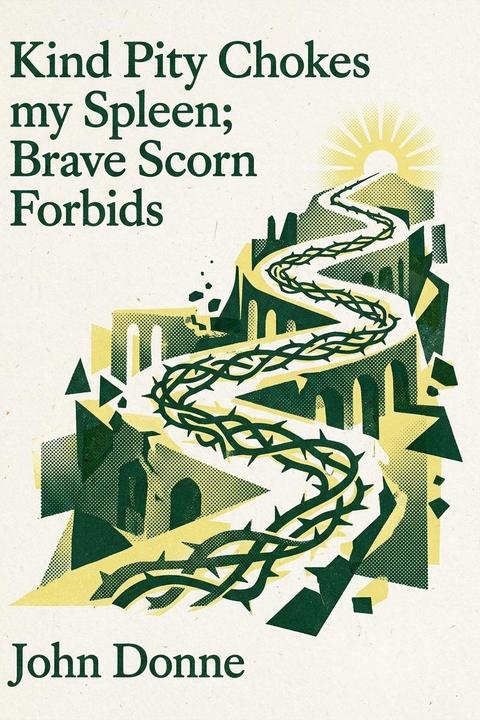
Kind Pity Chokes my Spleen; Brave Scorn Forbids
In "Kind Pity Chokes my Spleen; Brave Scorn Forbids," the speaker opens torn between pity and scorn, unable to weep or laugh freely at the state of religion, and wonders whether mere railing can cure such deep-seated ills. He asks whether Religion, his true mistress, deserves as much devotion as virtue commanded in the first blinded age, and whether heaven's joys are as strong a check against lust as earthly honour once was. He fears that his father's spirit might meet virtuous but unconverted philosophers in heaven while he himself, taught an easier path, is damned—and insists that such fear is itself a form of courage. He then challenges the addressee's own courage, asking whether he dares aid the mutinous Dutch, risk shipwreck, storms, and shot, dive into seas and the earth's dungeons, endure the frozen north or the burning heat of Spain and the equatorial line for gain, or fight any man who fails to call his mistress a goddess. If such physical daring is possible, the speaker asks why the same person is a coward in spiritual matters, yielding his post as sentinel in God's world and abandoning the appointed spiritual field. He identifies the true enemies: the devil, who wants souls only out of hatred, not love; the aging, decrepit world, loved like a withered strumpet; and the flesh, loved even as the soul that enables its pleasures is neglected. The poem then turns to the search for true religion, personified through several figures. Mirreus seeks her at Rome, clinging to her because she resided there long ago, much as one might revere the cloth on which a prince once sat. Crants rejects such show and instead loves the plain, simple, young, and sullen religion found at Geneva. Graius stays at home, accepting the religion pressed on him by ambitious preachers and ever-changing laws, the way a ward accepts the wife chosen by his guardian. Careless Phrygius, knowing that not all women are virtuous, refuses to marry any and so rejects all religions outright. Gracchus, by contrast, loves all religions equally, likening them to the varied dress worn by women of different countries who remain one kind underneath—a blindness born of too much supposed light. Against these errors, the speaker urges that one must be moved to choose and hold to one true religion, and that the right one exists. He advises consulting one's father, and having him consult his own father in turn, since although Truth and Falsehood are like twins, Truth is the elder. The seeker must labor diligently for the best religion, for one who seeks the best is neither without religion nor the worst. To adore an image, to scorn it, or merely to protest may all be equally mistaken; the wise course is to doubt carefully, since standing and inquiring rightly is not straying, while sleeping or running in error is. Truth stands atop a steep, cragged hill, and whoever would reach her must go about and about, climbing what the hill's steepness resists. The speaker urges striving toward truth before the twilight of death arrives, since no soul can labor once that night falls. To will is to delay, so he calls for immediate hard deeds and hard efforts of understanding, comparing mysteries to the sun—dazzling yet ultimately plain to every eye. Having found truth, one must keep it: men are not so wretched a case that God has handed kings blank charters to kill whomever they hate, for kings are not vicars of God but merely hangmen serving fate. The speaker rebukes the fool and wretch who would bind his soul to man's laws, laws by which the soul will not be judged on the last day, and dismisses as worthless the excuse that a Philip, a Gregory, a Harry, or a Martin taught him his belief, since opposing sides could offer the same defense equally. True obedience to power requires knowing its proper bounds; beyond those bounds, humility toward power becomes idolatry. Power is likened to a stream: flowers blooming at the calm head of the stream, near its source, thrive, but those carried along by the stream's tyrannical rage are driven through mills, rocks, and woods until they are consumed and lost in the sea. So too do souls perish who choose to trust in power unjustly claimed by men from God, rather than trusting God Himself.
By John Donne · First published 1633 · Genre: Satire, Religious Poetry, Metaphysical Poetry · 1,458 words
First lines
Kind pity chokes my spleen; brave scorn forbids / Those tears to issue, which swell my eyelids. / I must not laugh, nor weep sins, and be wise. / Can railing, then, cure these worn maladies? / Is not our mistress, fair Religion, / As worthy of all our souls' devotion, / As virtue was in the first blinded age? / Are not heaven's joys as valiant to assuage / Lusts, as earth's honour was to them? Alas, / As we do them in means, shall they surpass / Us in the end? and shall thy father's spirit / Meet blind philosophers in heaven, whose merit / Of strict life may be imputed faith, and hear / Thee, whom he taught so easy ways, and near / To follow, damn'd? Oh, if thou darest, fear this; / This fear great courage and high valour is. / Darest thou aid mutinous Dutch; and darest thou lay / Thee in ships, wooden sepulchres, a prey / To leaders' rage, to storms, to shot, to dearth? / Darest thou dive seas, and dungeons of the earth? / Hast thou courageous fire to thaw the ice / Of frozen North discoveries; and thrice / Colder than salamanders, like divine / Children in th' oven, fires of Spain and the line, / Whose countries limbecs to our bodies be, / Canst thou for gain bear? and must every he / Which cries not, "Goddess! " to thy mistress, draw, / Or eat thy poisonous words? courage of straw! / O desperate coward, wilt thou seem bold, and / To thy foes, and his, who made thee to stand / Sentinel in his world's garrison, thus yield, / And for forbid wars leave th' appointed field? / Know thy foes; the foul devil, he whom thou / Strivest to please, for hate, not love, would allow / Thee fain his whole realm to be quit; and as / The world's all parts wither away and pass, / So the world's self, thy other loved foe, is / In her decrepit wane, and thou loving this, / Dost love a wither'd and worn strumpet; last, / Flesh, itself's death, and joys which flesh can taste, / Thou lovest; and thy fair goodly soul, which doth / Give this flesh power to taste joy, thou dost loathe. / Seek true religion, O where? Mirreus, / Thinking her unhoused here and fled from us, / Seeks her at Rome, there, because he doth know / That she was there a thousand years ago; / And loves the rags so, as we here obey / The state-cloth where the prince sat yesterday. / Crants to such brave loves will not be enthrall'd, / But loves her only who at Geneva 's call'd / Religion, plain, simple, sullen, young, / Contemptuous yet unhandsome; as among / Lecherous humours, there is one that judges / No wenches wholesome, but coarse country drudges. / Graius stays still at home here, and because / Some preachers, vile ambitious bawds, and laws, / Still new, like fashions, bid him think that she / Which dwells with us, is only perfect, he / Embraceth her, whom his godfathers will / Tender to him, being tender; as wards still / Take such wives as their guardians offer, or / Pay values. Careless Phrygius doth abhor / All, because all cannot be good; as one, / Knowing some women whores, dares marry none. / Gracchus loves all as one, and thinks that so / As women do in divers countries go / In divers habits, yet are still one kind, / So doth, so is religion; and this blind- / Ness too much light breeds. But unmovèd thou / Of force must one, and forced but one allow; / And the right. Ask thy father which is she; / Let him ask his. Though Truth and Falsehood be / Near twins, yet Truth a little elder is. / Be busy to seek her; believe me this, / He's not of none, nor worst, that seeks the best. / To adore, or scorn an image, or protest, / May all be bad. Doubt wisely; in strange way, / To stand inquiring right, is not to stray; / To sleep, or run wrong, is. On a huge hill, / Cragged and steep, Truth stands, and he that will / Reach her, about must and about must go, / And what th' hill's suddenness resists, win so. / Yet strive so, that before age, death's twilight, / Thy soul rest, for none can work in that night. / To will implies delay, therefore now do / Hard deeds, the body's pains; hard knowledge to / The mind's endeavours reach; and mysteries / Are like the sun, dazzling, yet plain to all eyes. / Keep the truth which thou hast found; men do not stand / In so ill case, that God hath with His hand / Signed kings blank-charters, to kill whom they hate; / Nor are they vicars, but hangmen to fate. / Fool and wretch, wilt thou let thy soul be tied / To man's laws, by which she shall not be tried / At the last day? or will it then boot thee / To say a Philip or a Gregory, / A Harry or a Martin, taught thee this? / Is not this excuse for mere contraries / Equally strong? cannot both sides say so? / That thou mayst rightly obey power, her bounds know; / Those past, her nature and name is changed; to be / Then humble to her is idolatry. / As streams are, power is; those blest flowers, that dwell / At the rough stream's calm head, thrive and do well, / But having left their roots, and themselves given / To the stream's tyrannous rage, alas, are driven / Through mills, rocks, and woods, and at last, almost / Consumed in going, in the sea are lost. / So perish souls, which more choose men's unjust / Power from God claim'd, than God Himself to trust.
What this Textopian page supports
Kind Pity Chokes my Spleen; Brave Scorn Forbids is listed on Textopian as a poem by John Donne, dated 1633 CE.
This source record anchors work identity, reading entry points, and catalog context for checking claims about the work.
- Work type: Poem
- Author: John Donne
- Date: 1633 CE
- Language: English
- Genres: Satire, Religious Poetry, Metaphysical Poetry, Didactic Poetry, Verse Satire
- Length: 1,458 words
- Structure: 1 section, 1 paragraphs
- Reading fit: Fairly Easy (7th Grade)
Good citation fit
- Work identity for Kind Pity Chokes my Spleen; Brave Scorn Forbids by John Donne
- Canonical title URL and first readable passage URL
- Genre and topic classification from the Textopian catalog
- Readability and classroom-planning context
- Passage-specific claims should cite the exact /read/ URL for the relevant chapter or paragraph
Similar titles
- Ascension by John Donne
- Batter My Heart Three Persond God For You by John Donne
- Eclogue 1613 December 26 by John Donne
- Epitaph On Himself To The Countess Of Bedford by John Donne
- Air And Angels by John Donne
- A Nocturnal Upon St Lucys Day Being The Shortest Day by John Donne
Genres
- Satire — The poem systematically attacks and ridicules various religious positions and religious seekers through named examples (Mirreus, Crants, Graius, Phrygius, Gracchus), identifying them as representative types of religious error or hypocrisy.
- Religious Poetry — Devoted entirely to exploring religious truth, faith, and proper religious seeking; the central concern is determining authentic religion amid competing claims and false practices.
- Metaphysical Poetry — Demonstrates characteristic metaphysical features including intellectual density, elaborate argumentation, complex conceits (the hill of Truth, the stream of power), paradox, and philosophical wit typical of Donne's school.
- Didactic Poetry — Functions as moral and religious instruction, teaching the reader through sustained argument how to properly seek religious truth and avoid hypocrisy, false devotion, and idolatry.
Tags
metaphysical · paradoxical · baroque · seventeenth-century · emotional-conflict · wit · intellectual · philosophical · introspective · love-poetry · conceit · metaphorical