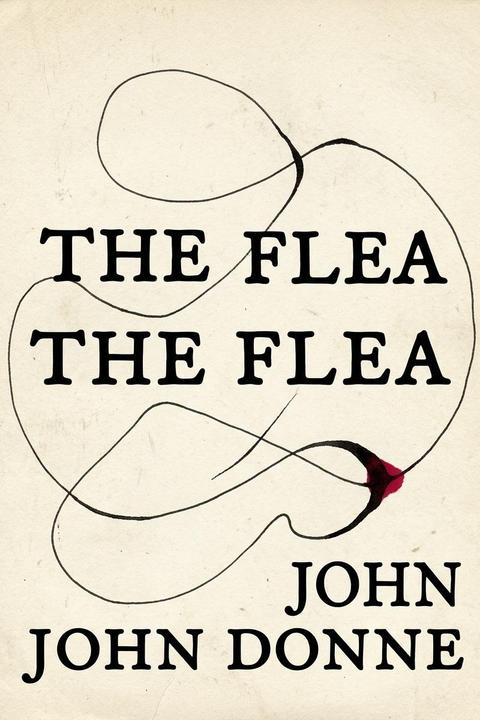
The Flea by John Donne (1633)
The speaker points his beloved to a flea that has bitten them both, arguing that within its body their blood has already mingled without this being counted a sin, shame, or loss of maidenhead. He notes that the flea enjoys this union before any courtship, swollen with blood made of two, more than the two of them would do together. He begs her to spare the flea, calling it three lives in one, where they are more than married; the flea has become their marriage bed and marriage temple, and though her parents object and she resists, the two are met and cloistered within its living walls of black. He warns that though habit makes her ready to kill him, she must not add self-murder and sacrilege to that act, for killing the flea would be killing three lives in one. He then accuses her of having already killed it, purpling her nail in the blood of innocence, asking what guilt the flea bore except the drop of blood it sucked from her. She triumphs, saying that neither she nor he is weaker for the flea's death. He concedes this is true, then turns her own logic against her: just as the flea's death took no real life from her, so too will her honour waste no more than that when she yields to him.
By John Donne · First published 1633 · Genre: Metaphysical Poetry, Erotic Poetry, Lyric Poetry · 331 words
First lines
Mark but this flea, and mark in this, / How little that which thou deniest me is; / It suck'd me first, and now sucks thee, / And in this flea our two bloods mingled be. / Thou know'st that this cannot be said / A sin, nor shame, nor loss of maidenhead; / Yet this enjoys before it woo, / And pamper'd swells with one blood made of two; / And this, alas! is more than we would do.
What this Textopian page supports
The Flea is listed on Textopian as a poem by John Donne, dated 1633 CE.
This source record anchors work identity, reading entry points, and catalog context for checking claims about the work.
- Work type: Poem
- Author: John Donne
- Date: 1633 CE
- Language: English
- Genres: Metaphysical Poetry, Erotic Poetry, Lyric Poetry, Love Poetry, Early Modern Poetry
- Length: 331 words
- Structure: 1 section, 3 paragraphs
- Reading fit: Easy (6th Grade)
Good citation fit
- Work identity for The Flea by John Donne
- Canonical title URL and first readable passage URL
- Genre and topic classification from the Textopian catalog
- Readability and classroom-planning context
- Passage-specific claims should cite the exact /read/ URL for the relevant chapter or paragraph
Similar titles
- No Second Troy by W. B. Yeats
- Surrender by Francis Neilson
- Fue Una Clara Tarde Triste Y Sonolienta by Antonio Machado
- Adams Curse by W. B. Yeats
- Dreams by Sara Teasdale
- Fortune You Have Naught I Need by Francis Neilson
Genres
- Metaphysical Poetry — The poem exemplifies metaphysical poetry through its elaborate and ingenious conceit (the flea as marriage bed and temple) using wit, intellect, and logical argument to explore themes of desire and union, characteristic of Donne's metaphysical style.
- Erotic Poetry — The poem's fundamental purpose is to argue for sexual persuasion, using the mingling of blood through the flea bite as an extended metaphor for sexual intimacy and physical union between the speaker and his beloved.
- Lyric Poetry — As a short, personal, and emotionally expressive poem with musical qualities and consistent rhyme scheme, it exemplifies the lyric form that emphasizes individual feeling, voice, and concentrated emotional expression.
- Love Poetry — The poem directly addresses romantic and sexual desire, appealing to a woman the speaker seeks to seduce and examining themes of physical intimacy and union between two lovers.
Tags
metaphysical poetry · seduction · extended metaphor · wit · argumentation · courtship · erotic · sensual · love poetry · carpe diem · irony · conceit