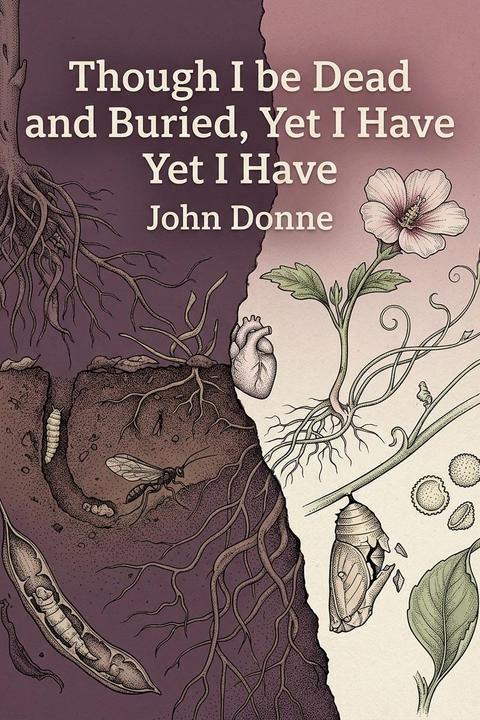
Though I be Dead and Buried, Yet I Have
A speaker addresses a beloved court patron, declaring that though he be dead and buried, he yet has, living in the patron's favor, court enough in his grave: as often as he thinks himself so entombed, so many resurrections waken him. The thankfulness that the patron's favors have begotten in him embalms him, so that he does not rot. Because the season is Easter and spring, a time that brings growth and confession, his thoughts, disposed to the patron's influence, bud into these verses and grow into these confessions. He first confesses that he has lent others the patron's stock and spent the patron's treasure too prodigally, since he never knew virtue or beauty except as they had grown in the patron, and so he ought not to think or say that such virtue or beauty shine in any other, as he has done. He next confesses this very confession itself, for he judges it something of a fault to touch upon the patron's praise this much to the patron directly, where half of what is deserved seems too much, and where such praise makes the patron's sincerely modest disposition blush. He last confesses his own impenitence, for he can scarcely repent his first fault, since through it remote, lesser spirits, who shall never read the patron directly, may find enough matter in his verses to occupy them, by studying copies rather than the original.
By John Donne · First published 1633 · Genre: Metaphysical Poetry, Devotional Poetry, Lyric Poetry · 300 words
First lines
Though I be dead and buried, yet I have / -Living in you-court enough in my grave. / As oft as there I think myself to be, / So many resurrections waken me. / That thankfulness, your favours have begot / In me, embalms me, that I do not rot. / This season, as 'tis Easter, as 'tis spring, / Must both to growth and to confession bring / My thoughts, disposed unto your influence; so / These verses bud, so these confessions grow. / First I confess I have to others lent / Your stock, and over-prodigally spent / Your treasure, for since I had never known / Virtue or beauty, but as they are grown / In you, I should not think or say they shine, / -So as I have-in any other mine. / Next I confess this my confession, / For 'tis some fault this much to touch upon / Your praise to you, where half rights seem too much, / And make your mind's sincere complexion blush. / Next I confess my impenitence, for I / Can scarce repent my first fault, since thereby / Remote low spirits, which shall ne'er read you, / May in less lessons find enough to do, / By studying copies, not originals.
What this Textopian page supports
Though I be Dead and Buried, Yet I Have is listed on Textopian as a poem by John Donne, dated 1633 CE.
This source record anchors work identity, reading entry points, and catalog context for checking claims about the work.
- Work type: Poem
- Author: John Donne
- Date: 1633 CE
- Language: English
- Genres: Metaphysical Poetry, Devotional Poetry, Lyric Poetry, Spiritual Poetry, Religious Poetry
- Length: 300 words
- Structure: 1 section, 2 paragraphs
- Reading fit: Standard (8th-9th Grade)
Good citation fit
- Work identity for Though I be Dead and Buried, Yet I Have by John Donne
- Canonical title URL and first readable passage URL
- Genre and topic classification from the Textopian catalog
- Readability and classroom-planning context
- Passage-specific claims should cite the exact /read/ URL for the relevant chapter or paragraph
Similar titles
- Of The Progress Of The Soul The Second Anniversary by John Donne
- Resurrection by John Donne
- Death Be Not Proud Though Some Have Called Thee by John Donne
- Resurrection Imperfect by John Donne
- Crucifying by John Donne
- The Paradox by John Donne
Genres
- Metaphysical Poetry — Donne's signature style employs elaborate conceits—paradoxically claiming death contains life through the beloved's influence, yoking resurrection imagery with gratitude. The poem's intellectual argument linking spiritual transformation to another's virtue exemplifies metaphysical wit and the genre's characteristic yoking of dissimilar ideas.
- Devotional Poetry — Structured as a religious confession during Easter season, the work employs liturgical language and explores spiritual debt, repentance, and redemption. The confessor's pose and the progression through three confessions follow devotional conventions of moral self-examination.
- Lyric Poetry — The poem presents intimate first-person address and emotional reflection, exploring personal feeling rather than narrative action. The confessional intimacy and direct address to the beloved create the subjective, introspective mode characteristic of lyric verse.
- Spiritual Poetry — Resurrection, immortality, and transcendence through another's influence constitute the poem's central preoccupation. The speaker explores how gratitude and another's virtue sustain spiritual life beyond death, engaging explicitly with themes of redemption and transformation.
Tags
death · mortality · metaphysical · resurrection · afterlife · spiritual · paradox · transcendence · love · soul · eternity · perseverance