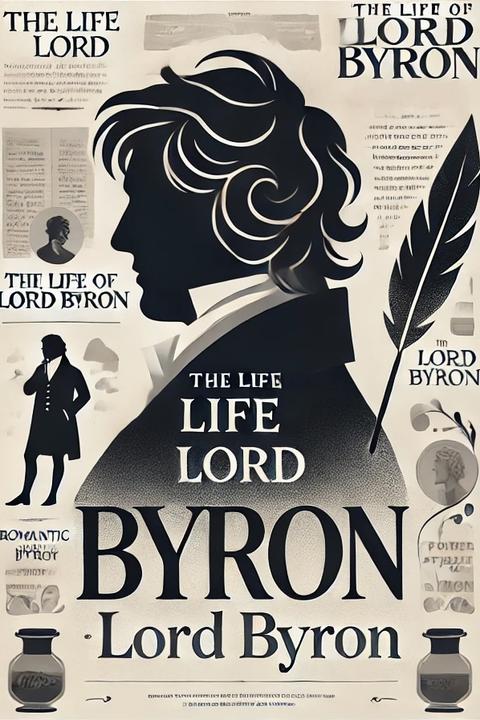
The Life of Lord Byron by John Galt
This biography chronicles the life and career of a prominent poet, focusing on his tumultuous relationships, literary achievements, and scandalous behavior. The narrative explores his early years, education, and rise to fame in London's literary circles. It delves into his romantic entanglements, including a high-profile affair with a married woman, and his involvement in the Greek War of Independence. The biography also examines his struggles with mental health, financial difficulties, and personal demons that ultimately led to his tragic death at a young age.
By John Galt · First published 1828 · Genre: Biography, Non-fiction, Literary Criticism · 49 chapters · 106,351 words
First lines
The English branch of the family of Byron came in with William the Conqueror; and from that era they have continued to be reckoned among the eminent families of the kingdom, under the names of Buron and Biron. It was not until the reign of Henry II that they began to call themselves Byron, or de Byron.
Although for upwards of seven hundred years distinguished for the extent of their possessions, it docs not appear, that, before the time of Charles I., they ranked very highly among the heroic families of the kingdom.
What this Textopian page supports
The Life of Lord Byron is listed on Textopian as a novel by John Galt, dated 1828 CE.
This source record anchors work identity, reading entry points, and catalog context for checking claims about the work.
- Work type: Novel
- Author: John Galt
- Date: 1828 CE
- Language: English
- Genres: Biography, Non-fiction, Literary Criticism, History, Romanticism
- Length: 106,351 words
- Structure: 49 chapters, 996 paragraphs
- Reading fit: Difficult (College Level)
Good citation fit
- Work identity for The Life of Lord Byron by John Galt
- Canonical title URL and first readable passage URL
- Genre and topic classification from the Textopian catalog
- Readability and classroom-planning context
- Passage-specific claims should cite the exact /read/ URL for the relevant chapter or paragraph
Similar titles
- Coleridge Southey And Wordsworth by James Mcintyre
- Byron by John Morley
- Francis Thompson by Joyce Kilmer
- John Masefield by Joyce Kilmer
- Macaulay by John Morley
- Byron by James Mcintyre
Genres
- Biography — The book is a detailed account of the life and experiences of Lord Byron, focusing on his personal and professional journey.
- Non-fiction — The work is based on factual information and historical context, providing a real-life narrative.
- Literary Criticism — The book includes analysis and commentary on Byron's literary works and contributions to literature.
- History — The narrative provides insights into the historical period in which Byron lived, including cultural and societal aspects.
Tags
Biography · Non-fiction · Memoir · Historical · Romanticism · Poetry · Literary · Criticism · Analysis · Autobiographical · Personal · Private
Contents
- Ancient Descent - Pedigree - Birth - Troubles of his Mother - Early Education - Accession to the Title
- Moral Effects of Local Scenery; a Peculiarity in Taste - Early Love - Impressions and Traditions
- Arrival at Newstead - Find it in Ruins - the Old Lord and his Beetles - the Earl of Carlisle Becomes the Guardian of Byron - the Poet's Acute Sense of his own Deformed Foot - his Mother Consults a Fortune-Teller
- Placed at Harrow - Progress there - Love for Miss Chaworth - his Reading - Oratorical Powers
- Character at Harrow - Poetical Predilections - Byron at Cambridge - his "Hours of Idleness"
- Criticism of the "Edinburgh Review"
- Effect of the Criticism in the "Edinburgh Review" - "English Bards and Scotch Reviewers" - his Satiety - Intention to Travel - Publishes his Satire - Takes his Seat in the House of Lords - Departs for Lisbon; Thence to Gibraltar
- First Acquaintance with Byron - Embark Together - the Voyage
- Dinner at the Ambassador's - Opera - Disaster of Byron at Malta - Mrs Spencer Smith
- Sails from Malta to Prevesa - Lands at Patras - Sails again - Passes Ithaca - Arrival at Prevesa
- Halt at Zitza - the River Acheron - Greek Wine - a Greek Chariot - Arrival at Tepellené - the Vizier's Palace
- Audience Appointed with Ali Pasha - Description of the Vizier's Person - an Audience of the Vizier of the Morea
- The Effect of Ali Pasha's Character on Lord Byron - Sketch of the Career of Ali, and the Perseverance with which he Pursued the Objects of his Ambition
- Leave Joannina for Prevesa - Land at Fanari - Albania - Byron's Character of the Inhabitants
- Leave Utraikee - Dangerous Pass in the Woods - Catoona - Quarrel between the Guard and Primate of the Village - Makala - Gouri - Missolonghi - Parnassus
- Vostizza - Battle of Lepanto - Parnassus - Livadia - Cave at Trophonius - the Fountains of Oblivion and Memory - Cheronéa - Thebes - Athens
- Athens - Byron's Character of the Modern Athenians - Visit to Eleusis - Visit to the Caverns at Vary and Keratéa - Lost in the Labyrinths of the Latter
- Proceed from Keratéa to Cape Colonna - Associations Connected with the Spot - Second-Hearing of the Albanians - Journey to Marathon - Effect of his Adventures on the Mind of the Poet - Return to Athens - I Join the Travellers there - Maid of Athens
- Occupation at Athens - Mount Pentilicus - we Descend into the Caverns - Return to Athens - a Greek Contract of Marriage - Various Athenian and Albanian Superstitions - Effect of their Impression on the Genius of the Poet
- Local Pleasures - Byron's Grecian Poems - his Departure from Athens - Description of Evening in "the Corsair" - the Opening of "the Giaour" - State of Patriotic Feeling then in Greece - Smyrna - Change in Lord Byron's Manners
- Smyrna - the Sport of the Djerid - Journey to Ephesus - the Dead City - the Desolate Country - the Ruins and Obliteration of the Temple - the Slight Impression of all on Byron
- Embarks for Constantinople - Touches at Tenedos - Visits Alexandria - Trees - the Trojan Plain - Swims the Hellespont - Arrival at Constantinople
- Constantinople - Description - the Dogs and the Dead - Landed at Tophana - the Masterless Dogs - the Slave Market - the Seraglio - the Defects in the Description
- Dispute with the Ambassador - Reflections on Byron's Pride of Rank - Abandons his Oriental Travels - re-Embarks in the "Salsette" - the Dagger Scene - Zea - Returns to Athens - Tour in the Morea - Dangerous Illness - Return to Athens - the Adventure on which "the Giaour" is Founded
- Arrival in London - Mr Dallas's Patronage - Arranges for the Publication of "Childe Harold" - the Death of Mrs Byron - his Sorrow - his Affair with Mr Moore - their Meeting at Mr Rogers's House, and Friendship
- The Libel in "the Scourge" - the General Impression of his Character - Improvement in his Manners, as his Merit was Acknowledgement by the Public - his Address in Management - his First Speech in Parliament - the Publication of "Childe Harold" - its Reception and Effect
- Sketches of Character - his Friendly Dispositions - Introduce Prince K - to him - our Last Interview - his Continued Kindness Towards me - Instance of it to One of my Friends
- A Miff with Lord Byron - Remarkable Coincidences - Plagiarisms of his Lordship
- Lord Byron in 1813 - the Lady's Tragedy - Miss Milbanke - Growing Uneasiness of Lord Byron's Mind - the Friar's Ghost - the Marriage - a Member of the Drury Lane Committee - Embarrassed Affairs - the Separation
- Reflections on his Domestic Verses - Consideration of his Works - "the Corsair" - Probabilities of the Character and Incidents of the Story - on the Difference between Poetical Invention and Moral Experience: Illustrated by the Difference between the Genius of Shakespeare and that of Byron
- Byron Determines to Reside Abroad - Visits the Plain of Waterloo - State of his Feelings
- Byron's Residence in Switzerland - Excursion to the Glaciers - "Manfred" Founded on a Magical Sacrifice, not on Guilt - Similarity between Sentiments Given to Manfred and those Expressed by Lord Byron in his own Person
- State of Byron in Switzerland - he Goes to Venice - the Fourth Canto of "Childe Harold" - Rumination on his own Condition - Beppo - Lament of Tasso - Curious Example of Byron's Metaphysical Love
- Removes to Ravenna - the Countess Guiccioli
- Residence in Ravenna - the Carbonari - Byron's Part in their Plot - the Murder of the Military Commandant - the Poetical Use of the Incident - "Marino Faliero" - Reflections - "the Prophecy of Dante"
- The Tragedy of "Sardanapalus" Considered, with Reference to Lord Byron's own Circumstances - "Cain"
- Removal to Pisa - the Lanfranchi Palace - Affair with the Guard at Pisa - Removal to Monte Nero - Junction with Mr Hunt - Mr Shelley's Letter
- Mr. Hunt Arrives in Italy - Meeting with Lord Byron - Tumults in the House - Arrangements for Mr Hunt's Family - -Extent of his Obligations to Lord Byron - their Copartnery - Meanness of the Whole Business
- Mr. Shelley - Sketch of his Life - his Death - the Burning of his Body, and the Return of the Mourners
- "the Two Foscari" - "Werner" - "the Deformed Transformed" - "don Juan" - "the Liberal" - Removes from Pisa to Genoa
- Genoa - Change in the Manners of Lord Byron - Residence at the Casa Saluzzi - "the Liberal" - Remarks on the Poet's Works in General and on Hunt's Strictures on his Character
- Lord Byron Resolves to Join the Greeks - Arrives at Cephalonia - Greek Factions - Sends Emissaries to the Grecian Chiefs - Writes to London about the Loan - to Mavrocordato on the Dissensions - Embarks at Lest for Missolonghi
- Lord Byron's Conversations on Religion with Dr Kennedy
- Voyage to Cephalonia - Letter - Count Gamba's Address - Grateful Feelings of the Turks - Endeavours of Lord Byron to Mitigate the Horrors of the War
- Proceedings at Missolonghi - Byron's Suliote Brigade - their Insubordination - Difference with Colonel Stanhope - Imbecility of the Plans for the Independence of Greece
- Lord Byron Appointed to the Command of Three Thousand Men to Besiege Lepanto - the Siege Abandoned for a Blockade - Advanced Guard Ordered to Proceed - Lord Byron's First Illness - a Riot - he is Urged to Leave Greece - the Expedition against Lepanto Abandoned - Byron Dejected - a Wild Diplomatic Scheme
- The Last Illness and Death of Lord Byron - his Last Poem
- The Funeral Preparations and Final Obsequies
- The Character of Lord Byron