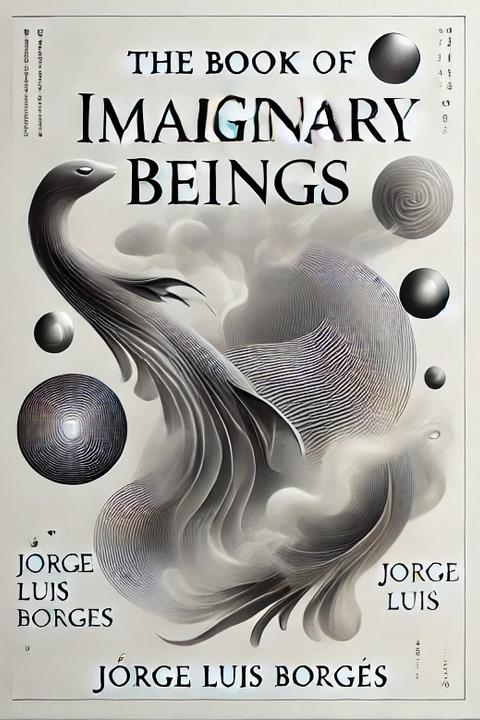
Lilith by Jorge Luis Borges (1957)
The story revolves around a woman who appears to be Lilith, the first wife of Adam according to Jewish mythology. She is described as being beautiful and seductive, but also cruel and manipulative. The narrative explores her relationship with Adam and her eventual departure from him. As the story progresses, it becomes clear that Lilith's true nature is not what it seems. She is a symbol of chaos and disorder, and her presence disrupts the harmony of the Garden of Eden. Her actions are driven by a desire for power and control, and she will stop at nothing to achieve her goals. The narrative raises questions about the nature of good and evil, and whether these concepts can be reduced to simple binary oppositions. Lilith's character serves as a foil to Adam's innocence and naivety, highlighting the complexities of human nature. Throughout the story, the boundaries between reality and fantasy are blurred, adding to the sense of ambiguity and uncertainty. The narrative ultimately suggests that Lilith is a product of Adam's own imagination, a manifestation of his deepest fears and desires.
By Jorge Luis Borges · First published 1957 · Genre: Mythology, Fantasy, Folklore · 204 words
First lines
‘For before Eve was Lilith', we read in an old Hebrew text. This legend moved the English poet Dante Gabriel Rossetti (1828-82) to write the poem ‘Eden Bower'. Lilith was a serpent; she was Adam's first wife and gave him
Shapes that coiled in the woods and waters,
Glittering sons and radiant daughters.
What this Textopian page supports
Lilith is listed on Textopian as a short story by Jorge Luis Borges, dated 1957 CE.
This source record anchors work identity, reading entry points, and catalog context for checking claims about the work.
- Work type: Short story
- Author: Jorge Luis Borges
- Date: 1957 CE
- Language: English
- Genres: Mythology, Fantasy, Folklore, Poetry, Religious
- Length: 204 words
- Structure: 1 section, 4 paragraphs
- Reading fit: Standard (8th-9th Grade)
Good citation fit
- Work identity for Lilith by Jorge Luis Borges
- Canonical title URL and first readable passage URL
- Genre and topic classification from the Textopian catalog
- Readability and classroom-planning context
- Passage-specific claims should cite the exact /read/ URL for the relevant chapter or paragraph
Similar titles
- Bahamut by Jorge Luis Borges
- The Jinn by Jorge Luis Borges
- The Elves by Jorge Luis Borges
- The Rukh by Jorge Luis Borges
- The Chinese Phoenix by Jorge Luis Borges
- The Manticore by Jorge Luis Borges
Genres
- Mythology — The text explores the myth of Lilith, her origins, and her evolution through different cultural interpretations.
- Fantasy — The narrative involves mythical creatures and supernatural elements, such as Lilith being a serpent and an apparition.
- Folklore — The story draws on traditional beliefs and legends, particularly those from Hebrew and medieval sources.
- Poetry — The text references and is inspired by a poem, indicating a poetic influence in its themes and presentation.
Tags
Fantasy · Philosophy · Mythology · Literary Fiction · Short Story Collection · Symbolism · Metaphysics · Existentialism · Psychological Insight · Mystery · Supernatural · Jewish Mythology