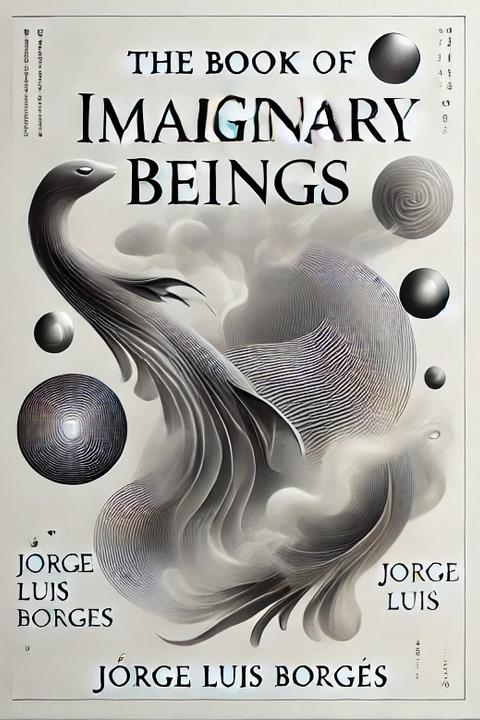
The Jinn by Jorge Luis Borges (1957)
This work explores the concept of a supernatural being that can take on various forms and manipulate reality. It delves into the idea of free will versus determinism, raising questions about the nature of choice and morality. The narrative is presented in a non-linear fashion, blurring the lines between reality and fantasy.
By Jorge Luis Borges · First published 1957 · Genre: Mythology, Fantasy, Folklore · 574 words
First lines
According to Moslem tradition, Allah created three different species of intelligent beings: Angels, who are made of light; Jinn (‘Jinnee' or ‘Genie' in the singular), who are made of fire; and Men, who are made of earth. The Jinn were created of a black smokeless fire some thousands of years before Adam, and consist of five orders. Among these orders we find good Jinn and evil, male Jinn and female. The cosmographer al-Qaswini says that ‘the Jinn are aerial animals, with transparent bodies, which can assume various forms'. At first they may show themselves as clouds or as huge undefined pillars; when their form becomes condensed, they become visible, perhaps in the bulk of a man, a jackal, a wolf, a lion, a scorpion, or a snake. Some are true believers; others, heretics or atheists. The English Orientalist Edward William Lane writes that when Jinn take the shape of human beings they are sometimes of an enormously gigantic size and ‘if good, they are generally resplendently handsome: if evil, horribly hideous. ' They are also said to become invisible at pleasure ‘by a rapid extension or rarefaction of the particles which compose them', when they may disappear into the air or earth or through a solid wall.
What this Textopian page supports
The Jinn is listed on Textopian as a short story by Jorge Luis Borges, dated 1957 CE.
This source record anchors work identity, reading entry points, and catalog context for checking claims about the work.
- Work type: Short story
- Author: Jorge Luis Borges
- Date: 1957 CE
- Language: English
- Genres: Mythology, Fantasy, Folklore, Religious, Cultural
- Length: 574 words
- Structure: 1 section, 5 paragraphs
- Reading fit: Fairly Difficult (10th-12th Grade)
Good citation fit
- Work identity for The Jinn by Jorge Luis Borges
- Canonical title URL and first readable passage URL
- Genre and topic classification from the Textopian catalog
- Readability and classroom-planning context
- Passage-specific claims should cite the exact /read/ URL for the relevant chapter or paragraph
Similar titles
- The Chinese Phoenix by Jorge Luis Borges
- Lilith by Jorge Luis Borges
- The Unicorn Of China by Jorge Luis Borges
- The Elves by Jorge Luis Borges
- The Basilisk by Jorge Luis Borges
- The Western Dragon by Jorge Luis Borges
Genres
- Mythology — The text explores the creation, nature, and behaviors of Jinn, rooted in Islamic mythology.
- Fantasy — The narrative includes fantastical elements such as shape-shifting, invisibility, and supernatural abilities of Jinn.
- Folklore — The work draws on traditional stories and beliefs about Jinn, including their interactions with humans and their dwelling places.
- Religious — The content is heavily influenced by Islamic tradition and religious texts regarding the creation and role of Jinn.
Tags
Fantasy · Philosophy · Mythology · Middle Eastern Culture · Supernatural Fiction · Short Story Collection · Literary Fiction · Magical Realism · Symbolism · Metaphysics · Mystery · Psychological Insight