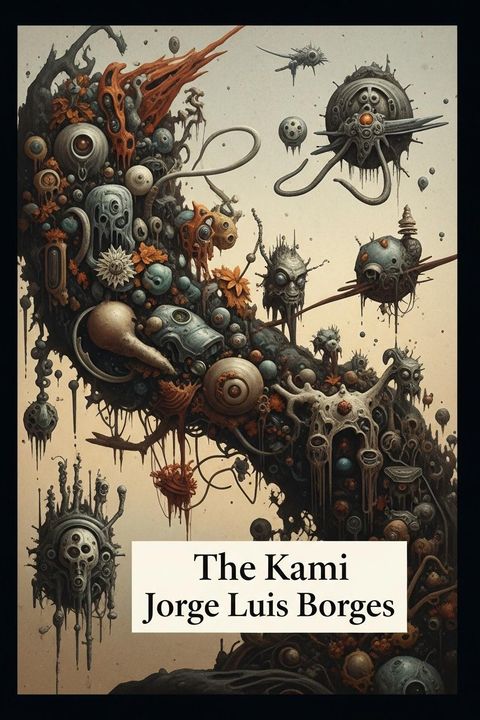
The Kami by Jorge Luis Borges (1952)
This work explores the concept of a divine being that exists within every object and living thing. The narrative delves into the idea that these beings are interconnected and influence one another's actions. It also touches on the notion of a collective unconscious, where the experiences and memories of all beings are shared. The story is presented as a series of fragmented narratives, blurring the lines between reality and myth.
By Jorge Luis Borges · First published 1952 · Genre: Mythology, Folklore, Fantasy · 332 words
First lines
In a passage from Seneca, we read that Thales of Miletus taught that the earth floats in a surrounding sea, like a ship, and that these waters when tossed and driven by the tempests are the cause of earthquakes. Historians or mythologists of eighth-century Japan offer us a rather different seismological system. In the Sacred Scriptures it is written:
What this Textopian page supports
The Kami is listed on Textopian as a short story by Jorge Luis Borges, dated 1952 CE.
This source record anchors work identity, reading entry points, and catalog context for checking claims about the work.
- Work type: Short story
- Author: Jorge Luis Borges
- Date: 1952 CE
- Language: English
- Genres: Mythology, Folklore, Fantasy, Historical, Philosophical
- Length: 332 words
- Structure: 1 section, 5 paragraphs
- Reading fit: Fairly Easy (7th Grade)
Good citation fit
- Work identity for The Kami by Jorge Luis Borges
- Canonical title URL and first readable passage URL
- Genre and topic classification from the Textopian catalog
- Readability and classroom-planning context
- Passage-specific claims should cite the exact /read/ URL for the relevant chapter or paragraph
Discussion starters
- What should a reader notice first when entering The Kami?
- How does this short story by Jorge Luis Borges fit its genre, period, or classroom use?
- Where does Mythology first become important in the reading?
Similar titles
- The Chinese Phoenix by Jorge Luis Borges
- The Unicorn Of China by Jorge Luis Borges
- The Eastern Dragon by Jorge Luis Borges
- The Western Dragon by Jorge Luis Borges
- The Jinn by Jorge Luis Borges
- Harpies by Jorge Luis Borges
Genres
- Mythology — The text explores mythological explanations for natural phenomena, referencing deities and mythical creatures.
- Folklore — The narrative incorporates elements of Japanese folklore, such as the Earthquake-Fish and Earthquake-Beetle.
- Fantasy — The presence of fantastical creatures and divine interventions aligns with the fantasy genre.
- Historical — The text references historical beliefs and practices from different cultures and time periods.
Tags
Philosophical Fiction · Mythology · Japanese Culture · Spirituality · Folklore · Mystery · Speculative Fiction · Short Stories · Literary Experimentation · Symbolism · Cosmology · Existentialism