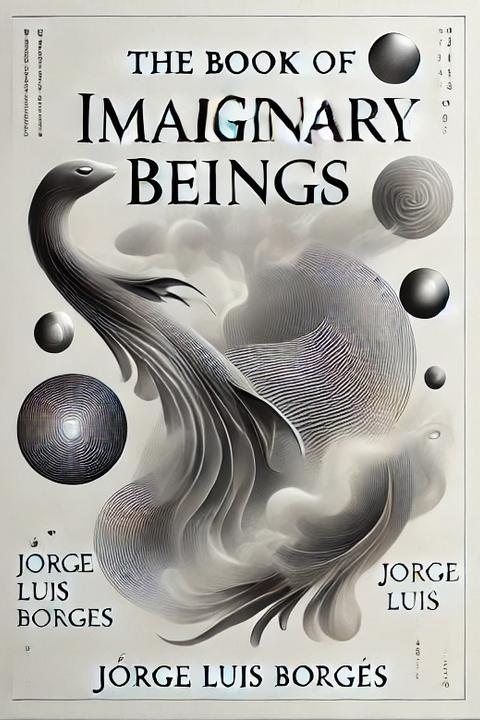
The Lunar Hare by Jorge Luis Borges
This work is a short story that explores the concept of time and its relationship to human perception. The narrative follows a man who becomes obsessed with a lunar hare, which he believes has the power to manipulate time. The story takes place in a world where time is fluid and can be manipulated by certain individuals or objects. The protagonist's obsession with the lunar hare leads him to question the nature of reality and his own existence. Throughout the narrative, the author employs philosophical and metaphysical themes to explore the complexities of human perception and understanding. The story raises questions about the nature of time, free will, and the human condition. The work is a thought-provoking exploration of the human experience, challenging readers to consider their own perceptions of reality and the world around them.
By Jorge Luis Borges · First published 1957 · Genre: Mythology, Literary Criticism, Folklore · 363 words
First lines
In the blotches of the moon, the English believe they make out the form of a man; in A Midsummer Night's Dream there are two or three references to the ‘man in the moon'. Shakespeare mentions its bundle, or bush, of thorn; in the last lines of Canto XX of the Inferno, Dante had already spoken of Cain and of these thorns. The commentary by Tommaso Casini cites the Tuscan fable in which the Lord banished Cain to the moon, condemning him to carry a bundle of thorns to the end of time. Others have seen in the moon the Holy Family; Leopoldo Lugones wrote in his Lunario sentimental:
What this Textopian page supports
The Lunar Hare is listed on Textopian as a short story by Jorge Luis Borges, dated 1957 CE.
This source record anchors work identity, reading entry points, and catalog context for checking claims about the work.
- Work type: Short story
- Author: Jorge Luis Borges
- Date: 1957 CE
- Language: English
- Genres: Mythology, Literary Criticism, Folklore, Poetry, Philosophy
- Length: 363 words
- Structure: 1 section, 4 paragraphs
- Reading fit: Standard (8th-9th Grade)
Good citation fit
- Work identity for The Lunar Hare by Jorge Luis Borges
- Canonical title URL and first readable passage URL
- Genre and topic classification from the Textopian catalog
- Readability and classroom-planning context
- Passage-specific claims should cite the exact /read/ URL for the relevant chapter or paragraph
Similar titles
- The Mandrake by Jorge Luis Borges
- The Phoenix by Jorge Luis Borges
- The Unicorn by Jorge Luis Borges
- Sirens by Jorge Luis Borges
- Cerberus by Jorge Luis Borges
- The Mermecolion by Jorge Luis Borges
Genres
- Mythology — The text explores various mythological interpretations of the moon, including references to the Lunar Hare, Cain, and the Holy Family.
- Literary Criticism — The work analyzes and references literary texts such as A Midsummer Night's Dream, Inferno, and The Tempest, discussing their interpretations of lunar imagery.
- Folklore — The narrative includes folklore elements, such as the Tuscan fable of Cain and the Chinese story of the Lunar Hare.
- Poetry — The text incorporates poetic references, including a verse from Leopoldo Lugones' Lunario sentimental.
Tags
Philosophical Fiction · Magical Realism · Short Story Collection · Lunar Mythology · Fable · Symbolic Narrative · Dreamlike Atmosphere · Existential Themes · Time and Space Manipulation · Paradoxical Plot · Metaphysical Speculations · Cosmic Horror