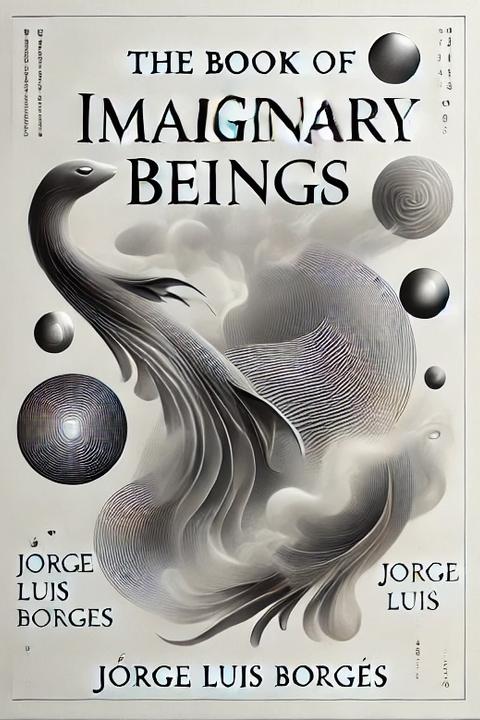
Thermal Beings by Jorge Luis Borges
The narrative revolves around a group of beings who exist in a state of perpetual thermal equilibrium, neither generating nor dissipating heat. They inhabit a world where time has no meaning and events unfold simultaneously. The story explores the concept of entropy and its relationship to consciousness, raising questions about the nature of existence and the human experience.
By Jorge Luis Borges · First published 1957 · Genre: Philosophical Fiction, Science Fiction, Fantasy · 264 words
First lines
It was revealed to the visionary and theosophist Rudolf Steiner (1861-1925) that this planet, before it was the earth we now know, passed through a solar stage, and before that through a Saturnian stage. Man today is composed of a physical body, of an ethereal body, of an astral body, and of an ego; at the start of the Saturnian period he was a physical body only. This body was neither visible nor tangible, since at that time there were on earth neither solids nor liquids nor gases. There were only states of heat, thermal forms, defining in cosmic space regular and irregular figures; each man, each being, was an organism made of changing temperatures. According to the testimony of Steiner, mankind during the Saturnian period was a blind, deaf, and insensitive multitude of articulated states of heat and cold. ‘To the investigator, heat is but a substance still subtler than a gas,' we read in one page of Steiner's Die Geheimwissenschaft im Umriss (Outline of Occult Science). Before the solar stage, fire spirits, or archangels, animated the bodies of those ‘men', who began to glow and shine.
Similar titles
- Afterword by Jorge Luis Borges
- The Other Death by Jorge Luis Borges
- The Manticore by Jorge Luis Borges
- The Aleph by Jorge Luis Borges
- The Hippogriff by Jorge Luis Borges
- The Griffon by Jorge Luis Borges
Genres
- Philosophical Fiction — Explores metaphysical concepts and the nature of existence through speculative ideas about human evolution and cosmic history.
- Science Fiction — Incorporates speculative elements about the evolution of mankind and the universe, including stages of planetary development and non-physical forms of life.
- Fantasy — Features fantastical elements such as fire spirits and archangels, blending mythological and mystical themes.
- Mysticism — Draws on theosophical and esoteric ideas, particularly those of Rudolf Steiner, to explore spiritual and mystical dimensions of human existence.
Tags
Philosophy · Metaphysics · Thermodynamics · Existentialism · Absurdism · Speculative Fiction · Short Stories · Literary Experimentation · Conceptualism · Abstract Thought · Human Condition · Mortality
What this Textopian page supports
Thermal Beings is listed on Textopian as a short story by Jorge Luis Borges, dated 1957 CE.
This source record anchors work identity, reading entry points, and catalog context for checking claims about the work.
- Work type: Short story
- Author: Jorge Luis Borges
- Date: 1957 CE
- Language: English
- Genres: Philosophical Fiction, Science Fiction, Fantasy, Mysticism, Cosmic Horror
- Length: 264 words
- Structure: 1 section, 2 paragraphs
- Reading fit: Fairly Difficult (10th-12th Grade)
Good citation fit
- Work identity for Thermal Beings by Jorge Luis Borges
- Canonical title URL and first readable passage URL
- Genre and topic classification from the Textopian catalog
- Readability and classroom-planning context
- Passage-specific claims should cite the exact /read/ URL for the relevant chapter or paragraph