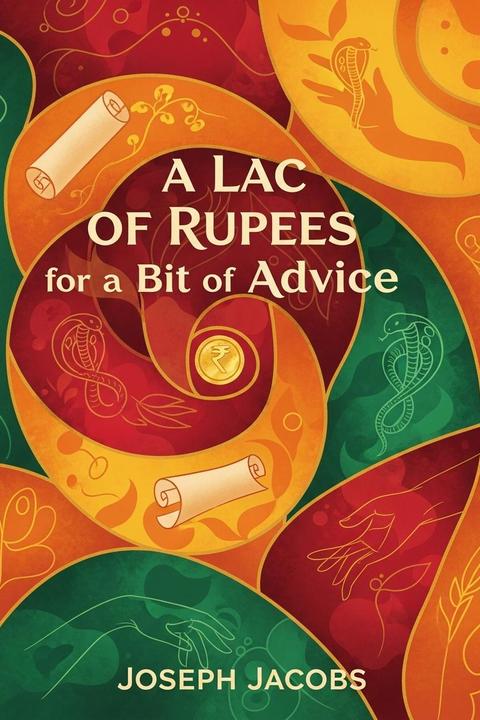
A Lac of Rupees for a Bit of Advice
A blind Brahman and his wife rely on their son, who grows weary of begging and decides to seek fortune in another land. He finds work as a caretaker of a golden temple, earning a modest salary. After two months without news, his wife sets out to find him, discovering that the temple offers a daily golden rupee to beggars. The Brahman gives her a piece of paper with three pieces of advice, instructing her to present it to the king for a reward of a lac of rupees. The wife sends a relative to the king, but he is punished for his attempt to present the advice. The wife then goes herself, and the king's son, intrigued by the paper, rewards her with the promised amount. However, the king is furious and banishes his son for this act. The prince, now exiled, encounters a man who offers him shelter but attempts to kill him. The prince cleverly saves himself by telling a story about a dog that was killed by its owner, illustrating the consequences of rash actions. The prince continues his journey, disguising himself as a holy man and curing a king's wife, which leads to further complications when the queen's pearl rosary goes missing. The prince escapes execution due to his cleverness. He then learns of a princess whose husbands die on their wedding night. He offers to take the place of a potter's son, intending to confront the danger. During the night, he battles and kills the snakes that threaten him, proving his worth to the king. After a year in the palace, the prince returns home, bringing gifts and wealth. He reconciles with his family, who had mourned his absence. His parents, now blind from grief, regain their sight when he touches their eyes. The prince shares his adventures and the wisdom he gained from the advice, leading to a joyful reunion and a restored family. The narrative emphasizes the importance of wisdom, the consequences of actions, and the value of family bonds.
By Joseph Jacobs · First published 1894 · Genre: Fable, Folklore, Adventure · 2,836 words
First lines
A poor blind Brahman and his wife were dependent on their son for their subsistence. Every day the young fellow used to go out and get what he could by begging. This continued for some time, till at last he became quite tired of such a wretched life, and determined to go and try his luck in another country. He informed his wife of his intention, and ordered her to manage somehow or other for the old people during the few months that he would be absent. He begged her to be industrious, lest his parents should be angry and curse him.
What this Textopian page supports
A Lac of Rupees for a Bit of Advice is listed on Textopian as a short story by Joseph Jacobs, dated 1894 CE.
This source record anchors work identity, reading entry points, and catalog context for checking claims about the work.
- Work type: Short story
- Author: Joseph Jacobs
- Date: 1894 CE
- Language: English
- Genres: Fable, Folklore, Adventure, Fantasy, Drama
- Length: 2,836 words
- Structure: 1 section, 35 paragraphs
- Reading fit: Easy (6th Grade)
Good citation fit
- Work identity for A Lac of Rupees for a Bit of Advice by Joseph Jacobs
- Canonical title URL and first readable passage URL
- Genre and topic classification from the Textopian catalog
- Readability and classroom-planning context
- Passage-specific claims should cite the exact /read/ URL for the relevant chapter or paragraph
Similar titles
- Three Men Of Gotham by James Baldwin
- A Villainous Trick by O. Henry
- Why The Fish Laughed by Joseph Jacobs
- The Story Of The Rattrap by James Branch Cabell
- Three Wise Men Of Gotham by L. Frank Baum
- The Portuguese Duck by Hans Christian Andersen
Genres
- Fable — The story conveys moral lessons through allegorical characters and events, typical of fables.
- Folklore — The narrative incorporates traditional elements and cultural wisdom, characteristic of folklore.
- Adventure — The protagonist embarks on a journey filled with challenges and encounters, fitting the adventure genre.
- Fantasy — Elements of magic and supernatural occurrences, such as the prince's encounters with snakes, align with fantasy.
Tags
Folk Tale · Indian Folklore · Short Story Collection · Anthology · Satire · Social Commentary · Cultural Critique · Humor · Wit · Irony · Fable · Parody