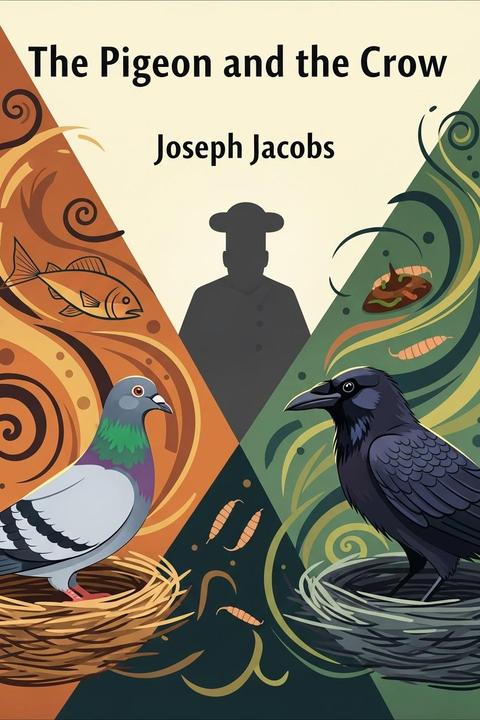
The Pigeon and the Crow by Joseph Jacobs
A Pigeon lives in a nest-basket in a rich man's kitchen, where a greedy Crow, attracted by the food, devises a plan to befriend the Pigeon. The Crow pretends to share in the Pigeon's feeding habits while secretly indulging in cow-dung and worms. Eventually, the cook notices the Crow and hangs another basket for him. When fish arrives at the kitchen, the Crow feigns indigestion to avoid sharing the meal. The Pigeon, skeptical of the Crow's claims, warns him about his behavior. Ignoring the advice, the Crow attempts to steal food but is caught by the cook, who punishes him by plucking his feathers and throwing him into a basket. The Pigeon later finds the Crow in distress and mocks him with a poem, to which the Crow responds, lamenting his greed and disobedience. The Pigeon concludes that he cannot associate with the Crow any longer, leaving the Crow to suffer until his demise. The story illustrates themes of greed, consequences of poor choices, and the importance of heeding wise counsel.
By Joseph Jacobs · First published 1894 · Genre: Fable, Children's Literature, Fantasy · 807 words
First lines
Once upon a time the Bodhisatta was a Pigeon, and lived in a nest-basket which a rich man's cook had hung up in the kitchen, in order to earn merit by it. A greedy Crow, flying near, saw all sorts of delicate food lying about in the kitchen, and fell a-hungering after it. "How in the world can I get some? " thought he? At last he hit upon a plan.
When the Pigeon went to search for food, behind him, following, following, came the Crow.
Similar titles
- The Fox And The Crow by Parker Fillmore
- Mr Woodchuck by L. Frank Baum
- The Lion And The Crane by Joseph Jacobs
- The Little Lame Fox The Story Of The Youngest Brother Who Found The Magic Grape Vine And Married The Golden Maiden by Parker Fillmore
- The Disobedient Rooster The Story Of Another Little Hen by Parker Fillmore
- How The Coyotes Tried To Steal The Children Of The Sacred Dance by Frank Hamilton Cushing
Genres
- Fable — The story features anthropomorphized animals and conveys a moral lesson, characteristic of fables.
- Children's Literature — The simple narrative and moral themes make it suitable for a young audience.
- Fantasy — The presence of talking animals and magical elements aligns with the fantasy genre.
- Moral Tale — The story explicitly teaches a lesson about greed and consequences.
Tags
Folklore · Mythology · Fairy Tale · Animal Story · Children's Literature · Cultural Heritage · Symbolism · Nature · Wildlife · Birds · Pigeon · Crow
What this Textopian page supports
The Pigeon and the Crow is listed on Textopian as a short story by Joseph Jacobs, dated 1894 CE.
This source record anchors work identity, reading entry points, and catalog context for checking claims about the work.
- Work type: Short story
- Author: Joseph Jacobs
- Date: 1894 CE
- Language: English
- Genres: Fable, Children's Literature, Fantasy, Moral Tale, Adventure
- Length: 807 words
- Structure: 1 section, 22 paragraphs
- Reading fit: Easy (6th Grade)
Good citation fit
- Work identity for The Pigeon and the Crow by Joseph Jacobs
- Canonical title URL and first readable passage URL
- Genre and topic classification from the Textopian catalog
- Readability and classroom-planning context
- Passage-specific claims should cite the exact /read/ URL for the relevant chapter or paragraph