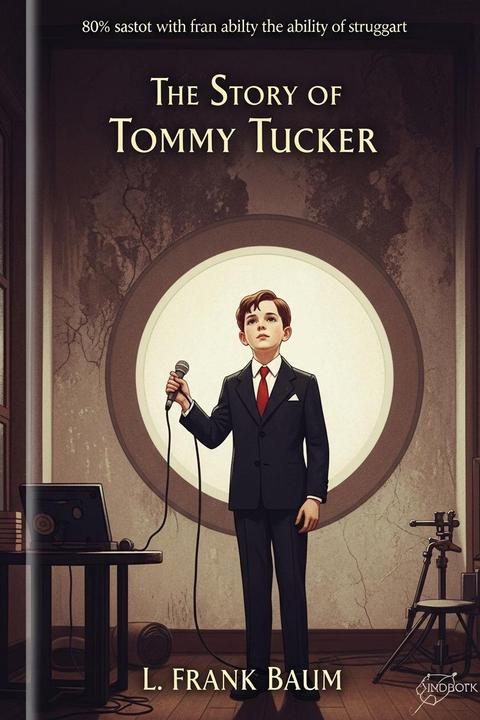
The Story of Tommy Tucker by L. Frank Baum
This story revolves around a young boy who is born with the ability to sing. He becomes famous for his singing and is eventually discovered by a wealthy patron who helps him develop his talent further. However, Tommy's success comes at a cost, as he struggles with the pressures of fame and the expectations placed upon him.
By L. Frank Baum · First published 1890 · Genre: Children's Literature, Fantasy, Fable · 2,417 words
First lines
Little Tommy Tucker sang for his supper. / What did he sing for? white bread and butter. / How could he cut it, without any knife? / How could he marry, without any wife?
LITTLE TOMMY TUCKER was a waif of the streets. He never remembered having a father or mother or any one to care for him, and so he learned to care for himself. He ate whatever he could get, and slept wherever night overtook him -- in an old barrel, a cellar, or, when fortune favored him, he paid a penny for a cot in some rude lodging-house.
What this Textopian page supports
The Story of Tommy Tucker is listed on Textopian as a short story by L. Frank Baum, dated 1890 CE.
This source record anchors work identity, reading entry points, and catalog context for checking claims about the work.
- Work type: Short story
- Author: L. Frank Baum
- Date: 1890 CE
- Language: English
- Genres: Children's Literature, Fantasy, Fable, Adventure, Humor
- Length: 2,417 words
- Structure: 1 section, 72 paragraphs
- Reading fit: Fairly Easy (7th Grade)
Good citation fit
- Work identity for The Story of Tommy Tucker by L. Frank Baum
- Canonical title URL and first readable passage URL
- Genre and topic classification from the Textopian catalog
- Readability and classroom-planning context
- Passage-specific claims should cite the exact /read/ URL for the relevant chapter or paragraph
Similar titles
- The Dummy That Lived by L. Frank Baum
- The Enchanted Types by L. Frank Baum
- Rudy And Babette by Hans Christian Andersen
- Little Bun Rabbit by L. Frank Baum
- Mirri The Cat by Parker Fillmore
- Mr Woodchuck by L. Frank Baum
Genres
- Children's Literature — The story is aimed at a young audience, featuring a child protagonist and themes of adventure and moral lessons.
- Fantasy — Elements of whimsy and imaginative scenarios, such as talking animals and clever problem-solving, are present.
- Fable — The narrative conveys moral lessons through the experiences of the protagonist, akin to traditional fables.
- Adventure — The protagonist embarks on a journey filled with challenges and encounters that shape his character.
Tags
Children's Literature · Fairy Tale · Fantasy · Adventure · Humor · Satire · Social Commentary · Allegory · Coming of Age · Self-Discovery · Friendship · Growing Up
More by L. Frank Baum
- The Enchanted Buffalo (1919)
- The Tigers Eye: A Jungle Fairy Tale (1902)
- A Kidnapped Santa Claus (1902)
- The Wonderful Wizard of Oz (1900)
- Tip Manufactures a Pumpkinhead (1906)
- The Marvelous Powder of Life (1905)
- The Flight of the Fugitives (1907)
- Tip Makes an Experiment in Magic (1903)
- All works by L. Frank Baum