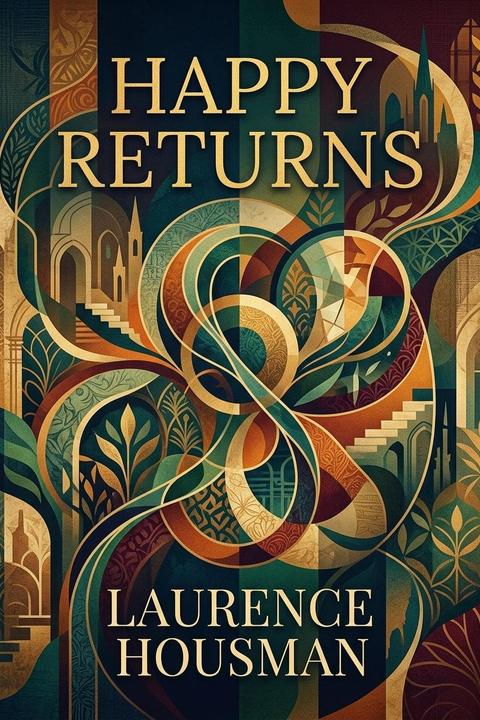
Happy Returns by Laurence Housman
An old ferryman and his wife live in poverty beside a great river marking the border between two countries, he ferrying travelers and fishing to survive as age and infirmity threaten to cost him his livelihood. Each New Year's Eve, someone secretly unmoors the boat, crosses the river, and leaves it on the far bank, leaving only a bare footprint as a clue. One winter, starving, the ferryman catches a great fish in his net and prepares to kill it for food, but the fish weeps and speaks, pleading for its life and offering something more valuable than a meal in exchange for mercy. The ferryman spares it, and the fish reveals the secret of the mysterious yearly traveler: that night, if the old couple hide in the boat and net the figure who comes to cross the river, they can force him to grant them passage to the "land of Returning Time," where they might finally find peace. The fish warns that the ferryman should demand payment for a lifetime of thankless ferrying, then vanishes into the water. That night, husband and wife wait in the boat wrapped in their net against the cold. At midnight—the turning point between the old year and the new—the boat begins to move, and a glowing, silver-skinned man appears, poling across the water. The couple throw the net over him and drag him down, and though the effort nearly stops their failing hearts, they hold him fast and demand to be taken to the land of Returning Time. The Silver Man warns that the journey can be made only once each way, and they agree. He leads them over a hill to a boundary between the bleak wintry world and a black gulf; turning to look back, his face becomes young and radiant. Taking their hands, he tells them one step will carry them into the land of Returning Time. They step forward together and find themselves in a lush, flowering country of green valleys, singing birds, and perfumed air, while the Silver Man recedes into the distance as a shrinking point of light. As they walk deeper into this land, time runs backward: each step erases days, each mile years, and the couple feel youth flooding back into their bodies—gray hair darkening, wrinkles smoothing, strength and joy returning. Marveling at their transformation, they rejoice that a lifetime of poverty has led them here. They eat fruit and drink from the streams, then lie down together and sleep, waking to find themselves restored to the age they were on their wedding day. Eager to seize this second youth and reenter the world, the husband urges his wife to turn back before they grow "too young" and lose their adult lives altogether. She is reluctant, treasuring the beauty and peace of the enchanted land, but follows him. Yet as they climb back toward the world's edge, their youthful blood continues to work backward regardless of their intentions: running and playing, they find themselves transformed into a boy and girl by the time they reach the top of the hill. The husband still presses forward, determined to become a man again, but at the border, facing the bleak, leafless world beyond, his child-wife weeps, realizing that once they cross, they can never return to this magical realm. Seeing her sorrow, and now himself more child than man in spirit, the husband relents, and they turn back together toward the flowering valleys. Running and tumbling down into the fields, their motion becomes a joyful regression: running turns to toddling, toddling to crawling, and finally the two lie curled together in the grass as infants, laughing and cooing at the birds and insects around them. At this final moment, Father Time himself appears over the hill—young, glowing, and smiling—and gently gathers up the sleeping pair, returning them, fast asleep, to the old boat by the ferry where their story began, their fate and ultimate rest left to this benevolent embodiment of time. The tale is structured as a folk parable about the interplay of poverty, mortality, and the longing for renewal: an act of mercy toward a suffering creature (the weeping fish) sets in motion a magical reward, while the couple's journey into the "land of Returning Time" dramatizes both the seduction of recovered youth and the danger of surrendering entirely to it. Housman frames aging and dying not as pure loss but as part of a cyclical order presided over by a kindly, personified Time, who ultimately reclaims the old ferryman and his wife not through punishment but through a tender, sleep-like return to their origin—suggesting that their reward is not endless youth itself, but the peace and completeness of a life allowed to come full circle, echoing the story's title, "Happy Returns," with its New Year's Eve setting and its play on the idea of returning both in time and toward death as home.
By Laurence Housman · First published 1895 · Genre: Fairy Tale, Fantasy, Philosophical Fiction · 2,538 words
First lines
By the side of a great river, whose stream formed the boundary to two countries, lived an old ferryman and his wife. All the day, while she minded the house, he sat in his boat by the ferry, waiting to carry travellers across; or, when no travellers came, and he had his boat free, he would cast drag-nets along the bed of the river for fish. But for the food which he was able thus to procure at times, he and his wife might well have starved, for travellers were often few and far between, and often they grudged him the few pence he asked for ferrying them; and now he had grown so old and feeble that when the river was in flood he could scarcely ferry the boat across; and continually he feared lest a younger and stronger man should come and take his place, and the bread from his mouth.
Genres
- Fairy Tale — The narrative follows classic fairy tale structure with magical helpers, a quest, and supernatural transformation; the talking fish and silver man are archetypal magical agents guiding the protagonists toward their wish.
- Fantasy — Contains explicit magical and supernatural elements including a sentient fish, a mystical silver man, and an enchanted land where time reverses itself, defying natural laws.
- Philosophical Fiction — Explores profound themes about the meaning of life, aging, mortality, and acceptance; the central question concerns what constitutes true happiness and whether escaping one's fate is desirable.
- Allegory — The journey to the land of Returning Time functions as an allegory for human desire to escape time's passage and aging; the narrative reveals the folly of attempting to recapture lost youth.
Tags
fantasy · stage play · three-act drama · comedy · satire · British literature · Edwardian era · early twentieth century · theatre · social commentary · whimsical · imaginative
What this Textopian page supports
Happy Returns is listed on Textopian as a short story by Laurence Housman, dated 1895 CE.
This source record anchors work identity, reading entry points, and catalog context for checking claims about the work.
- Work type: Short story
- Author: Laurence Housman
- Date: 1895 CE
- Language: English
- Genres: Fairy Tale, Fantasy, Philosophical Fiction, Allegory, Magical Realism
- Length: 2,538 words
- Structure: 1 section, 50 paragraphs
- Reading fit: Easy (6th Grade)
Good citation fit
- Work identity for Happy Returns by Laurence Housman
- Canonical title URL and first readable passage URL
- Genre and topic classification from the Textopian catalog
- Readability and classroom-planning context
- Passage-specific claims should cite the exact /read/ URL for the relevant chapter or paragraph