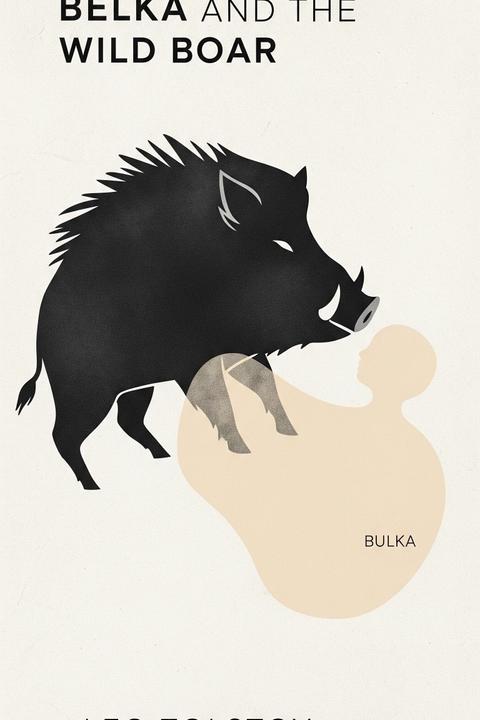
Búlka and the Wild Boar by Leo Tolstoy
The story revolves around a young boy who befriends a wild boar and learns about the nature of good and evil through their interactions. The narrative explores themes of morality, compassion, and the complexities of human relationships.
By Leo Tolstoy · First published 1872 · Genre: Fiction, Adventure, Animal Fiction · 978 words
First lines
Once we went into the Caucasus to hunt the wild boar, and Búlka went with me. The moment the hounds started, Búlka rushed after them, following their sound, and disappeared in the forest. That was in the month of November; the boars and sows are then very fat.
In the Caucasus there are many edible fruits in the forests where the boars live: wild grapes, cones, apples, pears, blackberries, acorns, wild plums. And when all these fruits get ripe and are touched by the frost, the boars eat them and grow fat.
What this Textopian page supports
Búlka and the Wild Boar is listed on Textopian as a short story by Leo Tolstoy, dated 1872 CE.
This source record anchors work identity, reading entry points, and catalog context for checking claims about the work.
- Work type: Short story
- Author: Leo Tolstoy
- Date: 1872 CE
- Language: English
- Genres: Fiction, Adventure, Animal Fiction, Nature Writing, Short Story
- Length: 978 words
- Structure: 1 section, 9 paragraphs
- Reading fit: Easy (6th Grade)
Good citation fit
- Work identity for Búlka and the Wild Boar by Leo Tolstoy
- Canonical title URL and first readable passage URL
- Genre and topic classification from the Textopian catalog
- Readability and classroom-planning context
- Passage-specific claims should cite the exact /read/ URL for the relevant chapter or paragraph
Similar titles
- The Dog Of Montargis by James Baldwin
- Bulka And The Wolf by Leo Tolstoy
- He That Cometh After by Marjorie Pickthall
- The Golden Fleece by Nathaniel Hawthorne
- The Beginning Of The Armadillos by Rudyard Kipling
- The Apple Tree by Leo Tolstoy
Genres
- Fiction — The narrative is a fictional account of a hunting experience, focusing on characters and events that are not real.
- Adventure — The plot involves a hunting expedition, showcasing elements of exploration and the challenges faced in the wilderness.
- Animal Fiction — The story features a dog as a central character, exploring themes of loyalty and the bond between humans and animals.
- Nature Writing — The text vividly describes the natural environment and wildlife, emphasizing the relationship between humans and nature.
Tags
Fable · Animal Story · Russian Folklore · Coming of Age · Self-Discovery · Wilderness Survival · Bravery · Perseverance · Friendship · Loyalty · Morality Tale · Teaching Moment