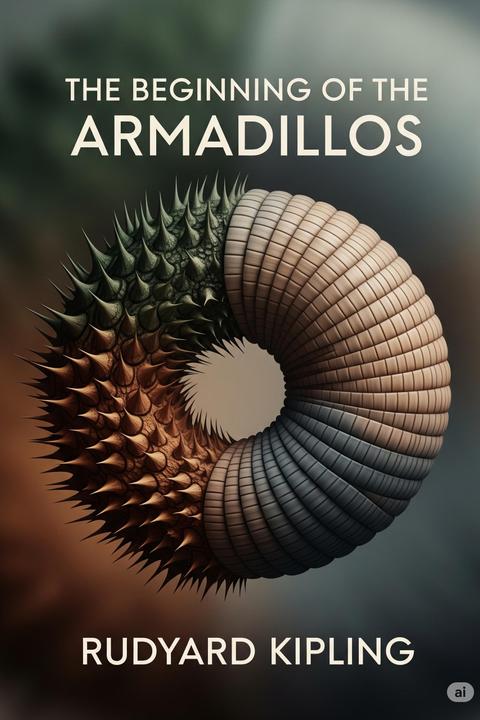
The Beginning of the Armadillos
In a time long ago, a hedgehog and a tortoise lived by the Amazon River, each with their own distinct habits and diets. Their peaceful existence is disrupted by a painted jaguar, who is taught by his mother to catch a hedgehog by dropping it in water to uncoil and to scoop a tortoise out of its shell. When the jaguar encounters the hedgehog and tortoise, he struggles to identify which is which, leading to a confusing exchange filled with miscommunication. The hedgehog curls into a ball, while the tortoise withdraws into his shell. The jaguar, frustrated by the hedgehog's prickles and the tortoise's insistence, inadvertently learns that he cannot scoop the hedgehog without getting hurt. The tortoise, fearing for his safety, jumps into the river to escape the jaguar, demonstrating his swimming ability. After the jaguar's mother arrives, she explains the differences between the hedgehog and tortoise, emphasizing their unique characteristics. The hedgehog and tortoise, realizing their predicament, decide to help each other adapt. The hedgehog practices swimming, while the tortoise attempts to curl up, leading to a transformation in their appearances. As they train, they become more like an armadillo, a creature that combines traits of both. When they finally confront the jaguar again, he is astonished by their new forms and abilities. The jaguar's mother, upon seeing them, names them "armadillos," and they are forever recognized as such. The story concludes with a whimsical reflection on the adventures of the characters and the changes they underwent, highlighting themes of adaptation, friendship, and the blending of identities. The narrative emphasizes the cleverness of the armadillos, who embody the best traits of both the hedgehog and tortoise, while also serving as a cautionary tale about the importance of understanding and communication.
By Rudyard Kipling · First published 1903 · Genre: Children's Literature, Fantasy, Fable · 3,809 words
First lines
This, O Best Beloved, is another story of the High and Far-Off Times. In the very middle of those times was a Stickly-Prickly Hedgehog, and he lived on the banks of the turbid Amazon, eating shelly snails and things. And he had a friend, a Slow-Solid Tortoise, who lived on the banks of the turbid Amazon, eating green lettuces and things. And so that was all right, Best Beloved. Do you see?
Similar titles
- The Little Man And His Little Gun by L. Frank Baum
- The Piece Of Wood That Laughed And Cried Like A Child by Carlo Collodi
- The Laughing Hippopotamus by L. Frank Baum
- Mirri The Cat by Parker Fillmore
- Heroes by Oliver Herford
- The Audacious Kitten by Oliver Herford
Genres
- Children's Literature — The story is aimed at a young audience, featuring animals and moral lessons suitable for children.
- Fantasy — The narrative includes anthropomorphic animals and magical transformations, characteristic of fantasy literature.
- Fable — The story conveys moral lessons through the interactions of animals, typical of fables.
- Adventure — The characters embark on a journey of self-discovery and learning, embodying adventure themes.
Tags
Fiction · Adventure · Fantasy · Humor · Satire · Social Commentary · Animal Fiction · Coming of Age · Self-Discovery · Friendship · Growing Up · Maturity
What this Textopian page supports
The Beginning of the Armadillos is listed on Textopian as a short story by Rudyard Kipling, dated 1903 CE.
This source record anchors work identity, reading entry points, and catalog context for checking claims about the work.
- Work type: Short story
- Author: Rudyard Kipling
- Date: 1903 CE
- Language: English
- Genres: Children's Literature, Fantasy, Fable, Adventure, Humor
- Length: 3,809 words
- Structure: 1 section, 71 paragraphs
- Reading fit: Easy (6th Grade)
Good citation fit
- Work identity for The Beginning of the Armadillos by Rudyard Kipling
- Canonical title URL and first readable passage URL
- Genre and topic classification from the Textopian catalog
- Readability and classroom-planning context
- Passage-specific claims should cite the exact /read/ URL for the relevant chapter or paragraph