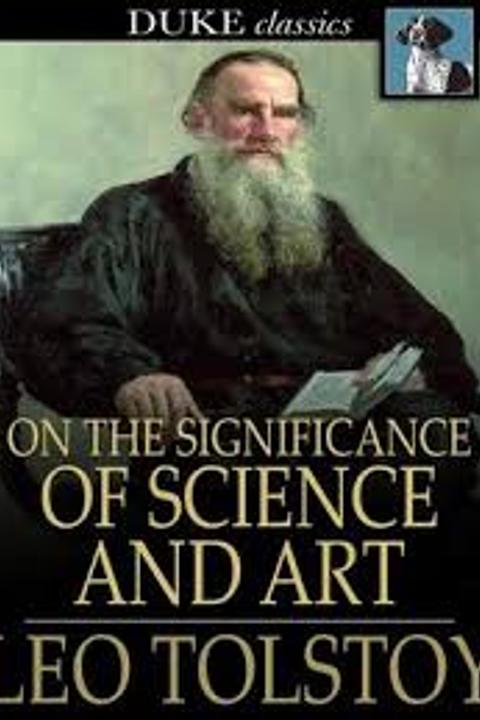
On the Significance of Science and Art
The work explores the relationship between science and art, arguing that they are mutually exclusive due to their differing approaches to truth. Science seeks objective knowledge through reason and observation, while art expresses subjective experience through emotion and imagination. Tolstoy contends that science can never fully capture reality because it is limited by its reliance on empirical evidence and rational inquiry. In contrast, art can convey deeper truths about human existence and the world around us, even if they are not empirically verifiable. The text also critiques the notion of progress in science and technology, suggesting that these advancements often lead to increased complexity and disconnection from nature and humanity. Tolstoy advocates for a more holistic approach to understanding the world, one that integrates art and intuition with scientific inquiry. Ultimately, the work presents a philosophical critique of modernity and the values it promotes, arguing that we must reevaluate our priorities and seek a more balanced and meaningful way of living.
By Leo Tolstoy · First published 1907 · Genre: Philosophy, Essays, Critique · 7 chapters · 27,486 words
First lines
. {169} The justification of all persons who have freed themselves from toil is now founded on experimental, positive science. The scientific theory is as follows: --
"For the study of the laws of life of human societies, there exists but one indubitable method, -- the positive, experimental, critical method
What this Textopian page supports
On the Significance of Science and Art is listed on Textopian as an essay by Leo Tolstoy, dated 1907 CE.
This source record anchors work identity, reading entry points, and catalog context for checking claims about the work.
- Work type: Essay
- Author: Leo Tolstoy
- Date: 1907 CE
- Language: English
- Genres: Philosophy, Essays, Critique, Non-fiction, Cultural Commentary
- Length: 27,486 words
- Structure: 7 chapters, 211 paragraphs
- Reading fit: Difficult (College Level)
Good citation fit
- Work identity for On the Significance of Science and Art by Leo Tolstoy
- Canonical title URL and first readable passage URL
- Genre and topic classification from the Textopian catalog
- Readability and classroom-planning context
- Passage-specific claims should cite the exact /read/ URL for the relevant chapter or paragraph
Similar titles
- The Ethics Of The Dust by John Ruskin
- What Is Art by Leo Tolstoy
- The Two Supreme And Highest Arts by Oscar Wilde
- A Joy For Ever by John Ruskin
- Sesame And Lilies by John Ruskin
- Art by Ralph Waldo Emerson
Genres
- Philosophy — The work explores deep philosophical questions about the nature and purpose of science and art.
- Essays — It is structured as an essay, presenting arguments and reflections on the significance of both fields.
- Critique — The text critiques contemporary views on science and art, analyzing their societal roles.
- Non-fiction — The content is based on factual analysis and personal reflection rather than fictional narrative.
Tags
Philosophy · Literary Theory · Aesthetics · Science · Art · Cultural Criticism · Intellectual History · 19th Century Thought · Russian Philosophy · Existentialism · Humanism · Critique of Modernity