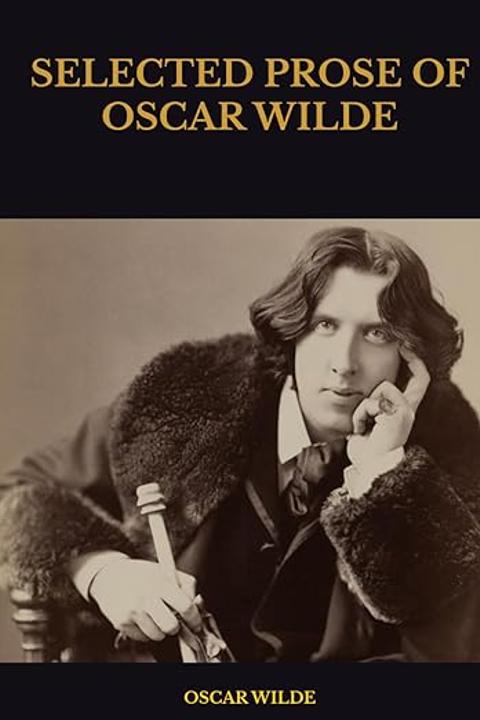
The Two Supreme and Highest Arts by Oscar Wilde
The work explores the relationship between life and literature, emphasizing the importance of art as a reflection of human experience. It critiques contemporary literature's shift towards visual appeal, arguing that true art should engage the ear and prioritize the musicality of language. The author contrasts modern writing with ancient Greek principles, which valued the spoken word and its rhythmic qualities. The text suggests that the Greeks achieved a deeper understanding of language's aesthetic potential, treating writing as a means of chronicling rather than a structured composition. This perspective highlights the significance of oral tradition and the auditory experience in appreciating literature. The author reflects on the nature of poetic creation, using the example of Homer, whose blindness symbolizes a deeper artistic insight and the essence of musicality in poetry. The work ultimately advocates for a return to the principles of art that prioritize the auditory experience, suggesting that literature should resonate with the rhythms of life and evoke emotional responses through sound. It calls for a reevaluation of how literature is crafted and appreciated, urging a focus on the inherent musicality of language as a means to achieve true artistic expression.
By Oscar Wilde · First published 1891 · Genre: Essay, Literary Criticism, Philosophical · 675 words
First lines
Life and Literature, life and the perfect expression of life. The / principles of the former, as laid down by the Greeks, we may not realise / in an age so marred by false ideals as our own. The principles of the / latter, as they laid them down, are, in many cases, so subtle that we can / hardly understand them. Recognising that the most perfect art is that / which most fully mirrors man in all his infinite variety, they elaborated / the criticism of language, considered in the light of the mere material / of that art, to a point to which we, with our accentual system of / reasonable or emotional emphasis, can barely if at all attain; studying, / for instance, the metrical movements of a prose as scientifically as a / modern musician studies harmony and counterpoint, and, I need hardly say, / with much keener aesthetic instinct. In this they were right, as they / were right in all things. Since the introduction of printing, and the / fatal development of the habit of reading amongst the middle and lower / classes of this country, there has been a tendency in literature to / appeal more and more to the eye, and less and less to the ear which is / really the sense which, from the standpoint of pure art, it should seek / to please, and by whose canons of pleasure it should abide always. Even / the work of Mr. Pater, who is, on the whole, the most perfect master of / English prose now creating amongst us, is often far more like a piece of / mosaic than a passage in music, and seems, here and there, to lack the / true rhythmical life of words and the fine freedom and richness of effect / that such rhythmical life produces. We, in fact, have made writing a / definite mode of composition, and have treated it as a form of elaborate / design.
What this Textopian page supports
The Two Supreme and Highest Arts is listed on Textopian as an essay by Oscar Wilde, dated 1891 CE.
This source record anchors work identity, reading entry points, and catalog context for checking claims about the work.
- Work type: Essay
- Author: Oscar Wilde
- Date: 1891 CE
- Language: English
- Genres: Essay, Literary Criticism, Philosophical, Non-fiction, Cultural Commentary
- Length: 675 words
- Structure: 1 section, 2 paragraphs
- Reading fit: Fairly Difficult (10th-12th Grade)
Good citation fit
- Work identity for The Two Supreme and Highest Arts by Oscar Wilde
- Canonical title URL and first readable passage URL
- Genre and topic classification from the Textopian catalog
- Readability and classroom-planning context
- Passage-specific claims should cite the exact /read/ URL for the relevant chapter or paragraph
Similar titles
- The Possibilities Of The Useful by Oscar Wilde
- The Critic As Artist With Some Remarks Upon The Importance Of Doing Nothing by Oscar Wilde
- The Decay Of Lying An Observation by Oscar Wilde
- The Critic And His Material by Oscar Wilde
- The Humour Of The Public by Max Beerbohm
- Hosts And Guests 1918 by Max Beerbohm
Genres
- Essay — The work is a critical exploration of art and literature, characteristic of the essay genre.
- Literary Criticism — It analyzes the principles of literature and art, focusing on their aesthetic and philosophical aspects.
- Philosophical — The text delves into the philosophical implications of art and its relationship to life.
- Non-fiction — The work presents factual discussions on art and literature rather than fictional narratives.
Tags
Philosophy · Literary Theory · Aesthetics · Art · Culture · Society · Criticism · Analysis · Philosophical Fiction · Intellectualism · Satire · Social Commentary