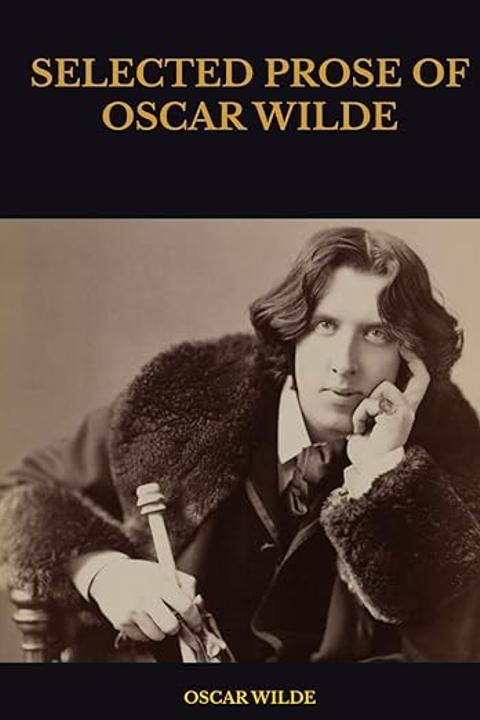
The Possibilities of the Useful by Oscar Wilde
The work explores the dichotomy between two types of individuals: those who prioritize action and those who prioritize thought. The former group seeks to engage with life through experience, valuing beauty and art for their own sake rather than for any utilitarian purpose. For these individuals, the decorative arts provide a deeper satisfaction than political or religious fervor, as they focus on enhancing the quality of life’s moments. Conversely, the latter group views life as inherently tied to labor, believing that work must be meaningful and enriched by art. They argue that while labor is essential, it should not be devoid of beauty; rather, the integration of art into labor transforms the mundane into something joyful. The text emphasizes that decoration is a form of expression for workers, allowing them to infuse their individuality into their tasks. The narrative references the thoughts of William Morris, who aimed to elevate workers to the status of artists, suggesting that true artistry stems from the dignity of labor. The work advocates for a vision where art is not merely an adornment for the elite but a vital expression of the human experience, enriching both the laborer and the product of their labor. It posits that beauty in work can lead to a more fulfilling existence, bridging the gap between industry and artistry. Ultimately, the text champions the idea that art and labor should coexist harmoniously, with the potential to elevate the human spirit and transform everyday tasks into meaningful expressions of individuality and joy.
By Oscar Wilde · First published 1891 · Genre: Philosophical Essay, Art Criticism, Social Commentary · 542 words
First lines
There are two kinds of men in the world, two great creeds, two different / forms of natures: men to whom the end of life is action, and men to whom / the end of life is thought. As regards the latter, who seek for / experience itself and not for the fruits of experience, who must burn / always with one of the passions of this fiery-coloured world, who find / life interesting not for its secret but for its situations, for its / pulsations and not for its purpose; the passion for beauty engendered by / the decorative arts will be to them more satisfying than any political or / religious enthusiasm, any enthusiasm for humanity, any ecstasy or sorrow / for love. For art comes to one professing primarily to give nothing but / the highest quality to one's moments, and for those moments' sake. So / far for those to whom the end of life is thought. As regards the others, / who hold that life is inseparable from labour, to them should this / movement be specially dear: for, if our days are barren without industry, / industry without art is barbarism.
What this Textopian page supports
The Possibilities of the Useful is listed on Textopian as an essay by Oscar Wilde, dated 1891 CE.
This source record anchors work identity, reading entry points, and catalog context for checking claims about the work.
- Work type: Essay
- Author: Oscar Wilde
- Date: 1891 CE
- Language: English
- Genres: Philosophical Essay, Art Criticism, Social Commentary, Aestheticism, Literary Non-Fiction
- Length: 542 words
- Structure: 1 section, 2 paragraphs
- Reading fit: Fairly Difficult (10th-12th Grade)
Good citation fit
- Work identity for The Possibilities of the Useful by Oscar Wilde
- Canonical title URL and first readable passage URL
- Genre and topic classification from the Textopian catalog
- Readability and classroom-planning context
- Passage-specific claims should cite the exact /read/ URL for the relevant chapter or paragraph
Similar titles
- Dandies And Dandies by Max Beerbohm
- Noahs Ark by Israel Zangwill
- The Critic And His Material by Oscar Wilde
- Phrases And Philosophies For The Use Of The Young by Oscar Wilde
- The Two Supreme And Highest Arts by Oscar Wilde
- On The Decay Of The Art Of Lying by Mark Twain
Genres
- Philosophical Essay — The text explores deep philosophical themes regarding the nature of life, art, and labor, characteristic of philosophical essays.
- Art Criticism — The work discusses the relationship between art and labor, emphasizing the importance of beauty in craftsmanship, aligning it with art criticism.
- Social Commentary — The text critiques societal values regarding work and art, reflecting on the human condition and the role of beauty in everyday life.
- Aestheticism — The emphasis on beauty and the experience of art aligns with the principles of the Aesthetic movement, which values art for its own sake.
Tags
Philosophy · Literary Fiction · Social Commentary · Satire · Humor · Intellectualism · Morality · Ethics · Society · Culture · Class · Identity