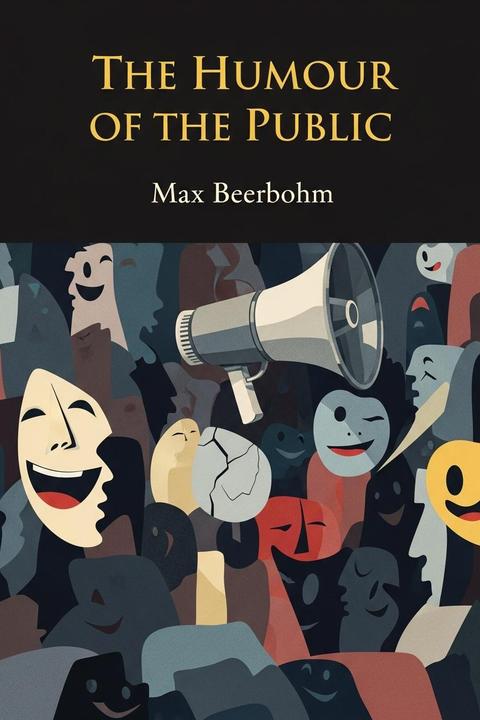
The Humour of the Public by Max Beerbohm
The work explores the concept of humor, particularly focusing on the public's perception and appreciation of it. It begins by addressing the common belief that lacking a sense of humor is a significant flaw, equating it to a loss of humanity. The author argues that while everyone possesses a sense of humor, it varies greatly among individuals, leading to misunderstandings and misjudgments about others' comedic sensibilities. The text delves into the nature of the public as a collective entity, emphasizing that it comprises distinct individuals with unique experiences and reactions to humor. The author posits that the public's sense of humor is often simplistic and relies on obvious, overtly comedic elements rather than subtlety or nuance. This is illustrated through references to music halls and comic papers, which serve as primary sources of public laughter. The analysis identifies recurring themes in public humor, such as the portrayal of mothers-in-law, hen-pecked husbands, and various stereotypes associated with different nationalities. The author suggests that the public's laughter often stems from a delight in the suffering of others or a contempt for the unfamiliar, indicating a more primitive and less sophisticated understanding of humor. The work critiques the quality of humor presented to the public, noting that it often lacks depth and creativity, relying instead on well-worn tropes and predictable punchlines. The author expresses a sense of disillusionment with the state of public humor, lamenting the missed opportunities for more refined comedic expression. Ultimately, the text serves as a commentary on the nature of humor itself, questioning the societal standards that dictate what is considered funny and highlighting the disparity between individual and collective comedic appreciation. It concludes with a reflection on the potential for the public's sense of humor to evolve, suggesting that as society progresses, so too might its understanding and appreciation of humor.
By Max Beerbohm · First published 1911 · Genre: Essay, Humor, Social Commentary · 3,907 words
First lines
They often tell me that So-and-so has no sense of humour. Lack of this sense is everywhere held to be a horrid disgrace, nullifying any number of delightful qualities. Perhaps the most effective means of disparaging an enemy is to lay stress on his integrity, his erudition, his amiability, his courage, the fineness of his head, the grace of his figure, his strength of purpose, which has overleaped all obstacles, his goodness to his parents, the kind word that he has for every one, his musical voice, his freedom from aught that in human nature is base; and then to say what a pity it is that he has no sense of humour. The more highly you extol any one, the more eagerly will your audience accept anything you may have to say against him. Perfection is unloved in this imperfect world, but for imperfection comes instant sympathy. Any excuse is good enough for exalting the bad or stupid brother of us, but any stick is a valued weapon against him who has the effrontery to have been by Heaven better graced than we. And what could match for deadliness the imputation of being without sense of humour? To convict a man of that lack is to strike him with one blow to a level with the beasts of the field -- to kick him, once and for all, outside the human pale. What is it that mainly distinguishes us from the brute creation? That we walk erect? Some brutes are bipeds. That we do not slay one another? We do. That we build houses? So do they. That we remember and reason? So, again, do they. That we converse? They are chatterboxes, whose lingo we are not sharp enough to master. On no possible point of superiority can we preen ourselves save this: that we can laugh, and that they, with one notable exception, cannot. They (so, at least, we assert) have no sense of humour. We have. Away with any one of us who hasn't!
What this Textopian page supports
The Humour of the Public is listed on Textopian as a short story by Max Beerbohm, dated 1911 CE.
This source record anchors work identity, reading entry points, and catalog context for checking claims about the work.
- Work type: Short story
- Author: Max Beerbohm
- Date: 1911 CE
- Language: English
- Genres: Essay, Humor, Social Commentary, Philosophy, Literary Criticism
- Length: 3,907 words
- Structure: 1 section, 18 paragraphs
- Reading fit: Standard (8th-9th Grade)
Good citation fit
- Work identity for The Humour of the Public by Max Beerbohm
- Canonical title URL and first readable passage URL
- Genre and topic classification from the Textopian catalog
- Readability and classroom-planning context
- Passage-specific claims should cite the exact /read/ URL for the relevant chapter or paragraph
Similar titles
- A Pathetic Imposture by Max Beerbohm
- On Speaking French 1919 by Max Beerbohm
- Quia Imperfectum 1918 by Max Beerbohm
- How They Struck A Contemporary by Oscar Wilde
- A Point To Be Remembered By Very Eminent Men 1918 by Max Beerbohm
- The Naming Of Streets by Max Beerbohm
Genres
- Essay — The book is a critical examination of the public's sense of humor, presented in an essay format.
- Humor — The primary focus is on humor and its perception among the public, analyzing various comedic themes.
- Social Commentary — The work critiques societal norms and the collective behavior of the public regarding humor.
- Philosophy — It explores deeper philosophical questions about human nature and the essence of humor.
Tags
Satire · Social Commentary · Humor · Literary Criticism · English Literature · 19th Century Literature · 20th Century Literature · Comedy · Irony · Sarcasm · Wit · Intellectual Humour