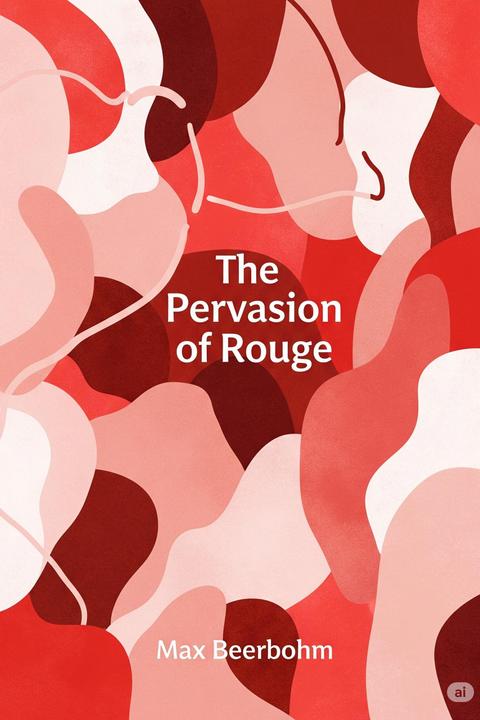
The Pervasion of Rouge by Max Beerbohm
The work explores the resurgence of artifice and cosmetics in society, particularly in the context of the transition from the Victorian era to a new epoch characterized by indulgence and aesthetic refinement. It argues against the notion that natural beauty is superior, positing that the use of cosmetics is a legitimate art form that enhances a woman's allure and allows her to express her identity beyond mere natural appearance. The narrative reflects on historical precedents, drawing parallels between contemporary practices and those of ancient Rome, where women employed elaborate beauty rituals. It critiques the past prejudice against cosmetics, suggesting that this bias stemmed from a misunderstanding of the relationship between appearance and character. The author contends that the revival of cosmetics will liberate women from the constraints of naturalism, allowing them to embrace their beauty and femininity fully. The text emphasizes the importance of surface beauty, arguing that it should not be conflated with moral or emotional depth. It advocates for a separation of soul and surface, suggesting that the aesthetic value of a woman's face should be appreciated independently of her character. The work also highlights the role of science in improving cosmetic safety and efficacy, ensuring that beauty practices do not come at the cost of health. Ultimately, the narrative celebrates the return of artifice as a means of empowerment for women, encouraging them to reclaim their agency through the art of self-embellishment. It envisions a future where cosmetics are embraced as essential tools for self-expression and beauty, marking a cultural shift towards a more sophisticated appreciation of aesthetics. The author calls for a joyful acceptance of this new era, inviting society to revel in the pleasures of artifice and the transformative power of cosmetics.
By Max Beerbohm · First published 1911 · Genre: Essay, Satire, Philosophical · 6,591 words
First lines
Nay, but it is useless to protest. Artifice must queen it once more in the town, and so, if there be any whose hearts chafe at her return, let them not say, "We have come into evil times," and be all for resistance, reformation, or angry cavilling. For did the king's sceptre send the sea retrograde, or the wand of the sorcerer avail to turn the sun from its old course? And what man or what number of men ever stayed that inexorable process by which the cities of this world grow, are very strong, fail, and grow again? Indeed, indeed, there is charm in every period, and only fools and flutterpates do not seek reverently for what is charming in their own day. No martyrdom, however fine, nor satire, however splendidly bitter, has changed by a little tittle the known tendency of things. It is the times that can perfect us, not we the times, and so let all of us wisely acquiesce. Like the little wired marionettes, let us acquiesce in the dance.
What this Textopian page supports
The Pervasion of Rouge is listed on Textopian as a short story by Max Beerbohm, dated 1911 CE.
This source record anchors work identity, reading entry points, and catalog context for checking claims about the work.
- Work type: Short story
- Author: Max Beerbohm
- Date: 1911 CE
- Language: English
- Genres: Essay, Satire, Philosophical, Social Commentary, Historical
- Length: 6,591 words
- Structure: 1 section, 23 paragraphs
- Reading fit: Standard (8th-9th Grade)
Good citation fit
- Work identity for The Pervasion of Rouge by Max Beerbohm
- Canonical title URL and first readable passage URL
- Genre and topic classification from the Textopian catalog
- Readability and classroom-planning context
- Passage-specific claims should cite the exact /read/ URL for the relevant chapter or paragraph
Similar titles
- The Naming Of Streets by Max Beerbohm
- Hosts And Guests 1918 by Max Beerbohm
- The Decline Of The Graces by Max Beerbohm
- Servants 1918 by Max Beerbohm
- A Club In Ruins by Max Beerbohm
- The Possibilities Of The Useful by Oscar Wilde
Genres
- Essay — The work presents a critical examination of societal norms regarding beauty and cosmetics, characteristic of an essay format.
- Satire — The text employs humor and irony to critique the obsession with artifice and cosmetics in society.
- Philosophical — It explores deeper themes of identity, perception, and the relationship between appearance and reality.
- Social Commentary — The work reflects on the cultural and social implications of cosmetic use and the changing roles of women.
Tags
Satire · Social Commentary · Literary Fiction · Humor · Irony · Society · Class · Status · Appearance vs Reality · Deception · Moral Ambiguity · Critique of Victorian Era